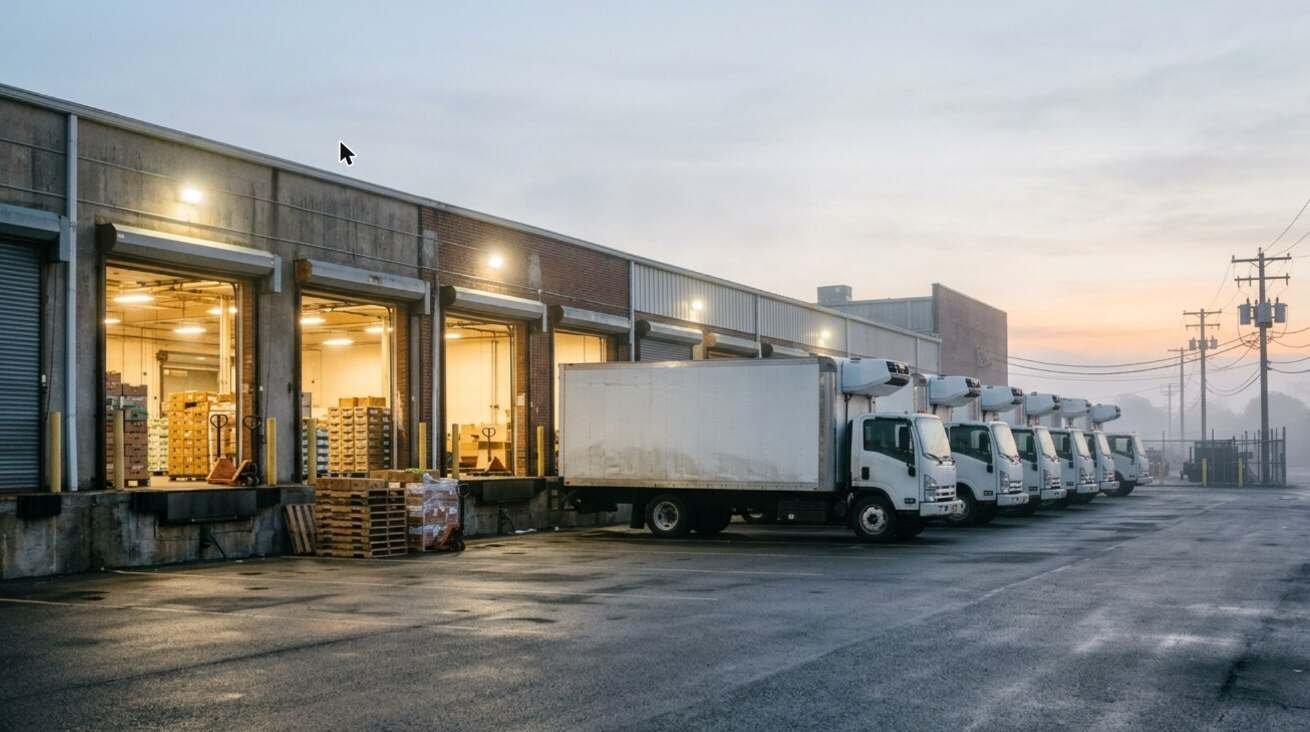

Marathon Foodservice is a family-owned company on Gordon Drive in Syosset, and I have dealt with it since the beginning of The Heritage Diner. Twenty-odd years is long enough to stop thinking of a supplier as a supplier. The trucks are just part of the week, like the grill and the Monday count.
A broadline house with a family name on the door
The company describes itself as a family-owned, service-driven, quality-focused broadline food service distributor with its office at 30 Gordon Drive, Syosset, NY 11791. Its site says it supplies restaurants, hotels, healthcare facilities and more across the Tri-State area, and a statistics block on the home page lists New York, New Jersey and Connecticut. A third-party directory entry lists the same address and calls the business family owned and operated, which matches what I have seen from my side of the counter.
Broadline is a trade word, and it means what it sounds like. A broadliner carries a little of everything so a kitchen can call one number instead of nine. BlueCart, a restaurant-ordering software company, puts the range at thousands of SKUs across all categories, and says the model suits high-volume staples delivered on scheduled routes. That is the diner’s week in a sentence.
The site gives no founding date and no company history, so I am not going to hand it one.
What comes off the truck
The products overview sorts the catalog into six groups: meat and poultry, frozen seafood, dairy, bread and bakery, fresh produce, and paper goods with janitorial supplies. The FAQ page says the full catalog sits behind the customer portal, from produce to pantry staples.
Most of what a diner kitchen eats in a day is on that list. Burgers are the clearest case. The featured items on the products page include a steak burger, a frozen 6-ounce beef patty and ground beef, and image descriptions on the page tie the patty and the ground beef to Marathon’s own label. Butter is on there too, a blend from AAK Foodservice, which is a third-party brand.
Then there are the outside names. The brands page lists sixteen manufacturers, among them Kikkoman, Lamb Weston, Land O’Lakes, Tyson, Unilever Food Solutions, Plymouth Beef and Tribeca Oven. The page does not say which products Marathon carries from each, and I will not guess at that either.
The services page adds a line I use more than I admit. Marathon is more than a food distributor, it says, and it supplies the everyday cleaning and stocking items. Anyone who has run out of gloves on a Friday knows why that matters.

Tuesday morning
The scene is the same most weeks. The truck backs up to the kitchen door while the dining room is still being wiped down, the driver wheels cases in on a hand truck, and the cooks are already pulling the order sheet off the wall. Somebody counts. Somebody always counts.
One winter the walk-in compressor was acting up, and I called the office worried about a full delivery of dairy and ground beef landing in a box that might not hold temperature. Marathon moved the drop and held the truck back until I said the cooler was steady. Nobody made a speech about it. That is what the relationship is made of, a hundred small adjustments nobody writes down.
I should be straight about one thing. A distributor can fix a delivery slot. It cannot fix a bad count on my side of the door, and the shortage that stung most over the years was mine, a par level I never updated after the menu changed.
How an order gets placed
Ordering runs several ways now. The home page and the services page describe an online customer portal and a mobile app, and the services page says customers can browse products, place orders and track deliveries. The FAQ says the answer to whether you can order online is yes, through the portal. An order can also go through a sales representative, who passes it to a routing coordinator, according to the delivery page.
I started on the phone, the way everybody did, and I still pick up the phone when something is odd. The portal is for the routine order. A rep is for the question the portal cannot answer, like whether a substitute cut will run lean.
The deadlines are written down. The FAQ says changes and cancellations are accepted until 5 pm and recommends ordering early. I take that as an instruction.

Delivery, pickup and the minimum question
The services page states that deliveries go out in multi-temp controlled trucks, and the home page shows refrigerated delivery trucks. The delivery information page also describes same-day pickup, Sunday through Friday except holiday closures, with one hour’s notice, between 9:30 am and 3:30 pm. The services page mentions a 10:00 a.m. pickup window, so the two pages do not line up on hours. Ask before you drive over.
Pickup has saved a service more than once. A weekend special sells faster than the forecast, the case count is short, and a short run to Syosset beats rewriting the board.
Minimums are where broadline distributors usually lose a small restaurant. BlueCart notes that broadliners often carry higher minimum order quantities, which can squeeze smaller operators. Marathon’s pages lean the other way. The home page advertises streamlined ordering, flexible delivery schedules, and low case minimum orders, and the services page lists case-splitting as a customer benefit. The delivery page states no minimum at all, and none of the pages gives a dollar figure or a case count. A new account should ask directly and get the answer in writing.

What a restaurant should ask any distributor
Restaurant Business, a trade publication, ran a list of ten things to understand about your distributor. Three of them have stayed with me. Special-order items can carry their own minimums, and the article gives a 10-case example, so a specialty ingredient will not necessarily ride on the next regular drop. Delivery frequency affects cost, and a restaurant can lower service charges by accepting larger, less frequent drops or off-peak delivery. And invoices deserve a regular look for price creep.
The third one is the habit I lean on hardest. A distributor’s catalog sets the numbers a kitchen lives by, because ingredient prices feed the recipe costing card and the costing card drives menu prices. Checking the invoice against the order, line by line, takes ten minutes and has paid for more than one afternoon.
The other half of the relationship lives in the kitchen. A standing order is only as good as the weekly order guide behind it, and the guide is only as good as the count in the walk-in cooler. Menu changes ripple through both, which is the point of planning a menu against ingredient cost.
For informational purposes only — consult a licensed attorney, tax professional or financial advisor.
Sources
- http://marathonfoodservice.com
- https://marathonfoodservice.com/products-overview
- https://marathonfoodservice.com/our-brands
- https://marathonfoodservice.com/our-services
- https://marathonfoodservice.com/delivery-info
- https://marathonfoodservice.com/faqs
- https://www.foodcodirectory.com/2022/06/marathon-food-service-ny-usa.html
- https://www.bluecart.com/blog/broadline-distribution
- https://www.restaurantbusinessonline.com/financing/10-things-you-need-know-about-your-distributor
All pages fetched November 8, 2026.