
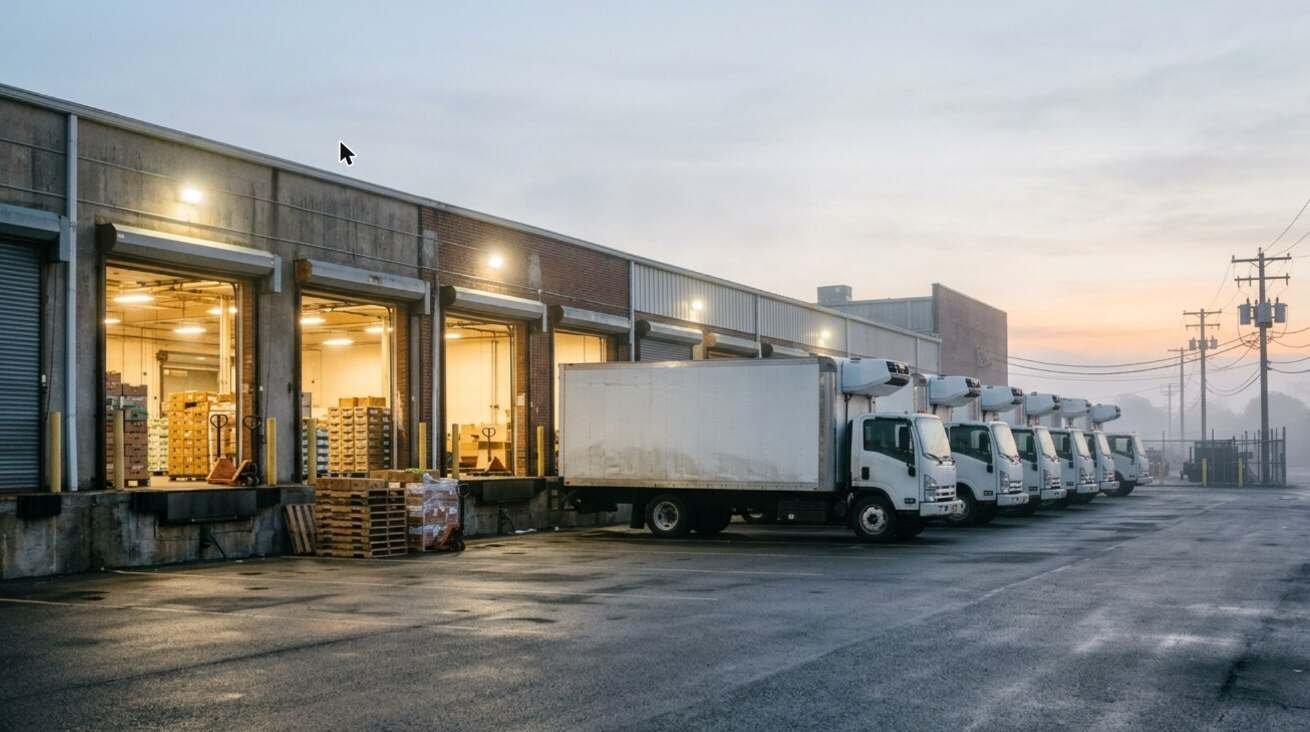
DiCarlo Distributors is a family-owned food distributor at 1630 N. Ocean Avenue in Holtsville, and The Heritage Diner buys from it.
A truck, a dairy store and a Polly-O route
The family’s About page goes back to 1927, when Michelina and Vincent DiCarlo bought a truck to deliver cheese in Brooklyn and Queens. A dairy store in Dyker Heights followed in the early 1940s, and more dairy and deli locations opened in Brooklyn and Mastic Beach over the next two decades.
The distribution company dates to 1963. According to the About page, DiCarlo Distributors Inc. started that year in Mastic Beach, delivering Polly-O dairy products across Suffolk County. A February 2023 feature in Greater Long Island, labeled “Sponsored” on the page, fills in the start: one Polly-O route run by brothers James, Vincent and Mike DiCarlo.
A man who starts with a single route and ends with a rail spur has done something right.
Shirley, Holtsville and a rail spur
The first warehouse went up in Shirley in 1968. After several expansions the company built its current Holtsville location in 1986, and the About page says the operation doubled in size in 2006. The Greater Long Island piece describes a 20-acre site just south of the Long Island Expressway with about 5 million cubic feet of dry, refrigerated and freezer space.
Two details tell you how seriously they treat logistics. The About page reports a 902.77 kW solar system with 3,058 panels installed in 2013. The same Greater Long Island article reports a rail spur, finished in 2006, that brings in eight to ten rail cars a month, each replacing roughly four 53-foot trucks.

What is on the truck
The About page describes a national-brand and gourmet line of more than 10,000 SKUs. The home page shows the range in its news and resource items: fresh seafood such as Little Neck clams and rope-cultured PEI mussels, a full produce line, pizzeria and Italian restaurant items, take-out essentials, soups and gravies, pan sprays, gloves, disposable cutlery and hand sanitizer.
The customer list reads restaurants, pizzerias, hotels, national chains and institutions. The Greater Long Island article adds nursing homes, schools, catering halls, country clubs and food carts, with customers from Maine to Virginia. A July 2020 announcement on Perishable News says DiCarlo joined Distribution Market Advantage, a network of fifteen regional, independently owned distributors serving multi-unit operators, and calls it one of the largest independently owned East Coast food distributors.
The sponsored feature also names Long Island makers on the truck, including Gabila’s Knish in Copiague, Bruno’s Specialty Foods in West Sayville and The Murph’s Famous Bloody Mary Mix in Melville, and it says that during the pandemic the company bought shellfish directly from local baymen. A companion piece on We the Italians, dated February 26, 2023, repeats the local examples and says as many as ten Long Island wholesale distributors had sold or closed in the previous five years while DiCarlo kept growing. Both articles are promotional, so those size and sourcing claims are the company’s own.
The Saturday we ran short
Every kitchen has a story like this one. A holiday weekend, the cooler looks fine on Thursday, and by Saturday lunch the pizza cheese and the fry oil are both a day from gone. A delivery cannot help at that point.
That is where the Holtsville store earns its keep. The home page says anyone can visit it. A March 2015 Newsday feature, reposted on DiCarlo’s site, describes a cash-and-carry store that opened about 28 years earlier for small pizzerias that could not meet a delivery minimum and has been open to the public from the start. I made the run, loaded a cart, and the diner never missed a plate.
BlueCart describes the model as a warehouse where operators pick products and leave the same day, as against distributors that deliver by refrigerated truck on set routes. For a kitchen my size the two channels do different jobs. The truck handles the predictable week. The store handles the surprise.

Broadline or specialty
Foodservice distribution splits roughly in two. Dining Alliance says broadline distributors “get a lot of food and non-food items from one place,” across proteins, produce, paper goods and cleaning supplies, while specialty houses cover narrower lines like seafood or baked goods for high-end or niche ingredients. DiCarlo spans food, disposables and sanitation items, which puts it nearer the broadline model, with specialty pieces like fresh shellfish on top. The company does not label itself either way.
Dining Alliance also warns that some distributors set minimum orders that squeeze smaller restaurants or those short on storage, and advises checking ordering rules and delivery schedules before committing. DiCarlo’s pages publish neither minimums nor schedules, so a new account settles those terms directly.
Ordering, safety and community
The home page lists separate “Commercial Ordering” and “Marketplace Ordering” paths, a “Become A Customer” link, online payment and a mobile app called DiCarlo BlueMobile for orders, invoices and product information. The About page puts the delivery fleet at more than 60 climate-controlled trucks, though a tile on the home page gives a smaller number, so confirm the count before quoting it.
The Food Safety page describes a Food Safety Plan built on HACCP principles for storage and distribution, a validated recall program, and staff who include HACCP-certified personnel and Preventive Controls Qualified Individuals. The About page lists SQF certification announced February 28, 2024, an NSF audit score of 99 reported in December 2021, and a 99.1 percent “Superior” rating from a Merieux NutriSciences inspection in October 2018. It also records a “Supplier of the Year” award from Miller’s Ale House in May 2022 and a 2019 partnership with Island Harvest and Elara to fight hunger.
Michael DiCarlo told Greater Long Island, “If our customers do well, we do well.” After this many years of invoices I can say the sentence holds up.

What the catalog does to a kitchen’s numbers
A distributor’s catalog sets most of the numbers a kitchen watches. Ingredient prices feed the recipe costing card, which drives menu pricing, and a delivery is only as useful as the count behind it, a routine covered in taking inventory in a walk-in cooler. Seasonal swings in cost shape the menu too, as laid out in seasonal menu planning against ingredient cost.
Sources
- https://www.dicarlofood.com/about/
- https://dicarlofood.com/
- https://www.dicarlofood.com/?p=1466
- https://www.dicarlofood.com/resources/food-safety/
- https://greaterlongisland.com/the-story-of-dicarlo-food-service-a-family-affair-of-60-years-on-long-island/
- https://wetheitalians.com/news/di-carlo-food-service-family-values-and-hard-work-recipe-success
- https://perishablenews.com/?p=175483
- https://diningalliance.com/blog/restaurant-food-distributor/
- https://www.bluecart.com/blog/what-are-food-distribution-channels
- https://www.youtube.com/watch?v=8ob9lAl5bhk
All pages fetched November 8, 2026.


