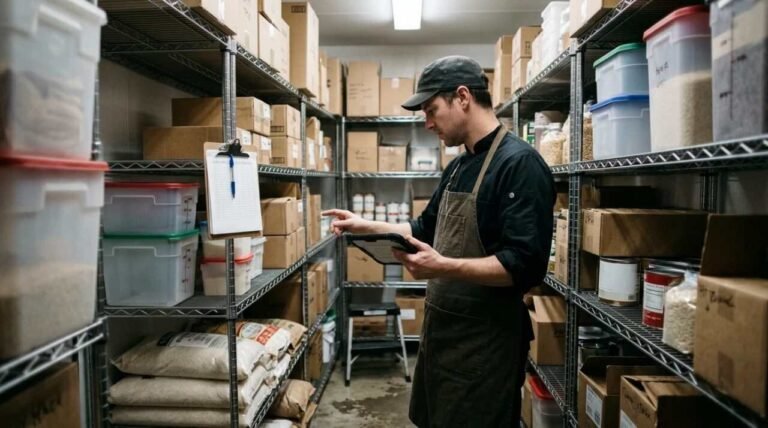

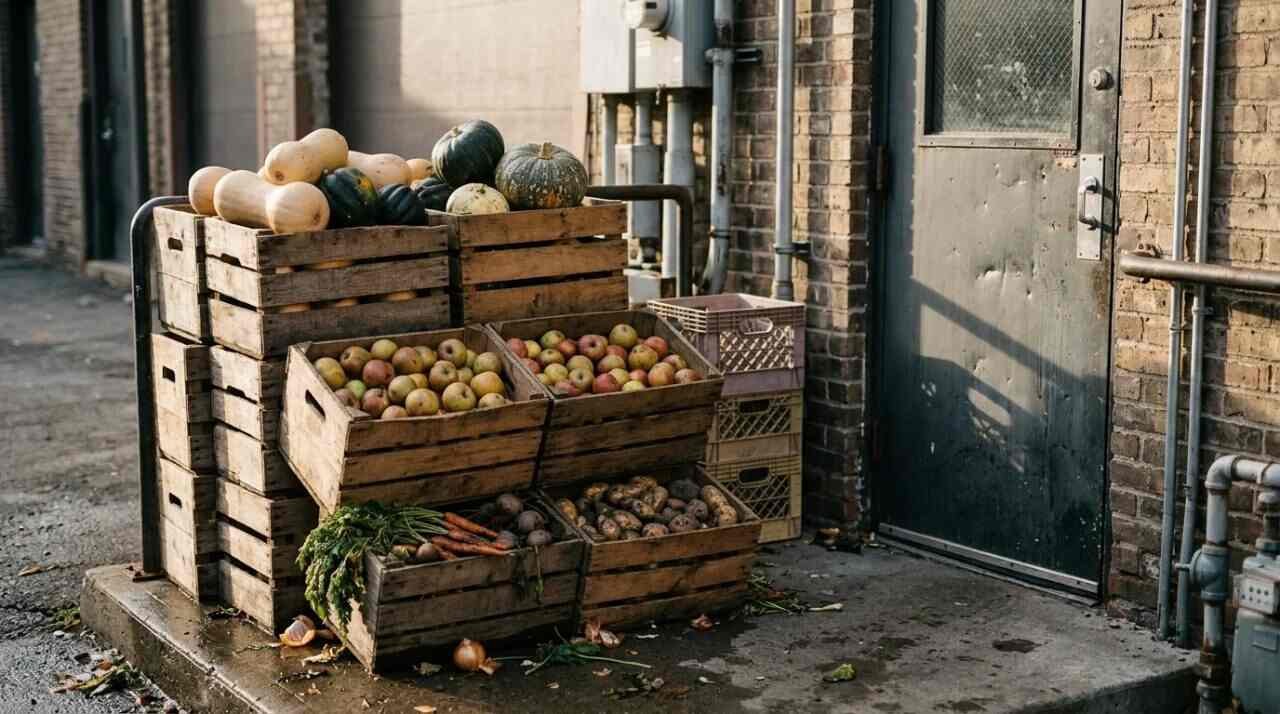
A menu is a price list that the supplier gets to edit. The dish stays on the page, the printed price stays where it is, and the cost of the tomato underneath it moves every week. Seasonal menu planning is the habit of deciding in advance which dishes the market will make cheap and which it will make expensive, rather than discovering it on the invoice. I have planned menus this way myself, and rather than describe my own numbers I have built this post from published sources, each linked where I use it.
The claim and its limits
In season usually means cheaper, but not every year
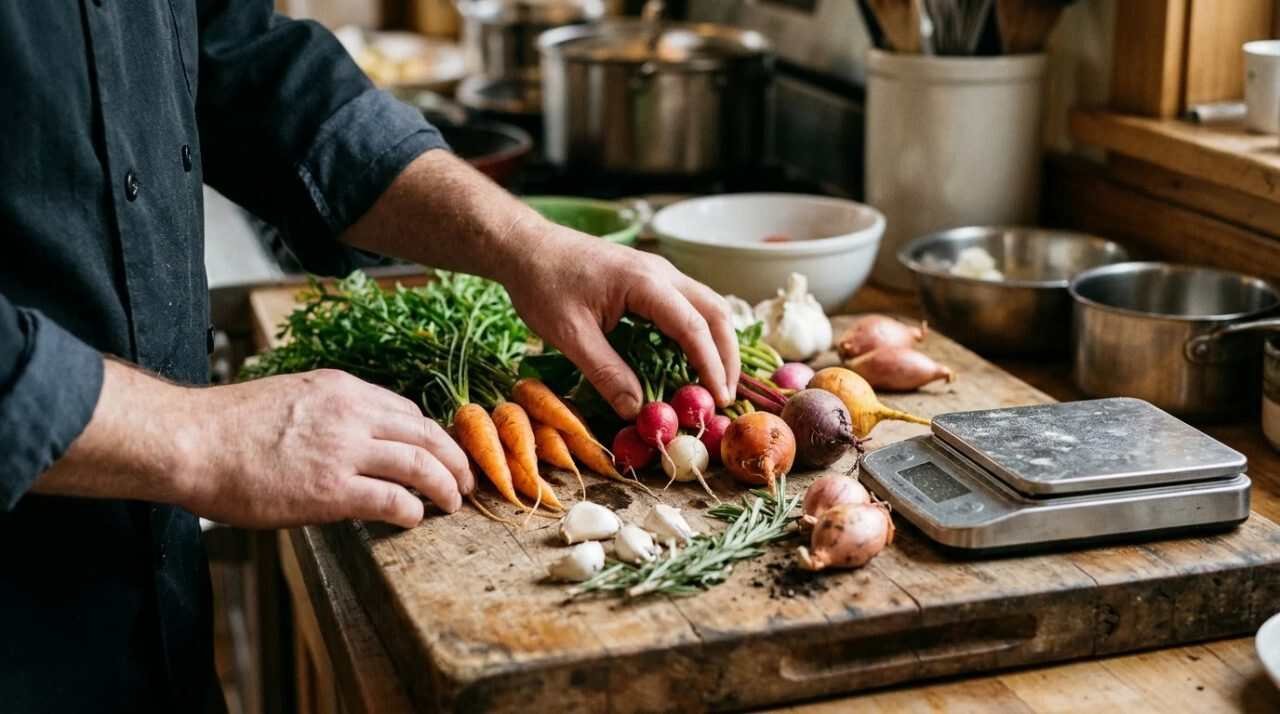
The standard claim is that seasonal menus cost less because in-season produce is cheaper. A Restaurant365 post originally published in QSR puts it in one line: “Foods that are in season cost less.” A GoFoodservice article on how often to change a menu agrees, saying that seasonal menus often lower costs because ingredients are at peak supply.
Both are describing a tendency, and neither claims a figure. Weather moves harvests. New York’s own harvest chart warns that harvest may start a week to ten days earlier in a warmer year, and that a cool spring delays maturity. A plan built on “squash is cheap in October” survives some years and gets embarrassed in others. The useful version of the claim is narrower: in-season ingredients are usually the first place to look for cost relief, and the plan has to check prices instead of assuming them.
Start with a cost for every dish
The plan is only as good as the costing sheet
Nothing about seasonal planning works without a cost on each plate. The Restaurant365 post calls costing the first step in menu engineering: “The first step in the menu engineering process is menu costing.” Each recipe is broken into ingredients and priced, including spices and oil, but leaving out labor. And the costing is meant to be kept current. The post says to update the ingredient cost portion every time supplier prices change.
I wrote about keeping recipes written down in kitchen recipes on paper, and what matters here is the habit. A seasonal change is a costing exercise with a calendar attached. Before a dish comes off, someone should know what it costs now. Before a dish goes on, someone should know what it will cost at the prices expected during the weeks it runs.
The same post also raises a detail that catches people. To cost a recipe accurately, an operator needs to “know how much yield they got from each sweet potato,” which is to say the usable weight after peeling and trimming. A cheap ingredient with poor yield is not cheap. Whether a given ingredient holds up is a thing to measure on the scale, not to assume.
Where to look up what is in season

The state publishes the calendar
A seasonal plan needs a calendar, and New York State publishes one. Its produce guide, titled “From A(pples) to Z(ucchini), your guide to New York’s produce” (PDF), is a two-sided sheet with fruits on one side and vegetables on the other. Items run down the left, months across the top, and a legend separates the “Harvest Period” from the “Availability Period.” Its own note says the periods are approximate and that readers should call farms for exact dates.
I could read the item names and month headings from that file, but not the shaded cells, so I am not going to claim which month any particular crop falls in. The chart is worth printing and putting on the wall; its dates are not something to quote from a blog.
A regional chart is a starting point. Local conditions change the real dates, and a farm stand or distributor knows them better than any PDF.
Watching the actual prices
The outlook gives direction; the invoice gives the price
A calendar says what is available. It does not say what it costs this week. Two federal sources do the second job from different directions.
The USDA’s Economic Research Service publishes a Food Price Outlook that tracks and forecasts annual percentage changes in food prices. It separates food at home from food away from home, and it carries forecasts for individual categories, including fresh vegetables and fresh fruits. ERS says it uses time-series models, gives each forecast a 95 percent interval, and updates monthly with projections up to 18 months out. That is a planning input, not a quote. It describes the year’s direction for a category and says nothing about Thursday’s price on a case of carrots.
For the week-to-week picture, USDA’s Specialty Crops Market News publishes terminal market and shipping point price reports. The page says reporters gather price, volume, quality and condition information from wholesale markets, growing regions and ports of entry, and that reports are published within hours of collection at no charge. Whether a particular restaurant’s supplier tracks those numbers is another matter, but an owner who reads the report knows when a supplier’s price is out of line with the market.
None of this replaces the supplier’s invoice, which is the price that counts. These sources tell you whether the invoice is reasonable and whether it is likely to move.
Deciding what stays on the menu
Labor counts as an ingredient
Once the dishes are costed and the season is mapped, the swap decisions follow. The GoFoodservice article recommends menu engineering, which compares each item’s popularity with its contribution margin, to decide what to keep, rework, promote or remove. It also suggests removing one item for every item added, so menu size and kitchen complexity stay under control.
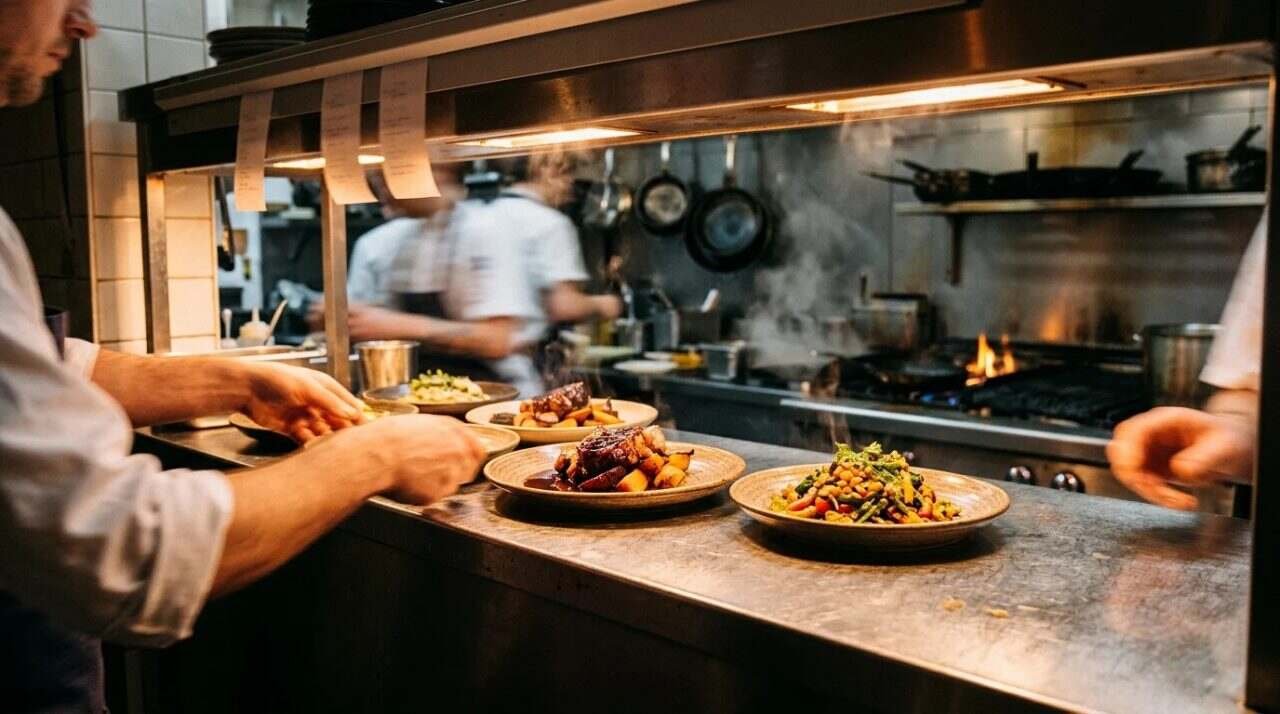
Two practical rules come out of the Restaurant365 post. One is that temporary specials are easy to pull if a seasonal ingredient runs out, which makes a special a safer vehicle than a printed item for something whose supply is uncertain. The other is that batch-cooked comfort dishes such as soups, stews and chili can reduce labor. That second point means a seasonal plan is not only about the ingredient line on the costing sheet. A dish that is cheap in October and takes three hours of hands-on time can cost more than it saves.
The specials board is the natural testing ground here. GoFoodservice says to test new items as specials for two to four weeks before reprinting menus permanently. A seasonal item that sells on the board has passed a cheaper audition than one printed on card stock.
GoFoodservice also says to monitor food costs weekly, so an ingredient price spike can be answered before it hurts profits. Weekly is a hard schedule for a small kitchen, but the work is not large if the costing is already on paper: reprice the five or six ingredients the menu leans on hardest, compare them with the last sheet, and see which dishes moved. A dish whose cost has crept up gets a smaller portion, a different garnish, a higher price or a spot on the specials board instead of the card. Each of those is a decision the owner makes in advance, rather than a margin the owner discovers at the end of the month.
The cost of changing the menu itself
Printing, training and the places a menu lives
Every change has a price of its own. GoFoodservice says each changeover carries costs for printing and training, and suggests that seasonal ingredient savings often exceed them. It adds that servers need to describe and recommend new dishes, and cooks need to plate them consistently during a rush, and that a dish that misses either requirement “will underperform regardless of how good the recipe is.”
How often to change varies, according to the same article: fine dining typically four times a year, casual dining two to three times, and quick-service restaurants rotating limited-time offers monthly. It also says no restaurant should go more than a year without evaluating its menu. Those are the article’s generalizations, not rules, but they give a sense of the usual rhythm.
For a restaurant that keeps its menu in several places, the change has to reach all of them. The Heritage Diner, the family restaurant where I work, once had a Google Business Profile showing stale menu prices because the menus were updated by hand and one place got forgotten, and people called to order from old menus. Today one menu is synced to Google, the diner’s website and other places. A seasonal swap is exactly the kind of change that exposes that weakness, and printing a menu that matches the online one is the part most easily forgotten.
A plan a small kitchen can run
Six steps, and the first one cannot be skipped
Put in order, the sources describe one workable cycle:
- Cost every current dish, with yield, and keep the costs current.
- Mark what the state produce chart says will be coming into season, treating its dates as approximate.
- Check the price outlook and market reports for the categories the menu leans on.
- Choose swaps with menu engineering, weighing labor as well as ingredients.
- Run new dishes as specials for a few weeks before printing anything.
- Update every place the menu lives on the same day.
That is more paperwork than most small kitchens want. The part that cannot be skipped is the first one. Without a cost for every dish, a seasonal menu is a guess about the market that nobody can check.
For informational purposes only. Prices, forecasts and harvest dates vary by year and by supplier, and food-cost figures in your own kitchen come from your own invoices.
Sources
- Restaurant365, “How to Adjust Your Restaurant Menu to Maximize Winter Profits”: https://www.restaurant365.com/blog/how-to-adjust-your-restaurant-menu-for-winter-profits/
- GoFoodservice, “When to Change Your Restaurant Menu”: https://www.gofoodservice.com/blog/how-often-should-i-change-my-restaurants-menu
- New York State produce guide (harvest chart): https://www.ny.gov/sites/default/files/atoms/files/HarvestChart.pdf
- USDA ERS Food Price Outlook: https://www.ers.usda.gov/data-products/food-price-outlook/summary-findings
- USDA ERS Food Price Outlook documentation: https://www.ers.usda.gov/data-products/food-price-outlook/documentation
- USDA AMS Specialty Crops Market News: https://www.ams.usda.gov/market-news/fruits-vegetables
- Kitchen recipes on paper (Till Post): https://tillpost.com/kitchen-recipes-on-paper/
- Printing a menu that matches the online one (Till Post): https://tillpost.com/printing-menu-matches-online/
- Restaurant Menu Planning: Menu Costing, Development, Trends and Seasonality (video): https://www.youtube.com/watch?v=rbmAP1sc_dA