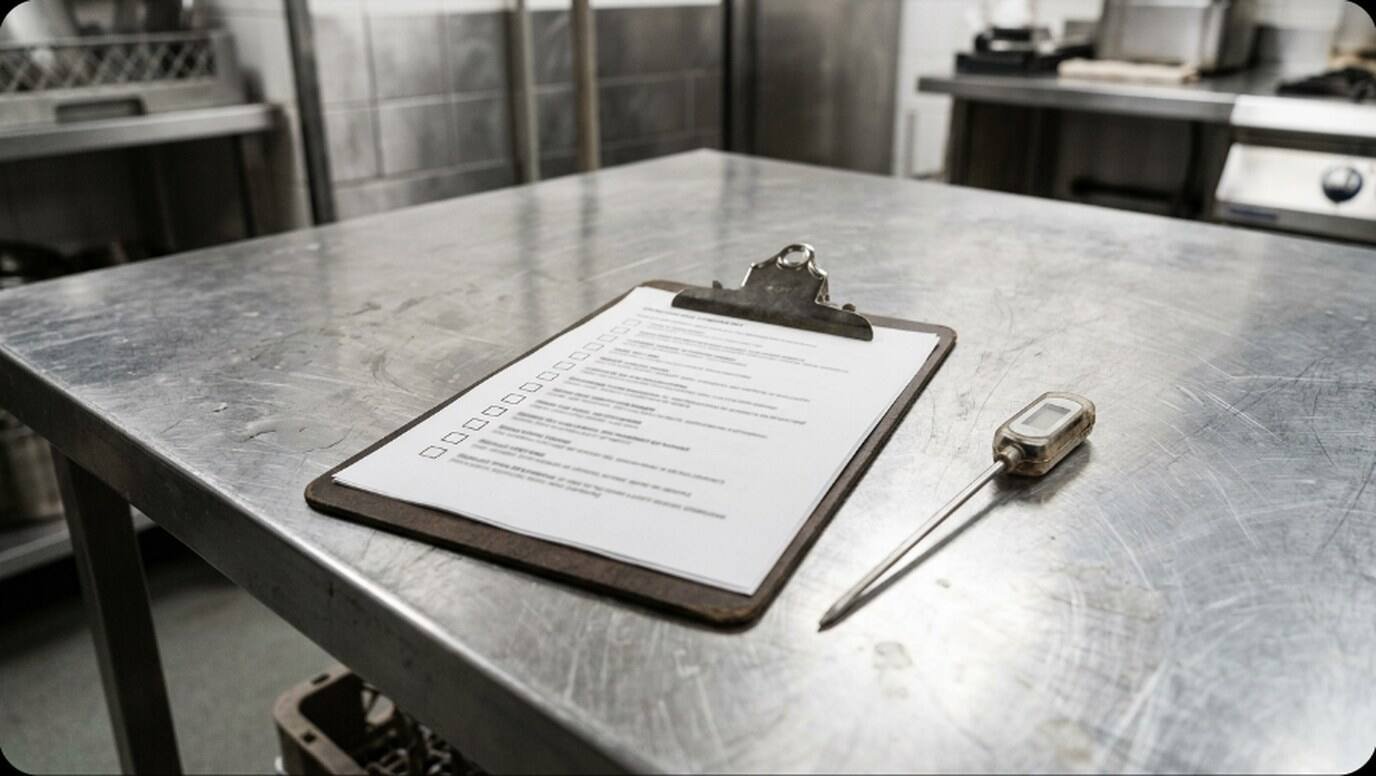
A receiving checklist turns the few minutes at the back door into a record. A free receiving checklist template in Excel and a printable PDF are available from Till Post. Fourteen checks cover the delivery, a table captures temperature readings, and a signature line closes the page.
Why delivery is a checkpoint
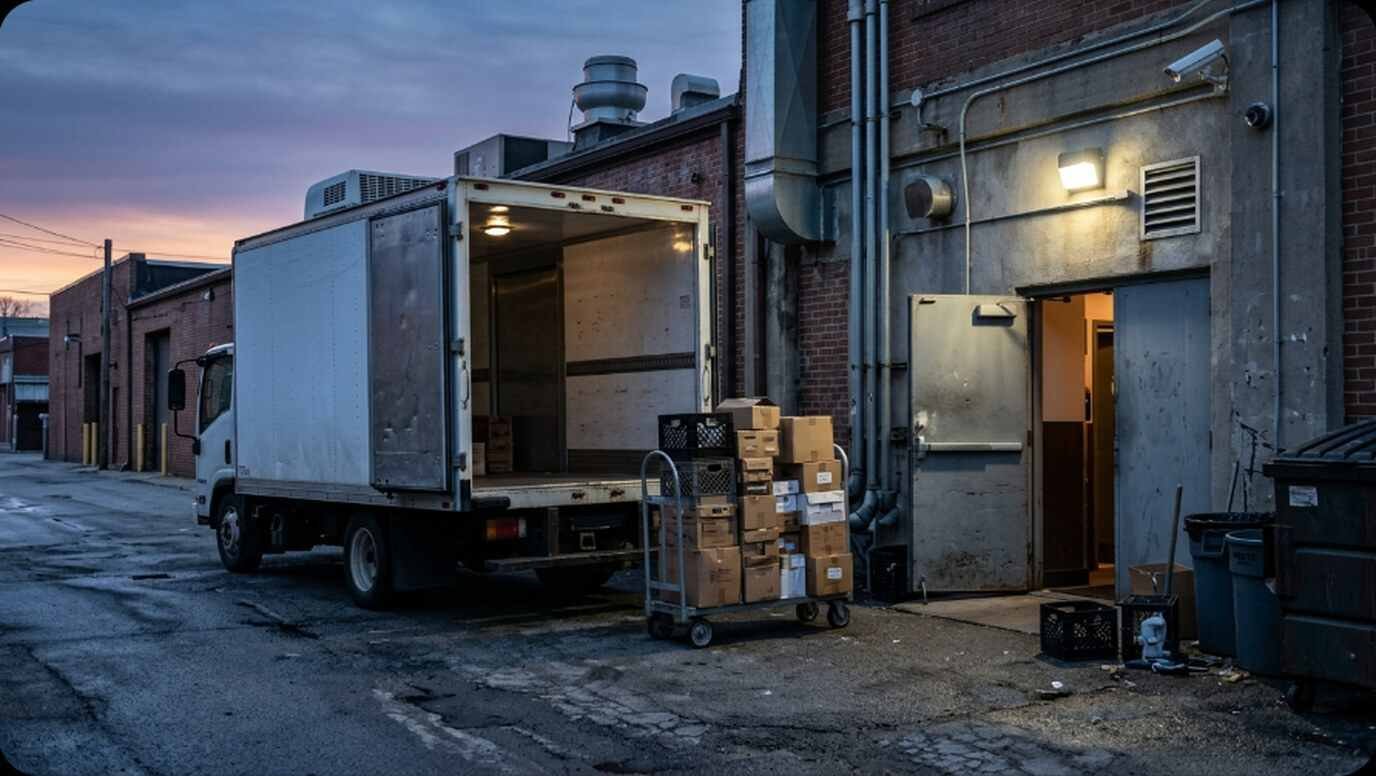
Once product is signed for and shelved, a problem belongs to the kitchen. A short count, a warm case of chicken or a crushed carton of eggs becomes harder to dispute with a vendor after the driver has left. The checklist moves the inspection to the one moment when the driver is still standing there.
The general walkthrough is in the post on what to check before signing for a delivery. The template turns that advice into boxes to tick.
What the 14 checks cover
The checklist runs in the order a delivery unfolds:
- Arrival: correct vendor and driver, delivery during operating hours, truck clean, refrigerated truck holding cold
- Preparation: cold space cleared in the walk-in and freezer before unloading
- Count and match: case count matches the invoice, and items match the order guide in product, size and brand
- Condition: intact packages, undented cans, legible labels and acceptable dates, frozen items frozen solid, no mold, pest damage or off odor
- Money: invoice prices match the quote or price list
- Paperwork: shorts, substitutions and rejects written on the invoice before signing
- Put-away: cold first, frozen next, dry last
Each line has an OK box, a Problem box and a notes column for the action taken.
Temperature readings
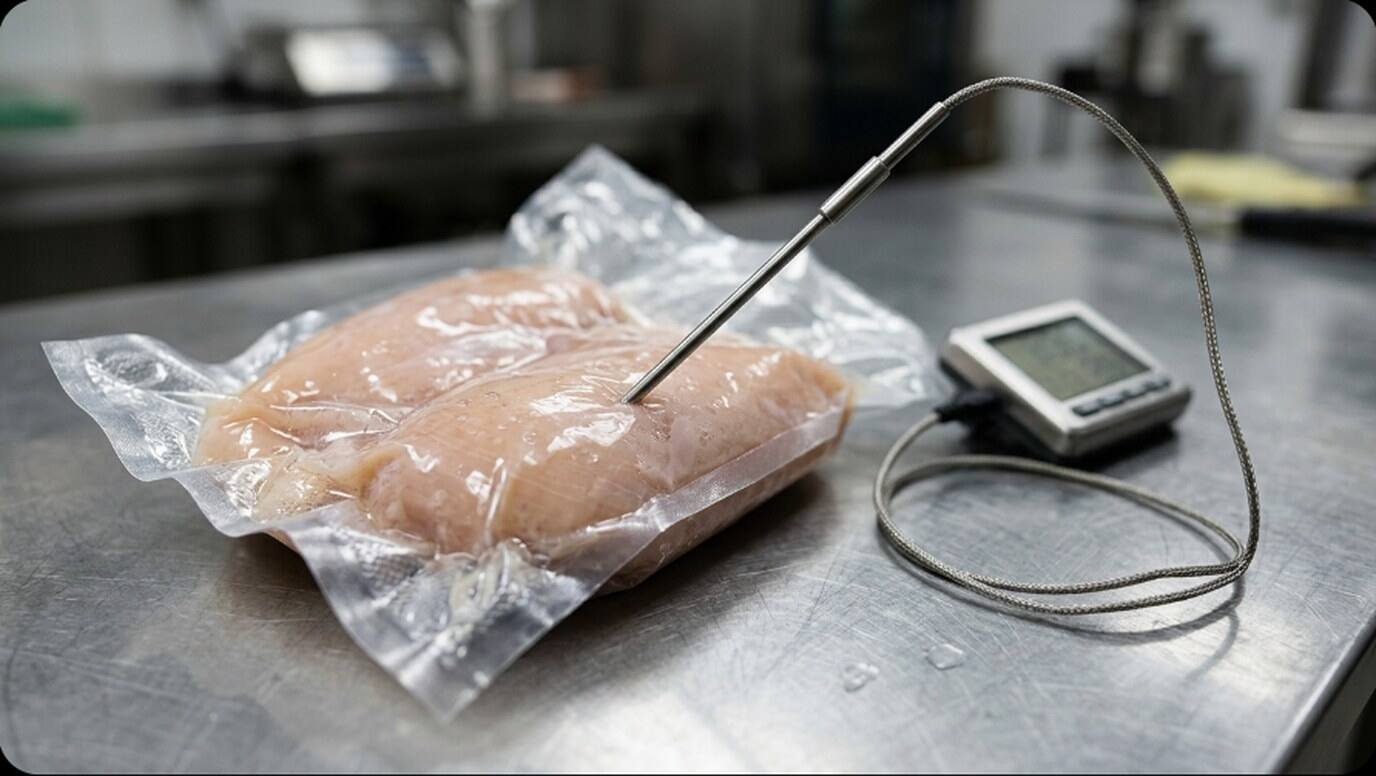
Cold items get a probe thermometer reading, recorded in a table with the product, the reading, an accept or reject decision and the limit used. The last column is blank on purpose.
Limits vary by product and by the rules that apply to the permit. Food safety training material based on the FDA Food Code, such as a fact sheet from the Institute of Child Nutrition, lists 41°F or below for fresh meat, poultry and packaged cold products, and 45°F or below for milk and eggs, with frozen foods arriving frozen solid. New York publishes its own food service rules, and the temperature language in the state’s Sanitary Code sets 45°F or below, or 140°F or above, for potentially hazardous food. The county health department confirms which limit governs a given permit, and the checklist leaves room to write it in.
A thermometer also has to be accurate to be useful. The state code requires storage thermometers accurate to plus or minus two degrees Fahrenheit, and a probe used at the dock benefits from the same standard.
Who signs and when
One person receives each delivery, fills the sheet while the driver waits and signs at the bottom. The header holds the date, vendor, invoice number and the name of the person who received it. Signing means something only if the person has checked, so rejected items are written on the vendor’s invoice before the signature goes down.
Keeping the sheets
Filled sheets are filed by week. When a vendor disputes a credit, the sheet shows the reading, the time and the signer. When an inspector asks how deliveries are checked, the stack answers. The post on what a health inspector looks at first explains why records of this kind carry weight.
Pairing it with other templates
The checklist works best next to the order guide template, which says what should have arrived, and the temperature log template, which tracks what happens to it afterward. All of the free sheets are collected on the restaurant templates page. A profile such as Restaurant Depot shows how a cash-and-carry pickup differs from a delivery, since pickup puts the receiving check in the owner’s hands.
Downloads
Sources
- Receiving Deliveries fact sheet, Institute of Child Nutrition
- New York State Sanitary Code, food temperature provision
- New York State Sanitary Code, storage facility thermometers
This is general information, not legal advice. The county health department has the final word on limits for a given permit.