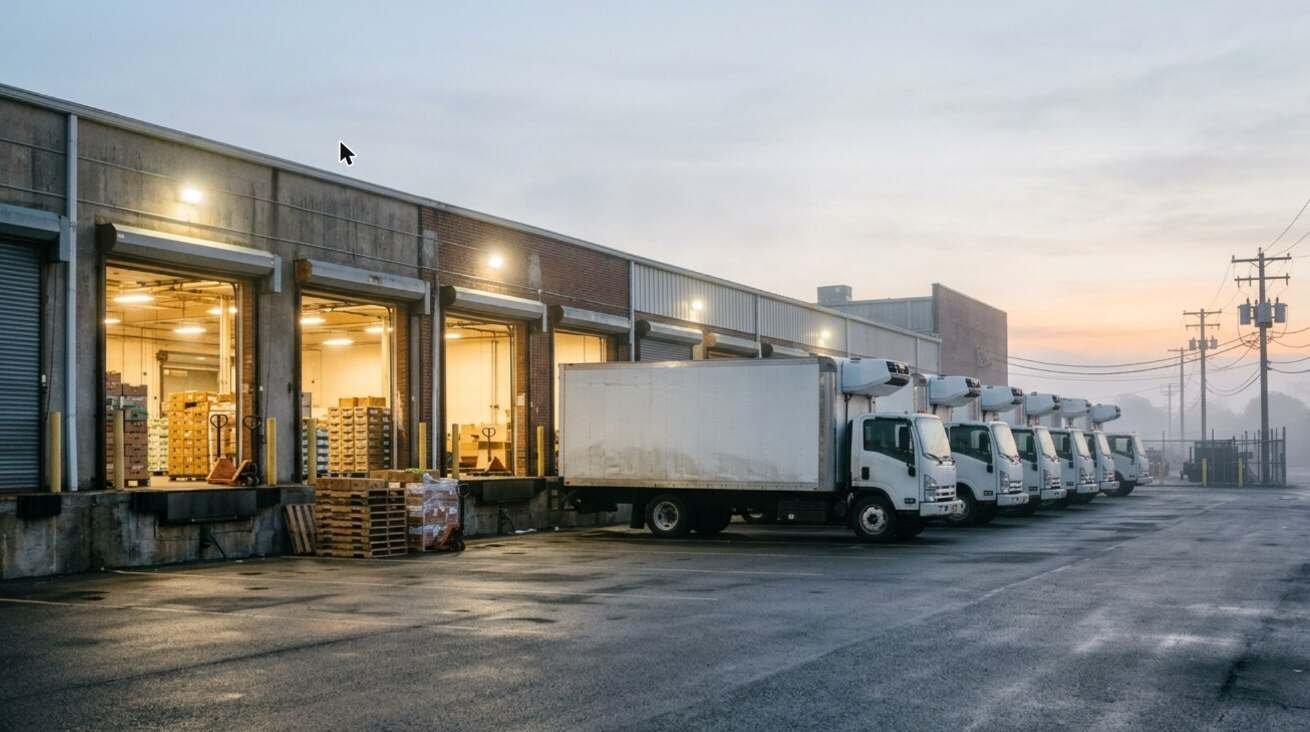
More than 25,000 pounds of fresh seafood go through one building in Wayne, New Jersey, every week, cut to order before it leaves, according to Driscoll Foods’ specialties page. I cut maybe forty pounds of fish a week at the diner, most of it flounder, most of it on Thursday, with a knife I have sharpened so many times it has gone narrow as a letter opener. Somewhere in Wayne a crew does my whole year before lunch on a Tuesday.
A warehouse on the old Bayer campus
Driscoll used to be a Clifton company. In 2014 it was in a 217,139-square-foot building at 174 Delawanna Avenue and had outgrown it, GlobeSt reported, so it planned a distribution complex and headquarters of about 400,000 square feet at 6 West Belt Parkway in Wayne, the former Bayer Healthcare campus. The state’s Grow New Jersey program offered up to $18.5 million in tax credits, tied to 139 new jobs and 215 that might otherwise have left the state.
The building that went up came in bigger than the plan. The company’s history page puts the Wayne facility at 507,000 square feet, with 340,000 of them cooler and freezer space. That is a walk-in the size of six football fields, give or take, and I still know somebody would leave the door propped open with a milk crate.
The roof got its own trade story. In July 2020, Refrigerated & Frozen Foods reported 9,306 solar panels across more than 500,000 square feet of roof, a 3.5-megawatt system expected to produce over 4.5 million kilowatt hours a year. That is enough, the magazine said, to power about 550 homes for a year. Solar Landscape, a New Jersey company, owns and runs it. Tim Driscoll framed it as conscience: “As an environmentally responsible corporation, our conscience guides us to make every effort to protect our environment.” His chief financial officer, George Williams, gave the plainer reason, the one anybody who has ever signed a utility check would recognize: “The install of a solar energy system benefits our bottom line.”
Cold storage eats electricity. Anyone who has opened a summer electric bill with the walk-in and two reach-ins running knows exactly what that CFO meant.
Ed, Tim and 8,000 square feet in Carlstadt
The history page credits Ed Driscoll with starting the business as a family company in 1971. The earliest site it lists is a warehouse of about 8,000 square feet in Carlstadt, New Jersey, opened in 1984. In 1996 his son, Tim Driscoll, bought the company from him, and Tim still leads it. Today the page counts more than 18,000 stocked products, over 200 multi-temperature trucks and more than 1,000 employees, and calls Driscoll one of the largest independent foodservice distributors in the Northeast.
A son buying the business from his father is a detail that stops me every time. Most family companies get handed down. This one got sold across the table, with a price on it, which tells a person something about both men.
The map grew outward from there. A distribution center in Amsterdam, New York, opened in 2015 and pushed service into upstate New York and western Massachusetts, and in 2021 the company bought Pocono ProFoods in Stroudsburg, Pennsylvania, the history page says, adding that expansion into Rhode Island and southern New Jersey is underway. In February 2017, Refrigerated & Frozen Foods reported a merger agreement with D. Brickman, a wholesale foodservice company in Menands, New York. Steven Donnelly, who ran Driscoll’s Amsterdam division and was named to lead the combined business, put the pitch in one line: “This presents a clear alternative to the broad liners in the marketplace.”
The contact page today lists three sites: 6 Westbelt in Wayne, 1 Van Bergen Lane in West Coxsackie, New York, and 2504 Chipperfield Drive in East Stroudsburg, Pennsylvania.

The Cut Shop and the fish room
This is where Driscoll picks its fight with the national houses. The specialties page describes an in-house Cut Shop doing custom butchering to a customer’s specifications, from frenched pork chops and porterhouse to filet mignon, and says the beef is dry-aged at least 28 days in a humidity-controlled room. The seafood comes from fisheries between Prince Edward Island and the Virginia coast, plus a Boat-to-Table program that brings fish straight off Jersey Shore boats. Orders placed by 3:15 p.m. are cut, packed and delivered the next day. The page lists SQF and HACCP certification and daily shellfish logging.
Those last two lines read like paperwork, the kind nobody frames and every inspector asks to see, and they are also the difference between a fish room and a room with fish in it.
For years I portioned my own strip steaks on Sunday nights after close. Whole loin on the board, scale at my elbow, the dishwasher running behind me. Twelve-ounce steaks, and the loin never cooperated: the tail end gave me a ten and a half that I couldn’t sell as twelve, the fat cap came off heavier than I wanted, and by eleven my forearms felt like I had been pulling a stuck drain. The trim went into the burger grind and the stew, which was the part I told myself made it worth it. Every one of those Sunday nights was labor I never wrote down anywhere.
That is the trade a cut shop offers. A portioned steak costs more per pound than a whole loin, and the kitchen gives up the trim, but the weight on the invoice is the weight on the plate. The math for comparing the two is the same yield arithmetic in how to calculate food cost percentage, run once with the trim counted and once with the Sunday night counted.
Kitchen 71, the meal line and the private label
The other programs sit further from the truck. The Driscoll homepage says Kitchen 71 is where its culinary staff work with operators on menu strategy and cost, and the specialties page describes sessions built around menu ideas, custom recipes and cost-saving techniques. Meal Solutions manufactures pre-plated and family-style meals for the Tri-State area under the tagline “Prepped, Packaged, Personalized.” There is also a private-label line of specialty products.
Every distributor of any size now sells advice along with the product. Sysco calls its version the Chef’s Table, which I described in the Sysco profile. The advice is real and it is also a window into what the kitchen buys, and both of those things stay true whether the company has a family name on the truck or a ticker symbol.
Sixteen thousand items in sixty days
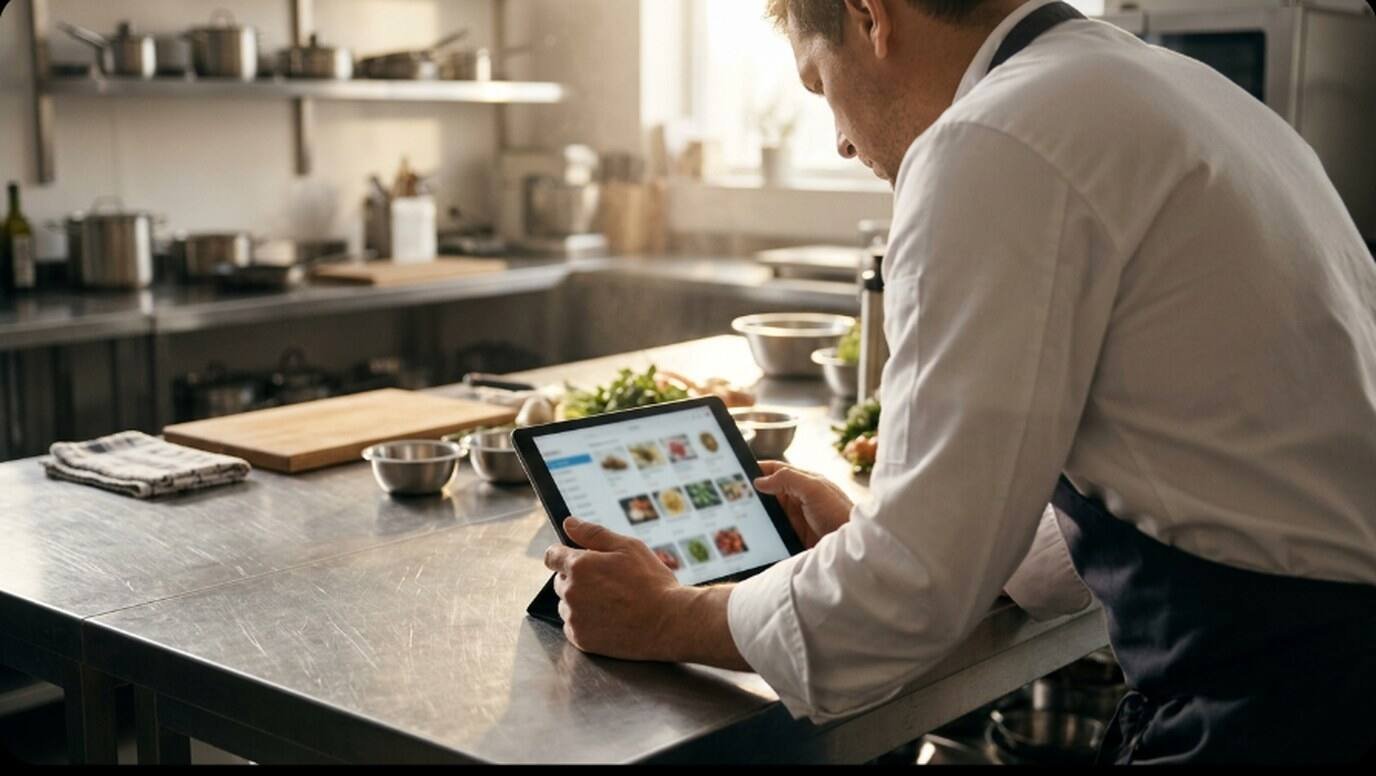
Ordering runs through an app built by Cut+Dry. A January 2024 Business Wire release says Driscoll was up and running on it within 60 days, with all 16,000 SKUs loaded with product images, specs and nutrition information. Christian Driscoll, vice president of procurement and marketing, said of the software company, “We found Cut+Dry to be in a different league, and we wish we had discovered them earlier.”
Sixteen thousand items with pictures in two months. It took me most of a winter to get forty menu items photographed for the website, and half of those pictures were of the same plate turned around.
New accounts go through sales@driscollfoods.com or the contact form with the reason set to New Customer, and the Customers menu links to a credit application. The Wayne number listed is (973) 672-9400. The questions for that first call are the same ones any house should answer before the first truck comes:
- Which of the three sites would serve the restaurant’s address, and on which days?
- Does the 3:15 p.m. next-day cutoff apply there?
- What are the weight tolerances on portioned meat and cut fish, and how is a short weight credited?
- What is the order minimum?
Whatever the answers, the cut product still gets weighed at the door. The restaurant receiving checklist template has a column for it.

An independent that buys independents
Here is the case for a house like Driscoll, and I believe it. A family company with a fish room and a cut shop is the “clear alternative” Donnelly talked about, the bid that keeps the national reps honest, and the place a kitchen goes for the things a broadline catalog treats as a line item. In the US Foods profile I wrote about watching the regional names disappear one at a time into the big companies. Driscoll is one of the names still standing.
Then read its own history again. D. Brickman in 2017. Pocono ProFoods in 2021. An independent stays independent partly by being the one doing the buying, and every smaller house it folds in was somebody’s third column on a price sheet. The pattern doesn’t change with the size of the company. It just happens closer to the ground, where nobody files a 128-page opinion about it.
None of that makes the fish worse. My knife is still in the drawer by the flat-top, narrow from forty pounds a week. Kitchens that stopped cutting their own fish and started buying it portioned: what did you lose that never showed up on the invoice?
For informational purposes only — consult a licensed attorney or financial advisor.
Sources
- Driscoll Foods, Our Specialties
- Driscoll Foods, Our Company
- Driscoll Foods, homepage
- Driscoll Foods, Contact
- GlobeSt, “Driscoll Foods to Relocate Distribution Operations to Wayne” (October 1, 2014)
- Refrigerated & Frozen Foods, “Driscoll Foods Adds 3.5 Megawatt Rooftop Solar Panels to its New Jersey Headquarters” (July 25, 2020)
- Refrigerated & Frozen Foods, Driscoll Foods and D. Brickman merge (February 20, 2017)
- Business Wire, “Driscoll Foods Launches New Online Ordering App with Cut+Dry to Revolutionize E-Commerce Operations” (January 22, 2024)