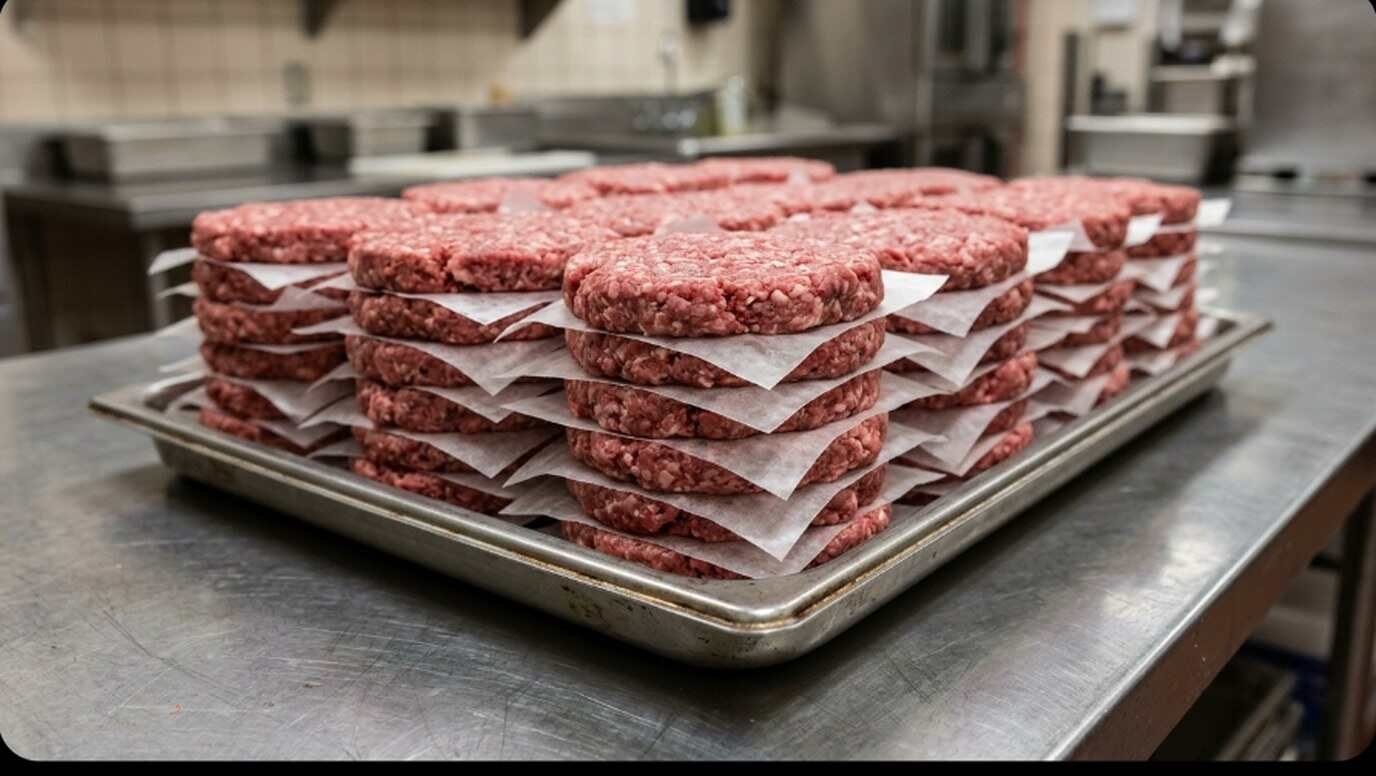

Grill Cheesy never had a front door. It had a name, a Google listing, a Facebook page and a menu of sandwiches that came off the same flat-top that cooks the eggs at The Heritage Diner in Mount Sinai, and for its whole run it reached customers one way, through DoorDash. A restaurant without a door learns fast what a delivery app is worth, because the app is the door.
Fifteen, twenty-five, thirty
The price list fits on an index card. DoorDash’s merchant pricing page sets out three plans: Basic at 15 percent on delivery orders, Plus at 25 percent and Premier at 30 percent, with pickup at 6 percent on all three. Basic opens with seven days at zero, and the other two open with thirty.
Those numbers are older than they look. When DoorDash rolled out the three tiers in April 2021, FreightWaves reported the same 15, 25 and 30 percent split and the same 6 percent pickup rate, and the company’s chief operating officer, Christopher Payne, said DoorDash was “changing how we do business to provide more choices, and better choices, for restaurants.” Five years on, the card reads the same. On a kitchen invoice, nothing holds still for five years.
What the higher rate buys is distance and placement. Plus adds a wider delivery radius, lower delivery fees for the customer and access to DashPass members; Premier adds the widest range, a sponsored listing and a $200 credit toward food photos and styling, according to the pricing page. There is no activation fee, no monthly fee and no contract, and a plan change in the Merchant Portal takes up to five business days.
A worked example, not a real restaurant: 300 delivery orders of $40 in a month is $12,000 in sales, and the three commissions come to $1,800, $3,000 and $3,600. The video below runs the same arithmetic, including how many more orders Plus and Premier need to leave what Basic leaves.
Advertising sits on top of the plan, and it is optional. The explainer says Sponsored Listings for Basic and Plus partners are charged only on orders placed through the ads, “not for clicks or impressions,” which is a fairer deal than most of the marketing pitches that come through the diner’s mail slot. It still means a restaurant on Basic can pay its 15 percent and then pay again to be seen, so the real rate on an advertised order is the plan plus the ad, and the statement is the only place that sum appears in one line.
The plans are open to US restaurants with 75 or fewer locations. The diner has one. I qualify by a margin of seventy-four.
What the commission pays for
A commission reads like rent for a spot on somebody else’s shelf, and partly it is. DoorDash’s commission explainer says the charge covers marketing, delivery and support, then lists the pieces: advertising, Dasher pay and insurance, customer service, the technology platform and credit card processing. On that last item the page is blunt: “There are no payment processing fees for restaurants on DoorDash app or website orders.”
That sentence matters the minute the number gets held up against another app’s. A platform with a lower headline rate and a separate processing charge can cost more per bag, and the only way to see it is to put every fee on one sheet of paper, the same exercise the post on card processing fee structures runs for flat rate against interchange-plus.
Online Ordering is the other product, the one that takes orders through a restaurant’s own website. It carries no commission, but the explainer puts processing at 2.9 percent plus 30 cents an order on the Boost and Pro packages, and 3.3 percent plus 30 cents on Starter. On a $40 order that comes to $1.46 or $1.62. The catch is that the customer has to know the restaurant’s name before they go looking for its website, and a ghost kitchen has that problem by definition.
Forty dollars through three plans
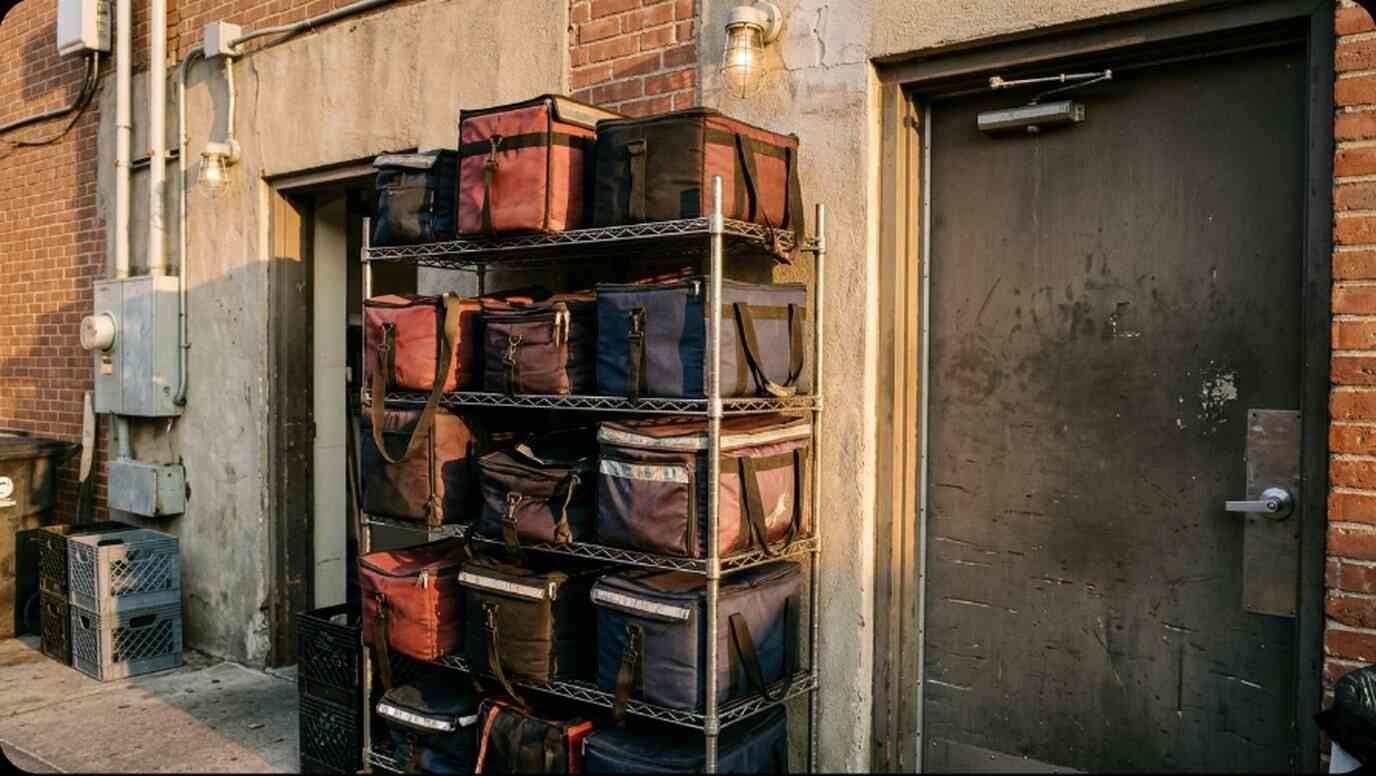
Run a $40 subtotal through each plan. Basic keeps $6.00 and sends back $34.00. Plus keeps $10.00 and sends back $30.00, and Premier keeps $12.00 and leaves $28.00. A pickup order the same size costs $2.40 at 6 percent, provided the pickup menu prices match the in-store ones, which the pricing page makes a condition of that rate.
Those are the easy numbers. The hard one sits underneath. Say food and packaging on that order run 35 percent of the menu price, or $14, a round figure for the example and not a real ticket. Basic leaves $20 once the food and the commission are paid. Premier leaves $14. To clear the same money on Premier, a kitchen needs roughly 43 percent more orders than it would on Basic, and every one of those extra orders has to be cooked, bagged and handed across the counter by somebody on the clock.
The method in how to calculate food cost percentage gets the real figure for each plate in about the time it takes to drink a coffee, and menu pricing without guessing covers what to do when the figure comes back ugly. Delivery is where an ugly number hides best. The deposit still lands every week, and it still looks like money.
A ghost kitchen inside a diner
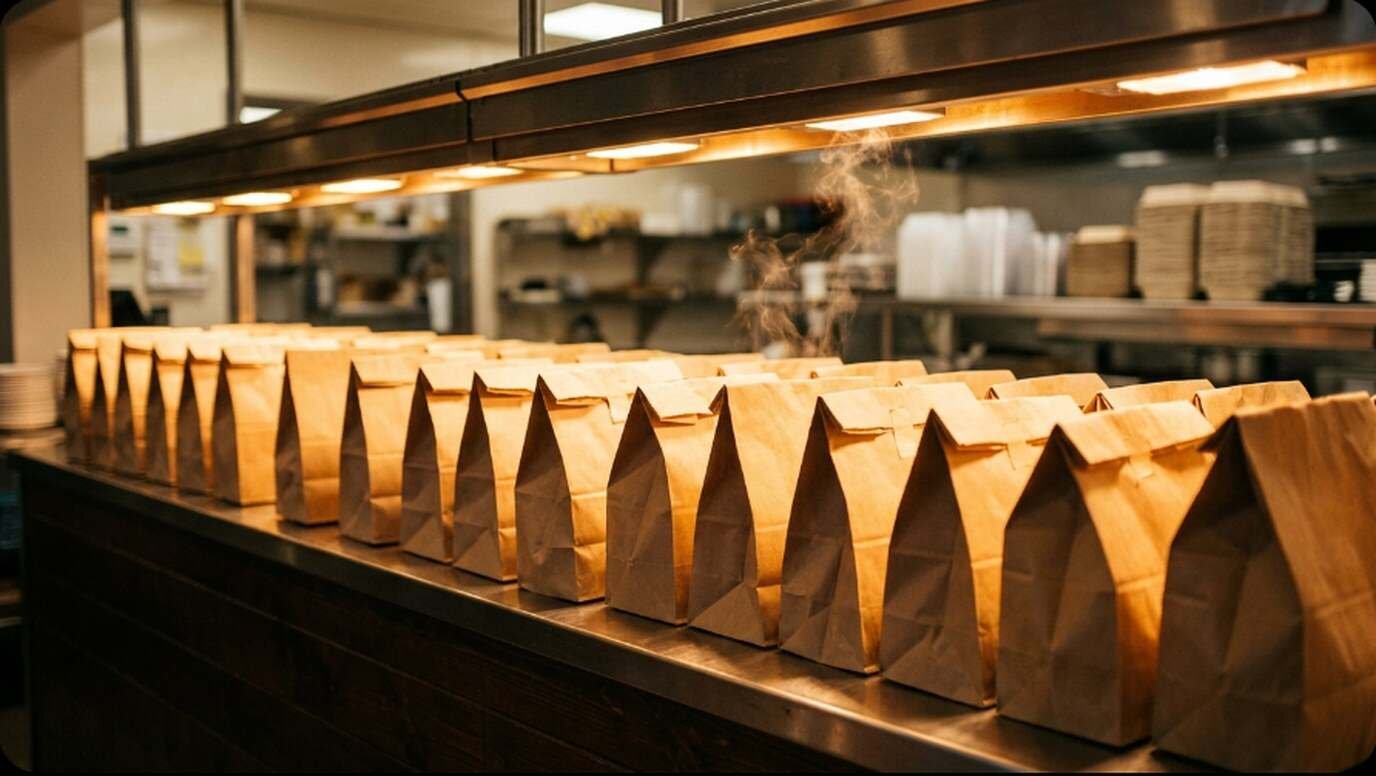
Grill Cheesy ran out of the diner’s kitchen, on the diner’s line, with the diner’s cooks. That is the appeal of a ghost kitchen and its catch in one sentence. The rent is already paid, the grill is already hot and the walk-in already holds the bread and the cheese, so a second brand costs little more than a menu, a name and an account on the app.
The catch shows up on a busy Sunday. The booths are full, the ticket rail is full, and the tablet chimes with a sandwich order from someone who has never heard of the diner and never will. The cook who makes it is the same cook running behind on three tables of eggs. Nobody on the line cares which brand a ticket belongs to; they care that it is one more ticket, and their shoulders say so before their mouths do.
A commission shows up on a statement. The minutes that tablet steals from the dining room never do, and a kitchen running both has to decide which customer waits. The rule I came to, the slow way, is that a ghost brand belongs to the dead hours, the long stretch between lunch and dinner when the flat-top is hot and the booths are empty.
Grill Cheesy still has its Google profile and its Facebook page. The DoorDash store is gone.

The case for Premier
The honest case for the expensive plan is a strong one, and it goes like this. For a ghost kitchen the app is not a sales channel. It is the whole storefront, the sign, the window and the foot traffic. A diner on Route 25A gets walk-ins because people drive past it every day, while a brand that lives only on a phone gets nothing unless the app puts it in front of someone, and Premier pays for the widest delivery range and a sponsored listing that put the name in front of more of those someones.
Premier also carries a guarantee that takes some of the fear out of a slow start. According to the pricing page, a Premier merchant that gets fewer than 20 orders in a month has that month’s commission refunded. During a location’s first six months on the plan, the refund also requires fewer than five cancelled orders and open hours on the app for 90 percent of the store’s set hours. A new brand with no reputation is exactly who that protects.
Where the argument stops working is the plate: the guarantee covers a month with no orders, and it does nothing for a month with plenty of orders at a margin that can’t carry 30 percent. A grilled cheese is cheap to make, which sounds like room to spare until the box, the bag, the pickle and the napkins get counted too. Reach is worth paying for, right up to the order where it isn’t, and the app will never tell a kitchen which order that was.
Before the tablet goes on the shelf
- Which plan fits the kitchen’s slow hours, and whether the wider radius on Plus or Premier reaches anyone who wouldn’t drive over anyway.
- Whether the pickup menu matches the in-store prices, since the 6 percent pickup rate depends on it.
- Whether the tablet is needed at all. DoorDash lists it at $6 a week after the trial, which is $312 a year for a device that does one job and does it loudly.
- Who absorbs a missing item at the customer’s door, and how that refund shows up on the statement.
- Where the restaurant sits. Inside New York City, the Department of Consumer and Worker Protection caps delivery fees at 15 percent of the order, basic service at 5 percent, enhanced service at 20 percent and transaction fees at 3 percent. Mount Sinai is in Suffolk County, so that law stops at the city line, a long way west of the diner.
The other half of the decision is whether the orders should run through the app at all, which is the question in online ordering on a restaurant’s own site or the delivery apps.
DoorDash makes leaving easy: no contract, no cancellation penalty, five business days to change plans. Leaving was never the hard part. The hard part is a quiet Tuesday at three, the flat-top ticking as it cools, and a cook looking over at a tablet that hasn’t made a sound since noon.
For informational purposes only — consult a licensed attorney or financial advisor.