
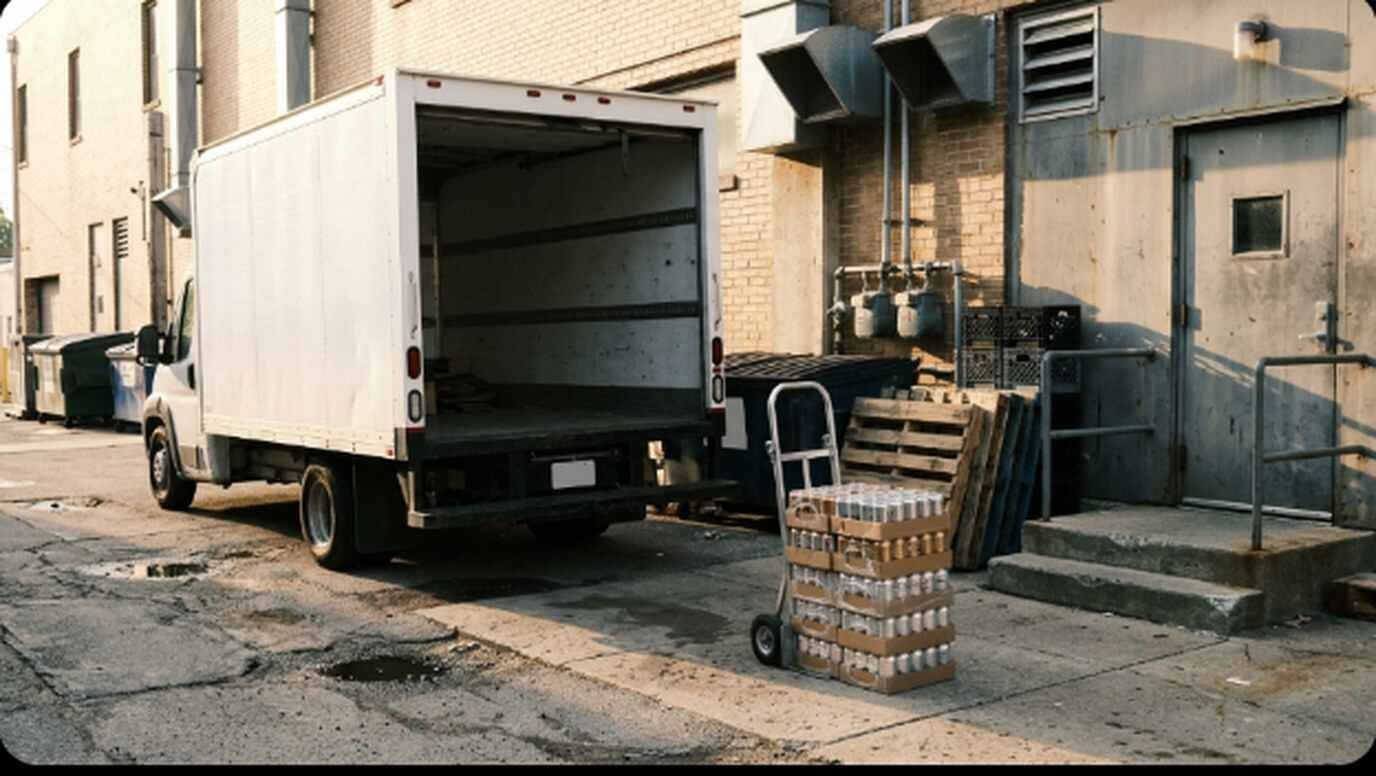
New York City protects a Pepsi-Cola sign on the Queens waterfront by law, and the bottling plant it was built to crown is gone. The red letters went up in August 1940 on a warehouse roof in Long Island City, and the city made the sign a landmark on April 12, 2016, according to Give Me Astoria’s history of the sign. The bottler that worked under those letters packed up for College Point more than twenty years ago. Every box of syrup in my stockroom comes from that company.
I have poured Pepsi at The Heritage Diner since we opened in 2000, and I already wrote about the five-gallon bag-in-box syrup itself: the cartons, the five-to-one ratio, the Saturday the fountain died. This piece is about the companies behind the glass. There are two of them on every drink I sell, and most owners I know could name only one.
A sign, a plant and a move to College Point
Pepsi’s operations came out of Manhattan to 47-51 33rd Street in Long Island City in November 1937, and the sign followed in 1940, per the same Give Me Astoria account. Artkraft Strauss restored the neon in the early 1990s. In early 2009 the whole thing was taken apart and reassembled in Gantry Plaza State Park, where Pepsi still maintains it.
The plant never got that kind of care. A 2006 Beverage Industry profile of Pepsi-Cola Bottling Co. of New York describes a newer plant in College Point, three years old at the time, sitting on 20 acres, housing the headquarters and turning out 23 million cases a year. The company had moved there from the historic Long Island City plant, which stopped production. A second plant in Brooklyn made another 22 million cases.
Twenty acres to make soda. My walk-in is about the size of a parking space, and I still lose a case of lemons in it once a month.
The brand owns the name and the bottler owns the truck
PepsiCo is the name on the can and the program around it. Its foodservice page offers food and drinks, consumer insights, equipment and service, and marketing support, and it pitches the Pepsi Spire fountain as able to create “up to a thousand drink combinations.” Business customers get a portal, PepsiCoPartners.com, where they can search products, schedule orders ahead, look back at recent orders, catch promotions and request equipment repair.
None of that carries a box down my basement stairs. The bottler does. The Honickman Companies’ page for Pepsi-Cola Bottling Company of New York describes a bottler and distributor of water, soft drinks, sports drinks, tea, juice and energy drinks, with facilities in New York City, Long Island and Westchester County. Its customer list runs from grocery and convenience stores through restaurants, stadiums, healthcare facilities and schools. The company calls itself “one of the only consumer packaged goods companies that produces products in New York City.”
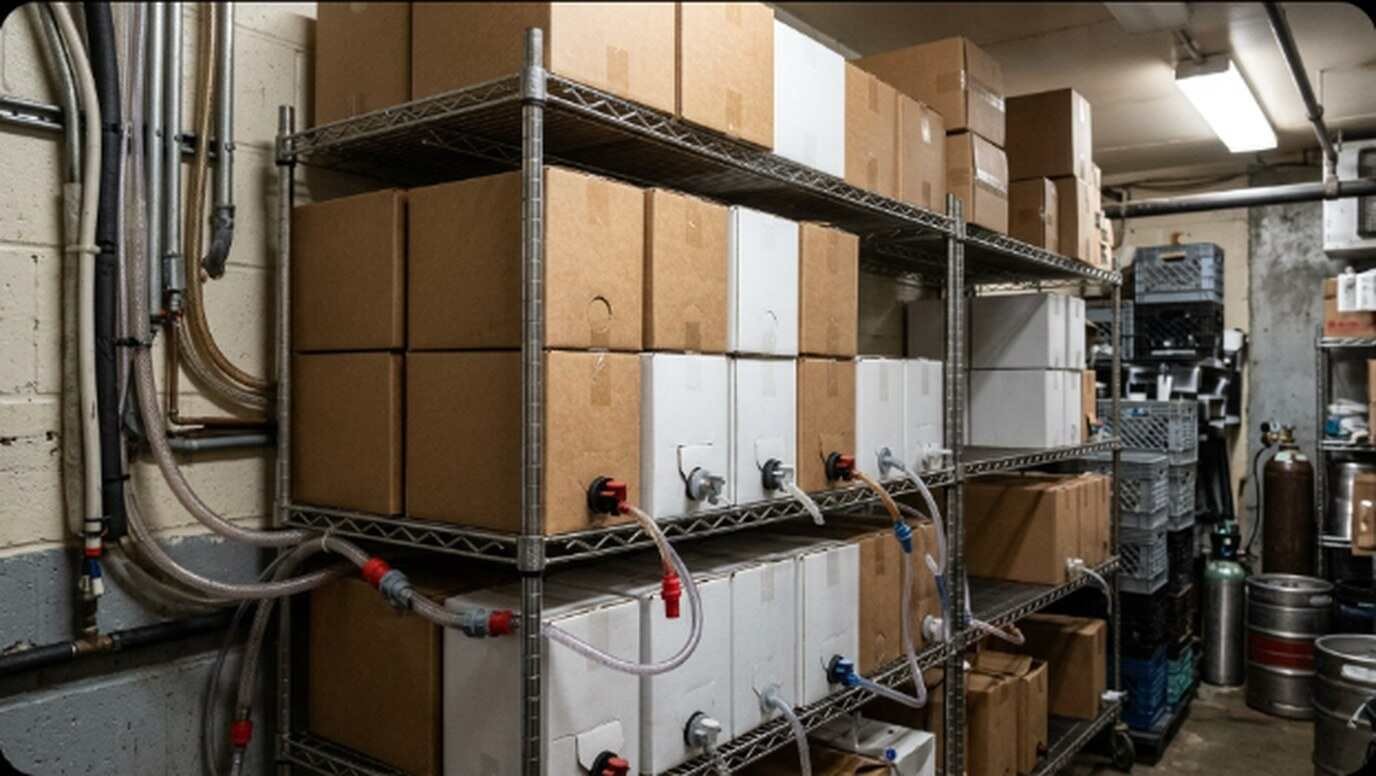
The family behind it started small. Harold Honickman launched the business in 1957, “initially serving five counties in southern New Jersey,” according to the group’s legacy page, which now describes five companies running from New York to Virginia, more than 60 brands and 23 production and warehouse facilities. Honickman bought the New York bottling business in 1984, the 2006 Beverage Industry profile says.
So the Pepsi on my counter is a family business that bought the right to sell a giant’s product inside a line on a map. I recognize the arrangement. I buy eggs from people I have never met and sell them under my own sign.
How Nassau and Suffolk changed hands in 2013
For years the Honickman bottler stopped at the city line. On March 20, 2013, Beverage Industry reported a three-way swap between PepsiCo, Pepsi Bottling Ventures and the New York bottler. Pepsi Bottling Ventures would sell its Long Island territory, Nassau and Suffolk counties, to Pepsi-Cola Bottling Company of New York, which already covered the five boroughs and Westchester. The deal was expected to close in the second quarter of 2013, and the money was not disclosed.
Harold Honickman’s line in that report is the kind of sentence a bottler says out loud and an owner hears differently: “Nassau and Suffolk counties provide the requisite scale for us to reinvest significantly.”
It went through. The magazine’s 2017 Bottler of the Year profile of the Honickman Group says the company acquired the Pepsi-Cola distribution rights for Long Island in 2013, which let it serve the entire metropolitan New York area. A territory, it turns out, is something two companies can trade the way kids trade baseball cards, and every restaurant inside the border comes along in the pack.
What the account looks like from behind the counter
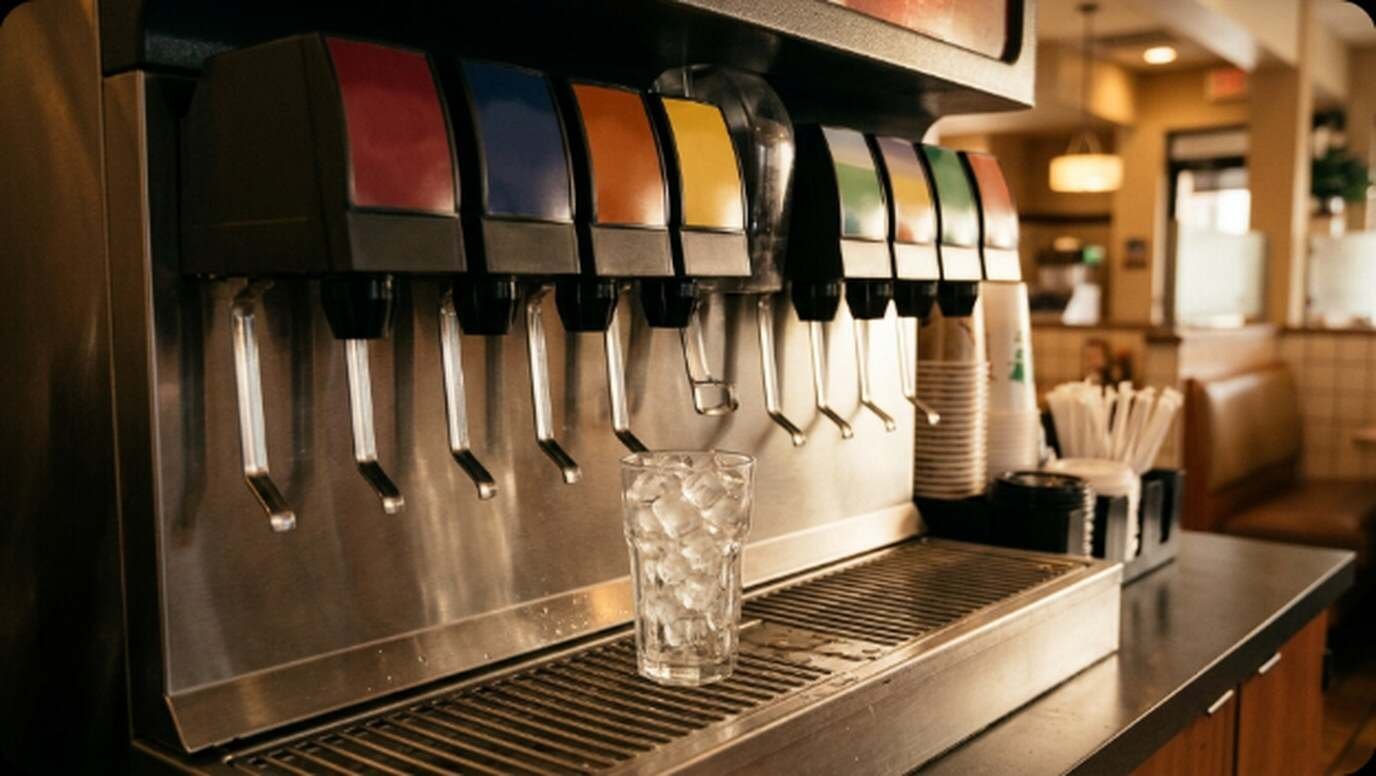
From my side, the account is two fountains, a stack of cartons and a phone number. Pepsi supplied both of our multi-spout fountains and maintains them, which I covered in the syrup review. That means the equipment belongs to the relationship. When a line goes, fixing it is their job as much as mine.
The service muscle behind that has been around a long time. Back in 2006, before Long Island was even in the territory, the College Point operation ran an in-house vending maintenance center with 50 technicians looking after about 40,000 pieces of vending, fountain and visi-cooler equipment, per Beverage Industry. That is a lot of compressors humming in a lot of basements.
One tech in particular I remember. He came in on a weekday after the lunch push, lay on his back on the tile under the soda station with a flashlight in his teeth, swapped a connector that had started weeping syrup onto the floor, wiped the rack down with a rag he brought himself, and wrote up his ticket on the hood of his van. He refused coffee. He took a Pepsi, which felt like a professional courtesy.
Reps are a different animal. Ours stands at the end of the counter with a tablet and a new flavor every season, and I ask the same question every time: which spout does it take away? A fountain has a fixed number of heads, and every new thing pushes an old thing off the tower. Mostly the answer stays no. The Starry box stays; I’m not going to argue with the kids who order it.
Michael Buonassisi, the bottler’s vice president of sales and marketing in 2006, summed up the business to the magazine in one line: “It’s all one account at a time.” Twenty years later that still sounds right from the receiving end.
Invoices, rebates and the paper trail
The cheapest drink in the building can still leak money, mostly through paperwork. Our boxes come on a delivery account straight from the bottler, and rebates come back through a buying group of restaurant owners, the details of which are in the bag-in-box piece. Neither number means anything if nobody checks the cartons against the invoice when the driver is standing there. The routine in checking a delivery before signing works for soda the same way it works for chicken.
After that it’s arithmetic. Syrup, carbonated water, ice, cup, lid and straw are all part of what a drink costs, and they go on the same sheet as a burger. The method in calculating food cost percentage works on a glass of cola, and the answer usually makes an owner feel better about life for a few minutes.
The other line worth watching is equipment terms. A fountain the bottler placed and maintains is a different deal from one the restaurant bought, and that difference shows up the first time a carbonator quits on a holiday weekend. I’d want it in writing before I’d want a lower price per box.
A rounding error with a fountain
Here is the scale. The 2017 profile counts roughly 3,000 employees across the Honickman operations and about 85 million cases distributed a year. Whatever my diner pours in a year doesn’t move that number. It doesn’t move the decimal behind it.
I like to tell people I chose Pepsi. That’s half true, and the half that isn’t took me a while to see. I chose the brand, back in 2000, for the price and the service. The bottler came with the address. When the territory moved in 2013, nobody on the Island was asked, and if the people on the truck ever stopped showing up on a Saturday, the territory map already says whose truck it was supposed to be. Switching would mean Coke, and as the syrup review points out, Coke means different connectors on every line in the basement.
So loyalty, in the soda business, is partly a map somebody drew in Purchase and somebody else redrew in College Point. It has worked out for me for twenty-five years. That doesn’t make it a choice.
Owners on the Island who were open before 2013: did anything change at the fountain when the territory moved, or did the same driver just show up with a different name on the paperwork?
For informational purposes only — consult a licensed attorney or financial advisor.
Sources
- Give Me Astoria, “Pepsi Cola Lives in Long Island City”
- Beverage Industry, “Pepsi-Cola Bottling Co. of New York: Bottler of the Year” (2006)
- PepsiCo, Foodservice
- The Honickman Companies, Our Companies
- The Honickman Companies, Our Legacy
- Beverage Industry, “PepsiCo, PBV, Honickman Swap Bottling Franchises” (2013)
- Beverage Industry, “2017 Beverage Bottler of the Year: The Honickman Group”


