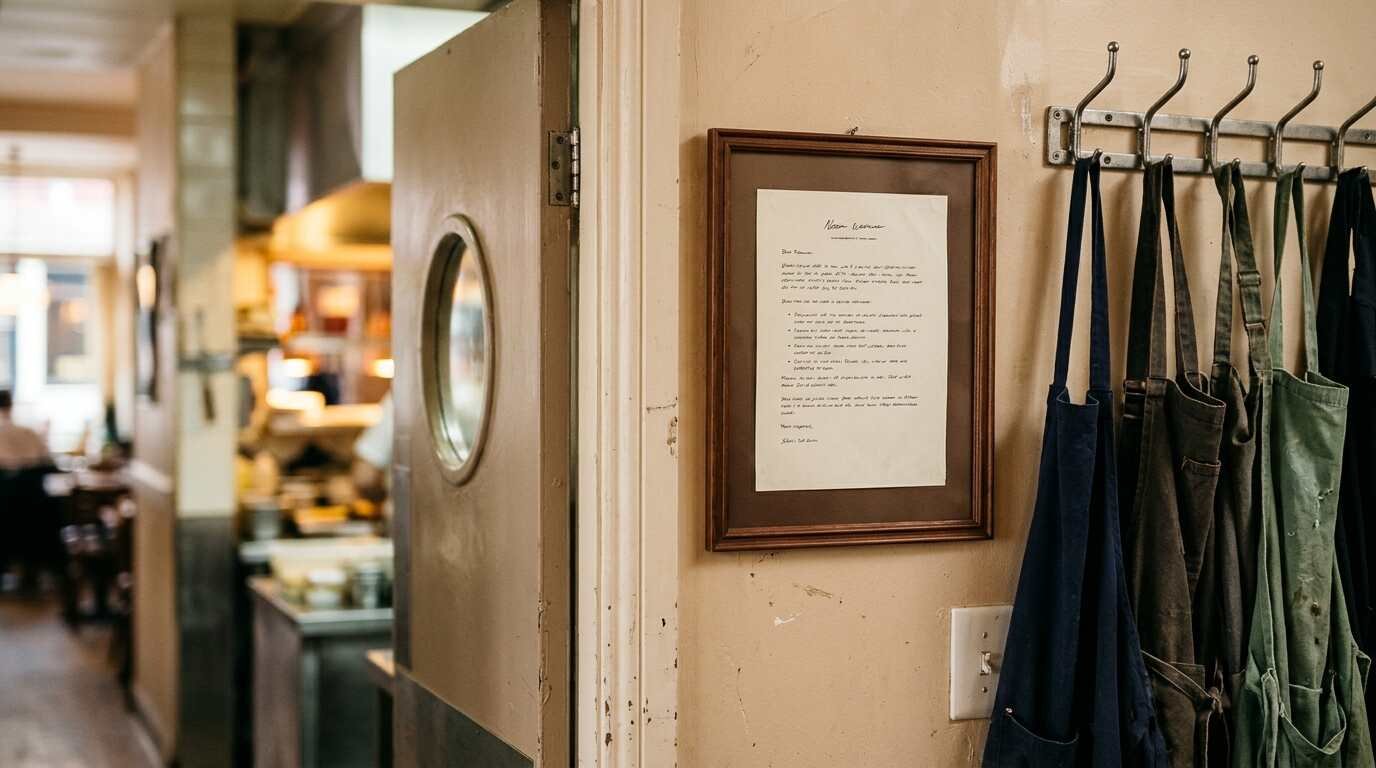
A New York restaurant is not allowed to write its own allergy poster for the kitchen. The state supplies it, and a county health department letter spells the point out: “Independently developed notices are not permitted.” The poster comes from section 1356 of the Public Health Law, which also puts an allergy line on every menu, online menus included, and carries a civil penalty of up to $125 per violation.
The poster is the part an inspector can see. The rest of allergen safety happens out of sight: knowing what is in each dish, keeping it off the wrong plate, and getting the dining room and the kitchen to say the same thing about it.
What New York requires
Section 1356 covers restaurants and catering halls that prepare and serve food on or off site. It asks for three things. The state department’s allergy and intolerance notice goes up in a visible spot that employees who prepare or serve food can reach, in at least one language each employee speaks, limited to the languages the department provides. Every menu carries either the standard message, “If you have a food allergy or intolerance, please notify us.”, or an allergy message for each prepared item. And menus posted online for delivery or takeout, including through third-party delivery services, carry an allergy notification, with the restaurant either giving customers a way to indicate allergies or supplying allergy information for each item.
The statute also says the commissioner posts the staff notice on the department’s website. That notice covers customer allergy procedures, cross-contact prevention and allergic reactions, including when to call 911.
The letter quoted above, from the Ulster County Department of Health, describes the same requirements for operators in that county. It gives May 20, 2023 as the date the law took effect and says the state translated the notice into 12 languages. Its quoted menu wording is shorter than the statute’s, “If you have a food allergy, please notify us.”, so the department’s current notice and the local health department are the places to confirm exact wording.
The nine major allergens

The FDA lists nine major food allergens: milk, egg, fish, crustacean shellfish, tree nuts, wheat, peanuts, soybeans and sesame. Its page on the addition of sesame to the 2022 Food Code says sesame became the ninth major allergen on January 1, 2023, and that packaged foods made on or after that date must list it on the label.
Sesame is the one most likely to hide in a restaurant kitchen. The National Restaurant Association’s allergy training page notes that food prepared for immediate consumption in a restaurant is not required to be labeled, so operators have to track sesame themselves in items such as buns, bagels, hummus and falafel. It can also appear as tahini, as gomasio, or behind vague terms like “natural flavors,” and the page advises checking with the manufacturer when a label is unclear.
Unpackaged food and the model Food Code
The FDA Food Code is a model, not a statute. The FDA’s own page says the code is voluntary and that state, local, tribal and territorial jurisdictions adopt it through their own rules. Its sesame page repeats the point: the model Food Code “is neither federal law nor federal regulation.”
What the model code recommends is still a useful checklist. For unpackaged food, section 3-602.12 calls for written notice of major allergens to consumers, in forms such as brochures, menu or deli case notices, placards and table tents. Bulk self-serve foods, under section 3-602.11, are to be labeled in plain view with the food source of each major allergen. The same page says food safety training should include awareness of the nine major allergens.
Cross-contact in the kitchen
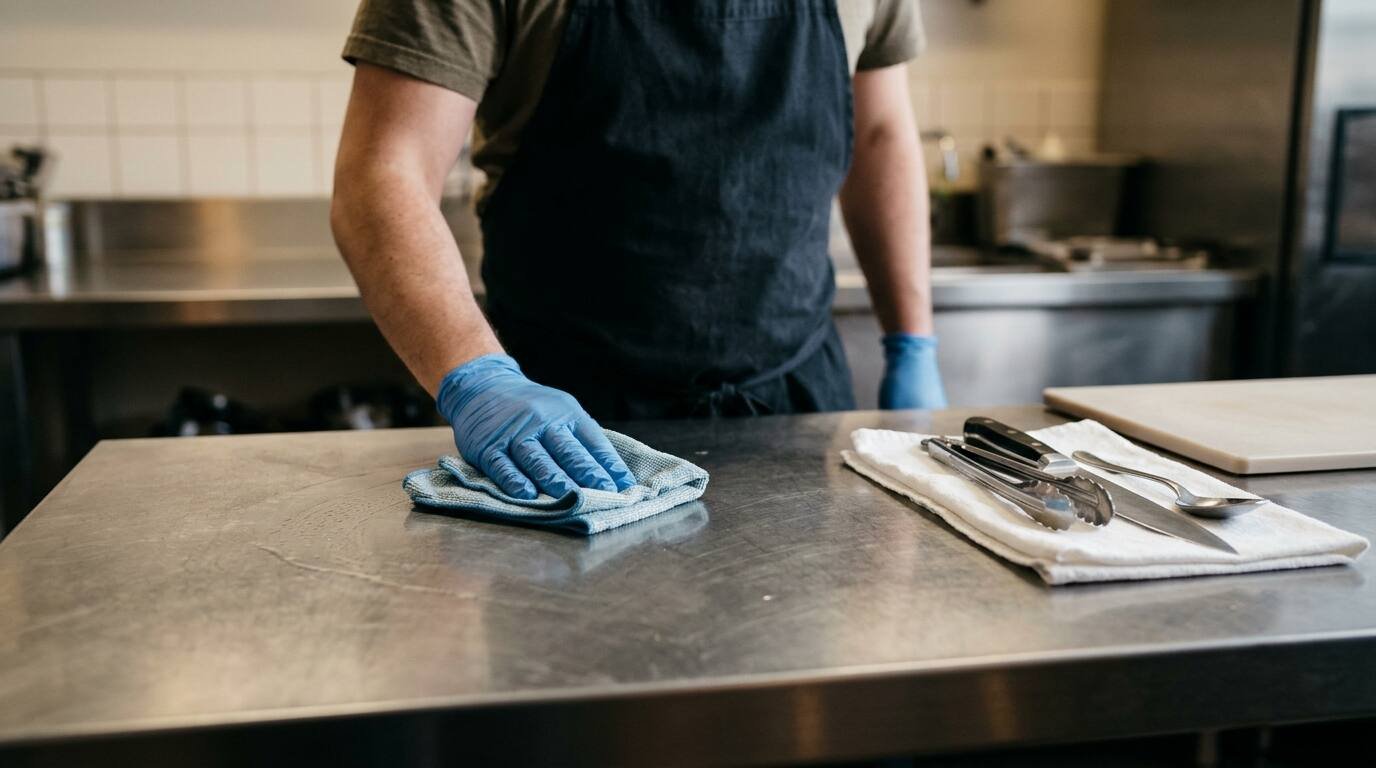
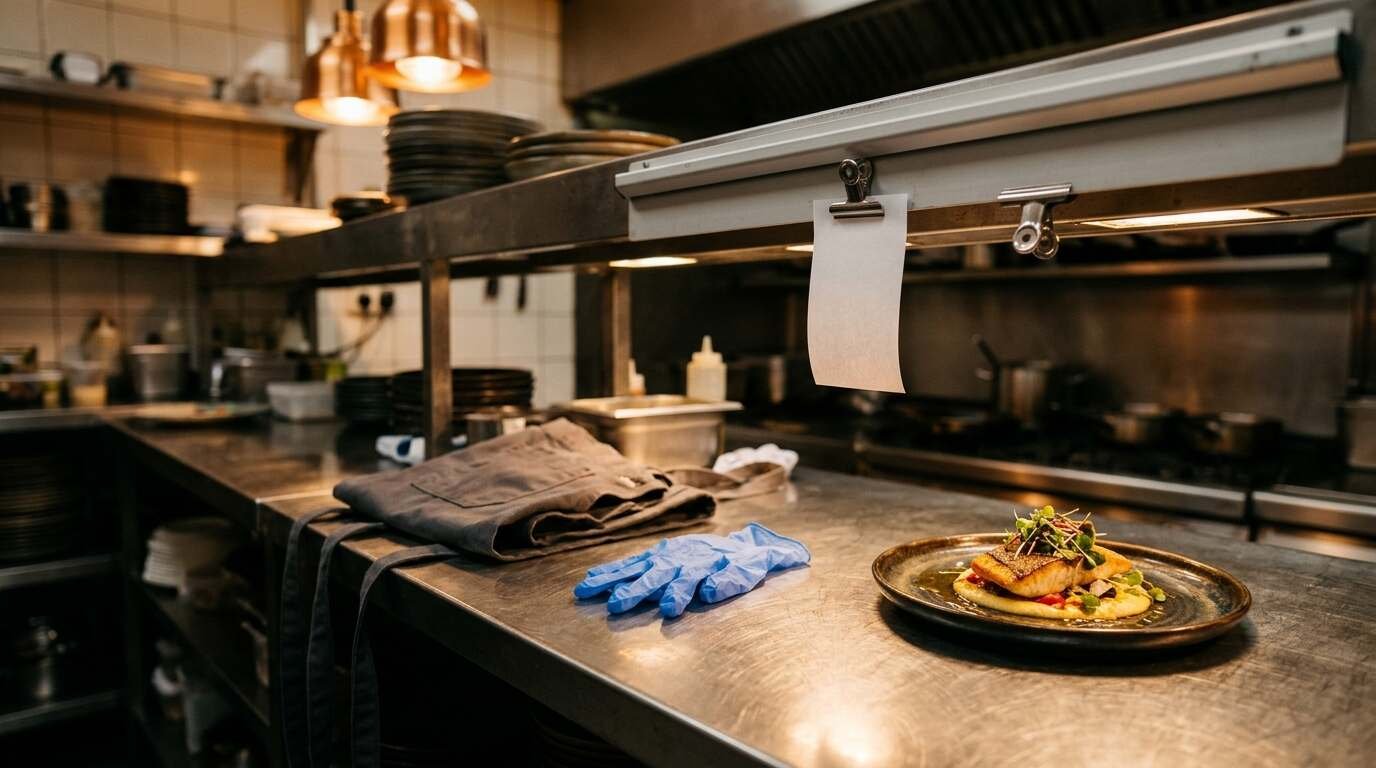
The NRA page splits prevention into back-of-house and front-of-house steps. In the kitchen, it lists washing hands, keeping uniforms clean, reading ingredient labels, using proper recipes so that ingredients can be tracked, and inspecting deliveries for substitute products that contain allergens. For an allergy order specifically, it lists changing gloves and aprons, using separate equipment, sanitizing surfaces and equipment before and after preparation, and marking the plate, flag or lid.
The front of the house has its own list: clean uniforms and aprons, sanitized surfaces and utensils, dedicated cloths or single-use towels, and delivering the allergy order separately from the rest of the table’s food.
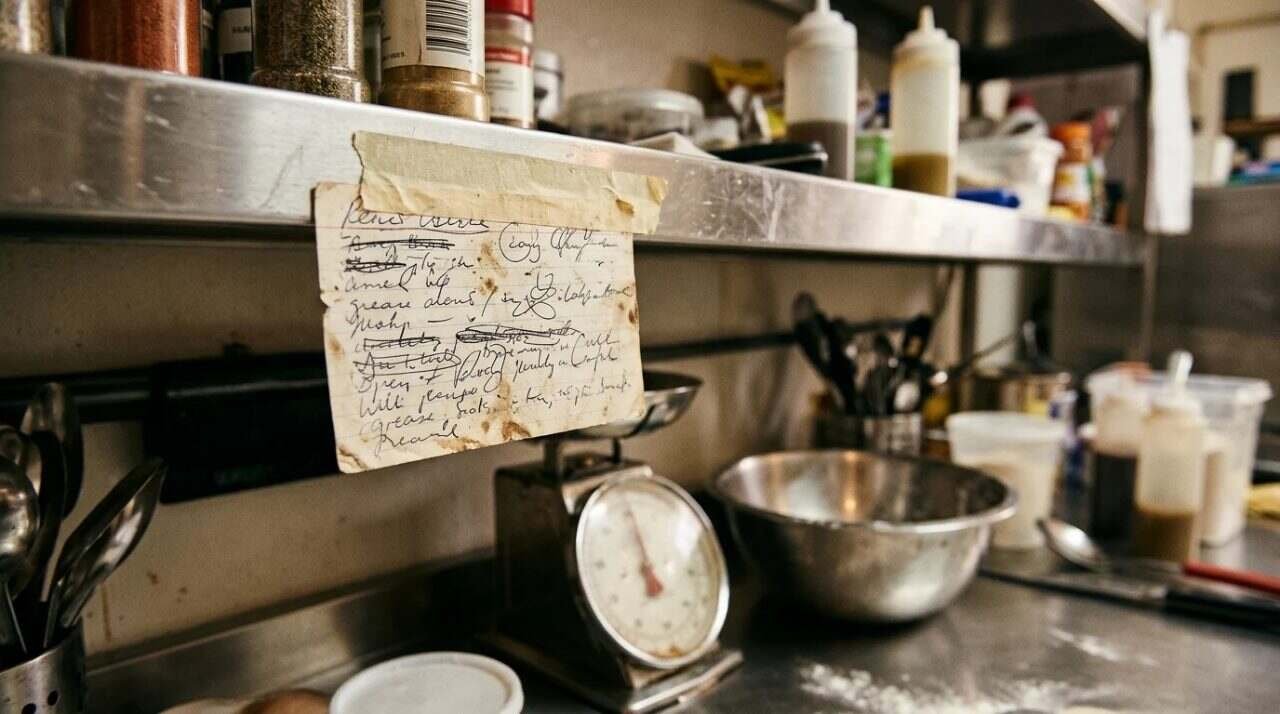
A recipe card is what makes the delivery check work. A kitchen that can name every ingredient in a dish, sauce and garnish can answer a server’s question in seconds. A kitchen that cannot has to guess, and guessing is how a substitute brand of bread crumbs ends up on a plate it should not.
Keeping the dining room and kitchen in step
The same NRA page states that most incidents come from miscommunication between servers or other front-of-house staff and the kitchen. It advises that when a customer discloses an allergy, servers follow the restaurant’s allergen policy and consult management and the kitchen if they are unsure a dish can be served safely.
That puts the weight on a written policy with a named point of contact. The page says each organization should have its own allergen awareness policy, that all staff should be trained on it, and that training should cover the ingredients in every recipe, who handles allergen questions and the kitchen’s procedure for allergy orders. It also acknowledges that not every restaurant has the resources to follow every practice, and tells operators to assess what their staff and equipment can realistically handle.
Cross-trained staff make this easier, since a second person who knows the station can cover the allergy order when the first is out; the case for that is laid out in Cross-Training Restaurant Staff. Menu changes are the other place the dining room and kitchen drift apart, and Printing a Menu That Matches the Online One covers keeping one master version.
What a CDC survey found about training
The CDC’s Restaurant Food Allergy Practices report, published in April 2017, interviewed 278 restaurants in six sites, including New York State and New York City, with data collected from January 2014 to February 2015. The response rate was 32.6 percent of eligible restaurants.
Fewer than half of the staff in each group reported allergy training: 44.4 percent of managers, 40.8 percent of food workers and 33.3 percent of servers. Among those who were trained, cross-contact prevention was the most common topic for managers (96.7 percent) and food workers (98.8 percent), while servers most often reported training on what to do when a customer has an allergy (94.2 percent). Responding to a severe reaction was covered for 64.2 percent of trained managers, 69.8 percent of food workers and 73.1 percent of servers.
On the kitchen side, 55.2 percent of managers said their restaurants had ingredient lists or recipes for all or most menu items, while 25.3 percent had them for none. Dedicated utensils or equipment for allergen-free preparation were reported by 19.1 percent. The survey is more than a decade old and covers a limited number of sites, so it describes a baseline, not current conditions.
Set against the statute, those numbers point at a gap the law does not reach. Section 1356 checks for a poster on the wall and a line on the menu. A quarter of the surveyed managers reported no ingredient lists or recipes for any menu item, and a kitchen in that position can hang the state’s notice in every required language and still be unable to answer the one question a server brings back from the table.
When a reaction happens
The NRA page gives a short sequence for the dining room. Notify management and coworkers, call 911 and tell the operator what is happening, stay with the guest, designate someone to meet first responders at the door, and follow up with management under the restaurant’s policy. The state’s posted notice, per the statute, covers the same ground, including when to call 911. In a small dining room on a busy night, that sequence asks for at least three people at once, one on the phone, one with the guest and one at the door, on whatever night the manager happens to be off.
For informational purposes only — consult a licensed attorney or financial advisor.
Sources
- New York State Senate, Public Health Law section 1356
- Ulster County Department of Health, Food allergy letter
- FDA, Addition to the 2022 Food Code: sesame added as a major food allergen
- FDA, FDA commemorates 30 years of the FDA Food Code
- National Restaurant Association, Train restaurant employees to be allergy aware
- CDC, Restaurant Food Allergy Practices, Six Selected Sites, United States, 2014
- FARE (YouTube), FAAN’s Restaurant Training Video, Part I