
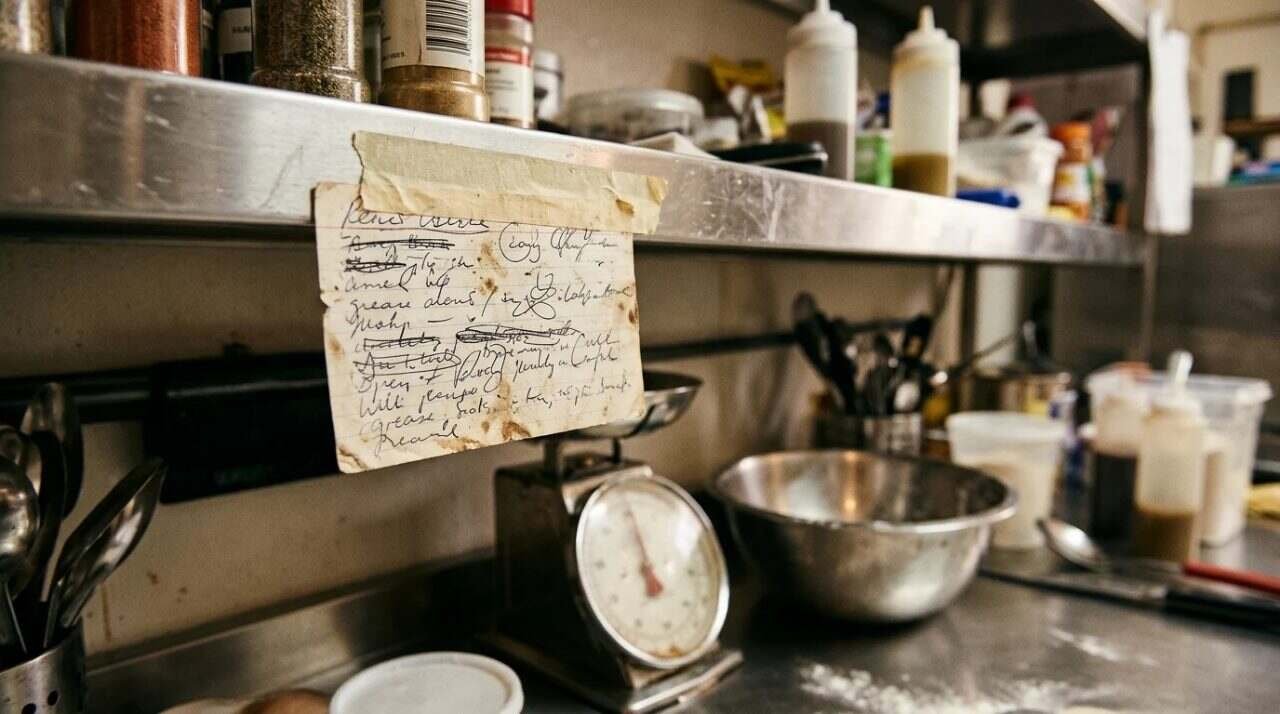
A recipe that lives in one cook’s head is not a recipe. It is a habit, and a habit leaves the building when the cook does. I have done the work of getting recipes out of heads and onto a card, and I would not run a kitchen without it. The argument for writing them down is older than any restaurant software, and the clearest statement of it comes from an unlikely place: the people who write guidance for school cafeterias.
What the school cafeteria people worked out
The Institute of Child Nutrition publishes a short sheet titled Why Use Standardized Recipes, written for school food service. It does not mention a diner, a deli or a pizzeria, and it does not need to. Its reasons apply to any kitchen that makes the same thing more than once.
The sheet lists them one at a time:
- Consistent quality, batch after batch.
- A predictable yield, which helps prevent both waste and running short on the serving line.
- Steady food cost, because the same ingredients in the same amounts keep the cost per serving from drifting.
- Easier purchasing, since the recipe shows how much of each ingredient is needed.
- Inventory control, since staff can estimate how much stock a batch will use.
- Labor control, because written procedures help workers use their time well.
- Employee confidence, since removing guesswork reduces mistakes.
Read that list as a restaurant owner and you will notice that it is not about cooking. It is about money and staffing. Purchasing, inventory, labor and cost per serving are the things that decide whether a kitchen makes money, and every one of them depends on someone knowing what goes into a batch.
The six parts of a recipe card
New York’s State Education Department, in a guide for child nutrition programs, says a standardized recipe needs six elements:
- A name or number. The name should be descriptive and easy to understand, and a number helps with organization and identifies the recipe on production records.
- Ingredients, with alternatives named when needed, such as dehydrated onions in place of fresh.
- Weights and measures, by weight or volume in the easiest unit to use. The guide says to be specific and to avoid vague terms like “1 package.”
- Servings, meaning the amount that makes one serving.
- Yield, meaning the total number of servings the recipe makes.
- Directions written so that all staff understand them, including cooking times and temperatures.
The guide gives examples of what happens without them: using extra ground beef or cutting pans to the wrong size raised costs and changed serving sizes. That is a school example, and a restaurant’s version is a cook who adds a little more of the expensive thing because it tastes better to him and nobody told him the number.
The Institute of Child Nutrition sheet adds a few fields of its own to the list: a recipe category, the cooking temperature, and the cooking and serving equipment. I would add one more that neither source requires, which is the date the card was last checked. I come back to that below.
Why on paper, and not in someone’s head
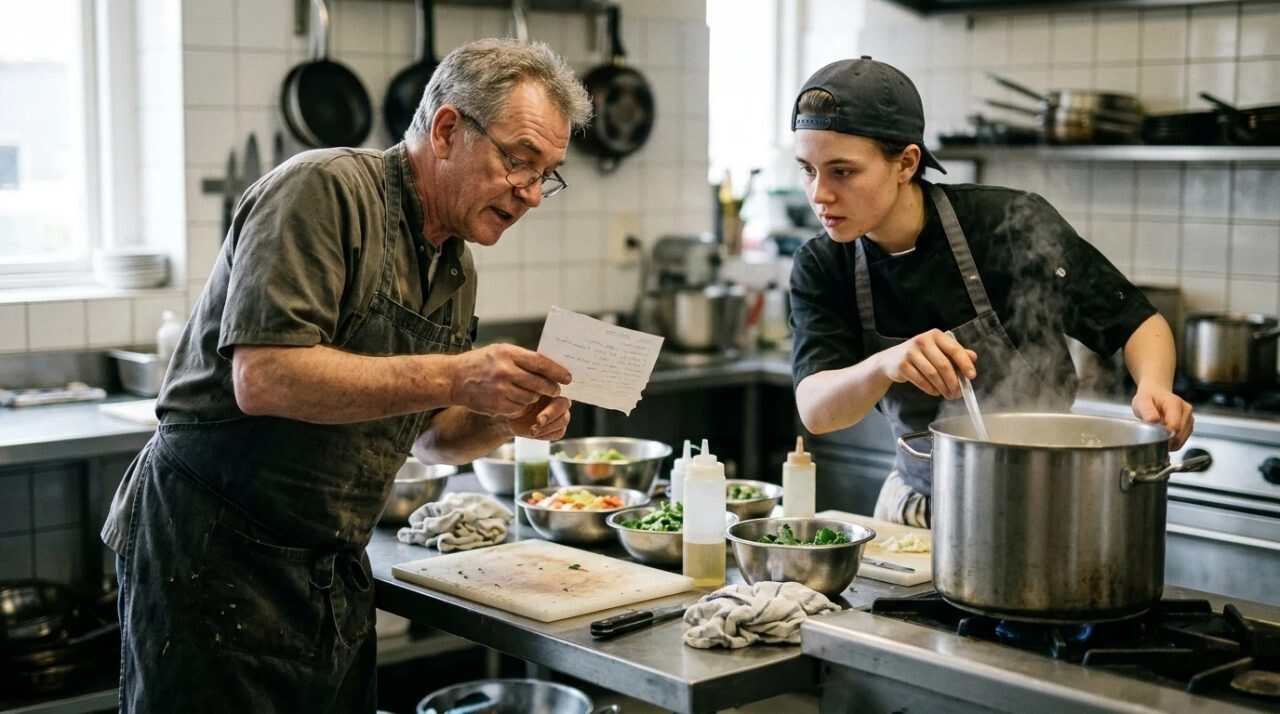
There are two ways to get a recipe out of memory: onto paper or onto a screen. I lean toward paper for the kitchen and I will say why, with the limit stated at the end.
Paper is where the cook is standing
A card taped above the station is in the cook’s line of sight while his hands are busy. A phone or a tablet is a thing he has to unlock, with wet hands, in a place where it will get splashed. A card gets splashed too, but a card costs a few cents to redo, and it does not stop working when the Wi-Fi does.
Paper forces a decision
Writing “season to taste” on a card is an honest admission that the recipe is not finished. Writing “1 tablespoon” is a decision. Putting a measure on paper makes somebody choose it, and once it is chosen, it can be tested, argued with and changed on purpose. A recipe that lives only in a head can change without anyone deciding to change it.
Paper survives the person
People leave kitchens, sometimes on good terms and sometimes on a Friday with no warning. A written recipe is the part of the cook’s knowledge that stays. It is also the part the next cook can learn from without asking the one who left.
None of this makes paper better than software at everything. Software is better at searching, scaling a recipe up and keeping track of which version is current. The honest answer is that a kitchen needs the information written down somewhere it can be read and updated. For the line itself I prefer the card, because the line is where the work happens.
Write the card with the cook
The usual mistake is to treat recipe writing as a desk job. An owner or manager sits down, makes up the quantities from memory, prints them and hands them out. The cooks look at the card and then do it their own way, because the card does not match what they know works.
The better method is slower. Stand with the cook while he makes the batch, and weigh each ingredient as it goes in. Write down what he actually used, not what you think he should use. Make the dish from the card on another day, with someone else, and see whether it matches. The first card is a draft.
That second cook matters. A recipe has not been written down until a person who did not write it can make it correctly from the card alone. If the second cook has to ask a question, the answer belongs on the card.
I developed training sessions for managers and staff through Nanos Media, the technology and consulting group I owned for the restaurant industry, and it is the reason I would involve the cook in writing a card: a person is more likely to follow what they helped build.
Keep the paper current
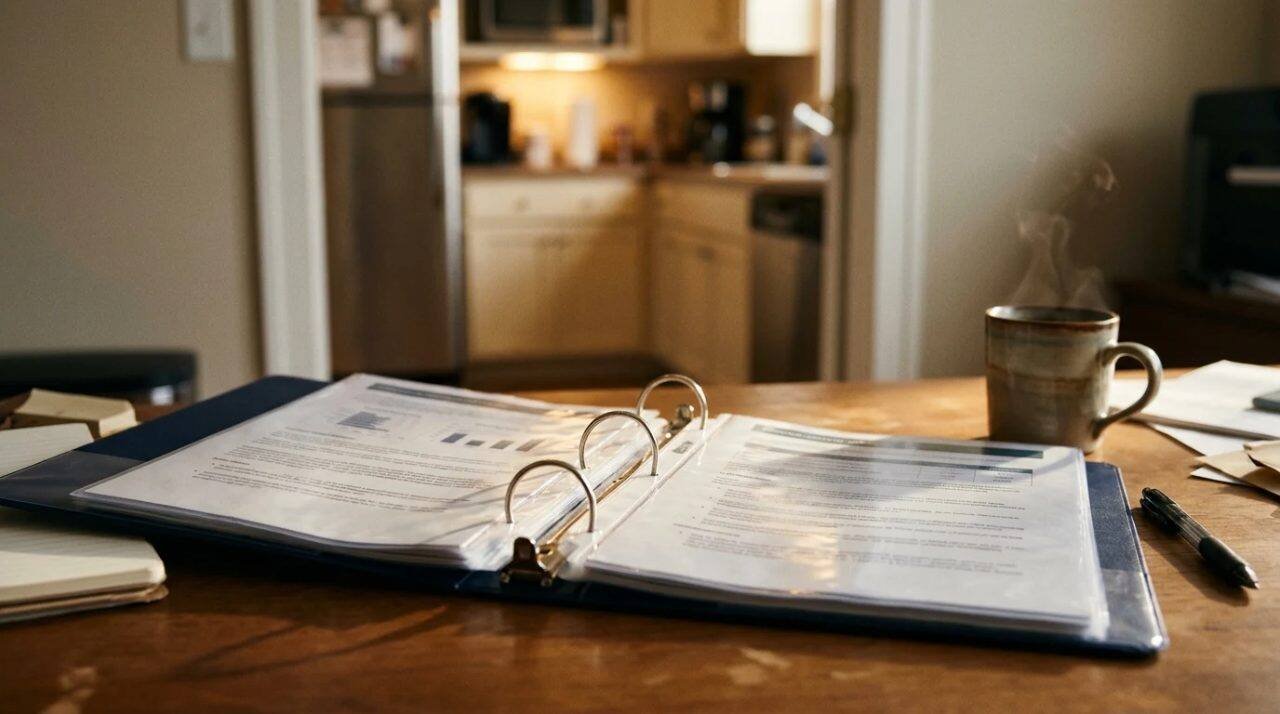
The weak spot of a paper card is that it goes out of date quietly. A supplier changes a product size, a cook adjusts the salt by a pinch, and a year later the card says one thing and the kitchen does another.
My own experience with stale information is on the menu side. The Heritage Diner’s Google Business Profile once showed old menu prices, because I updated menus by hand and forgot one. People called to order from the old menu. The recipe card has the same failure mode as that menu: the information was correct once, and nobody owns the job of keeping it correct.
Three habits keep cards honest:
- Put a date on each card, and a name of who checked it.
- When a change is made, change the card the same day, and take the old one down.
- Once or twice a year, pick a handful of cards at random and have a cook make the dish from the card alone.
The date on the card is the cheapest control on the list and the one most often left off.
The allergy question
Written recipes also matter for safety. Suffolk County’s foodborne illness risk factor list puts a knowledgeable person in charge and trained employees first, and says the training should include food allergy awareness. A cook who is asked whether a dish contains an ingredient can answer from memory, and be wrong. A card with the full ingredient list lets him check.
The same applies to a substitution. If a supplier changes a brand of stock or bread, the card is where the change should be noted, so that the ingredient list a server reads out is the real one. That is a point about process and not a legal one, and I am not describing what any particular rule requires.
Where paper falls short
Paper has real limits. A binder of cards is hard to search. Scaling a recipe from a batch of ten to a batch of forty means doing arithmetic on the back of a ticket. And a card on the wall cannot tell you which of three copies is current.
Those are reasons to keep a master copy somewhere with a date, such as a binder in the office or a file, and to treat the cards on the wall as copies of it. The master is where changes are made. The cards are what the line reads.
For informational purposes only. Food safety and allergen labeling requirements vary by establishment and change over time, so confirm them with your local health department, and consult a licensed attorney if you have a compliance question.
Sources
- Institute of Child Nutrition, Why Use Standardized Recipes: https://theicn.org/resources/527/food-service-management-skills/107291/why-use-standardized-recipes.pdf
- New York State Education Department, Standardized Recipes (2020 revision): https://cndev-acquia.nysed.gov/sites/cn/files/standardized-recipes-2020-revision.pdf
- Suffolk County, Foodborne illness risk factors: https://suffolkcountyny.gov/Departments/Health-Services/Public-Health-Protection/Foodborne-Illness
- Video: https://www.youtube.com/watch?v=wZgaCXfx9T0