

A product name does two jobs that pull in opposite directions. To the person who made the thing, the name is a small piece of ownership, the word that goes on the tag. To a stranger typing into a search box, the name is only useful if it contains the words that stranger already uses. I have done this exercise for what I sell. What the published guidance says about it is more specific than most advice I have read, so I have built this post from Google’s own pages and linked them where they are used.
A disclosure first: Marcellino NY, which sells handmade English bridle leather briefcases and has been my own business since 2010, comes up below as an example, and I have a financial interest in it.
What Google says about the words people search
The maker’s word and the buyer’s word
Google’s SEO starter guide makes a point that sounds obvious and is easy to overlook: think about the words readers might use, because experts and newcomers often phrase the same query differently. Its example is “charcuterie” versus “cheese board.” The person who knows the trade word and the person who does not are looking for the same thing and typing different strings.
The same page says Google’s language matching can connect a page to many queries even without exact terms, so a site owner does not need to cover every variation. It also says writing naturally helps, and that “keyword stuffing is against Google’s spam policies.” Between those two statements sits the working rule for a product name: use the plain word a buyer would type, once, in a name that reads like something a person would say.
That rules out most clever names used alone. Take a made-up name such as “The Sovereign.” It tells a search engine nothing, and it tells a stranger nothing either. A name like “Sovereign Leather Briefcase” does both jobs. The invented word stays, since it is the part that belongs to the maker, and the plain noun follows it so the listing says what the thing is.
Where the name gets read
One name, five places
A product name does not live in one place. It appears in the page title, the main heading, the web address, the image file names and the alt text, and in the product data if the shop supplies any. Each place has its own advice from Google, and they line up.
On titles, Google’s guidance on title links asks for a title that is descriptive, unique and concise. It says to avoid vague labels, to give each page distinct text that matches its content, and to avoid repeating words inside one title, which it treats as keyword stuffing. Long titles that differ by one detail make pages hard to tell apart, and long titles get cut off to fit the screen, so the important words go first.
On web addresses, the starter guide says to try to include words in the URL that may be useful for users, and its example is a path like /pets/cats.html. It also says keywords in the domain or URL path have hardly any ranking effect beyond appearing in breadcrumbs. That is a useful correction. A URL full of product keywords will not rescue a weak page, but a URL that makes sense to a human is still worth having, because the person deciding whether to click can read it.
On images, Google’s image guidance calls alt text the most important metadata attribute for an image, and prefers short descriptive file names, with my-new-black-kitten.jpg as the better example against IMG00023.JPG. It warns against filling alt attributes with keywords. I went through the details of that in alt text and image file names, and the short version is that the name of the product belongs in the file name once and in the alt text as part of a sentence a person could read aloud.
Read together, these pages ask for the same discipline in five places: one name, written the same way, in the title, the heading, the address, the file name and the alt text. Drift is the risk. A product called one thing on the shelf tag, another in the page title and a third in the photo’s file name makes a shop look like three shops. Google’s title page says each page should have text distinct from the others, so the answer is consistency across the places that name one product, and difference between the products themselves.
What a store feed expects from a name

Google’s list of what to leave out
If a shop lists products in Google’s Merchant Center, the name becomes a title with rules attached, and those rules double as a decent checklist for anyone. Google’s product title guidance says a title should clearly describe the product and match the landing page. It should include the brand when the brand distinguishes the product, and variant details such as size or color. Google says to be “specific” so customers can find the right item.
The limits are practical. Titles run from 1 to 150 characters, and Google advises putting the most important details first because users often see only the first 70 or fewer characters. Titles should leave out promotional text such as price, sale price, shipping and the company name, which belong in their own attributes. They should avoid all caps for emphasis, symbols, HTML tags and gimmicky characters, extra white space, and unclear or unprofessional language.
Several of those are the kind of flourish a maker might add to make a name feel special: capital letters, a symbol, the word SALE. Google’s page treats each one as a defect.
Once a product has a page, its details can also be passed along as structured data. Google’s product structured data documentation explains that this markup lets Google show details such as price, availability and review ratings in results, and distinguishes product snippets for pages where people cannot buy directly from merchant listings for pages where they can. Whether a given shop needs that is a question for the platform it runs on, but the name in the markup should match the name on the page.
A naming scheme that survives variants
Keep the differences in their own fields
Here the marketing advice runs into the workshop. At Marcellino NY, the early lesson was that too many customizations make every piece different, and hard to track and remake. A product name that tries to carry every variation turns into the same problem in text form: a pile of one-off labels, each slightly different, none of which a buyer would type.
The way out is the one Google’s feed guidance describes. Name the product by what it is and keep the variants in their own fields. The title says what the thing is and carries the variant details that tell versions apart, such as size or color, and the same details are submitted again as separate attributes. Where a detail has no attribute of its own, such as a flavor, Google says to put it in the title. A shop that does this ends up with a stable name and a separate, searchable record of what differs.
For a shop selling handmade goods, that suggests a plain structure:
- The invented or house name, if there is one, kept short.
- The plain noun a buyer would type.
- One or two distinguishing details, such as material or size.
- Everything else, including price and promotions, held somewhere other than the name.
Customers who find pieces through social media and then ask for an exact remake face a related problem, because they have a picture and no name. A consistent name for each design is the thing that lets both sides point at the same object.
Testing a name before committing to it
Four checks at a kitchen table
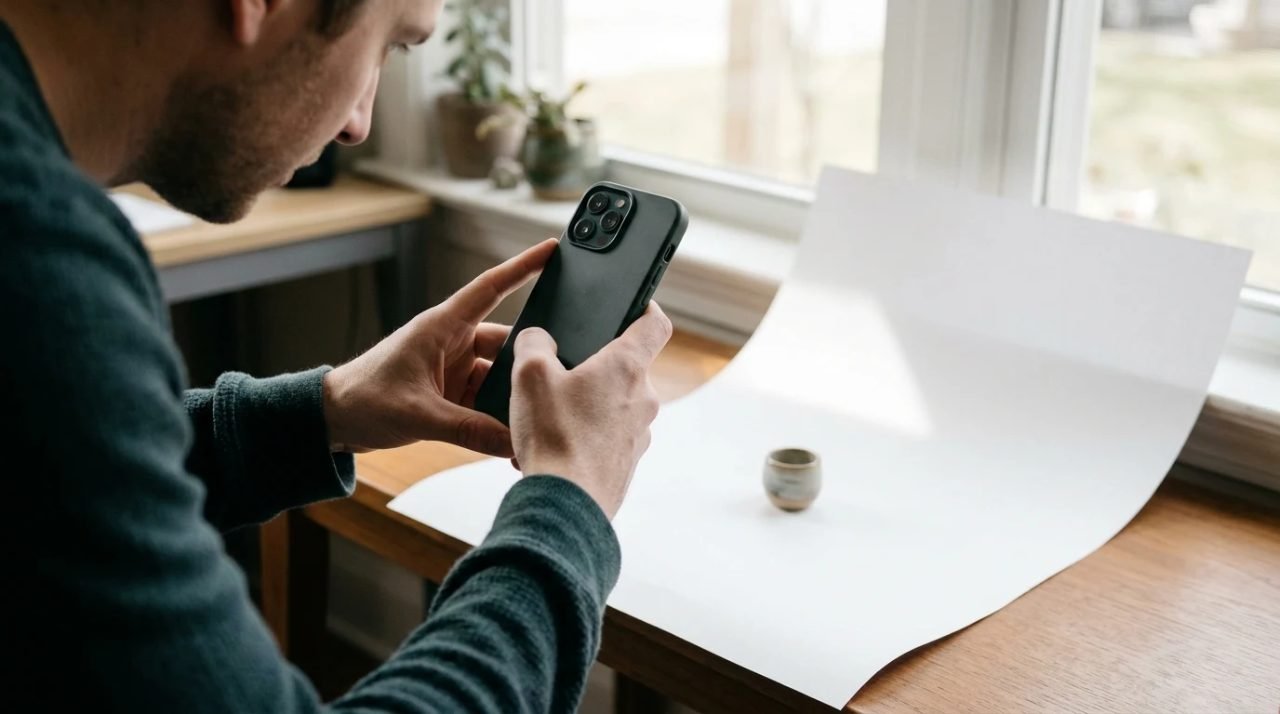
Google offers no formula, and the starter guide says plainly that on domain names you should do what is best for your business, since users will use the name to find you. The product-name version of that is a short test a person can run at a kitchen table.
- Say the name to someone who has never seen the product and ask what they think it is.
- Type the plain noun, with no brand, into a search box and read the first page of results to see what words other sellers use.
- Write the title the way it will appear, then cut it to its first 70 characters and see whether the important part survives.
- Check that no two products in the shop share a name that differs by only one detail, because Google’s title page says that makes pages hard to tell apart.
The search step costs nothing. The results page shows exactly how strangers describe the category, in the wording of competitors who have already been through it. A name that matches none of that wording will rely on the owner’s own marketing to be found, which is a heavier load than a name can usually carry.
None of this says the clever name is wrong. It says the clever name is half a name. The other half is a word a stranger types on a Tuesday night when they have never heard of the maker.
For informational purposes only. Search results change and Google gives no guarantee that any title, URL or markup will produce a specific ranking or display.
Sources
- Google SEO Starter Guide: https://developers.google.com/search/docs/fundamentals/seo-starter-guide
- Title links (Google Search Central): https://developers.google.com/search/docs/appearance/title-link
- Image SEO best practices (Google Search Central): https://developers.google.com/search/docs/appearance/google-images
- Product titles (Google Merchant Center Help): https://support.google.com/merchants/answer/6324415
- Product structured data (Google Search Central): https://developers.google.com/search/docs/appearance/structured-data/product
- Alt text and image file names (Till Post): https://tillpost.com/alt-text-and-image-file-names/
- How to Rank No. 1 on Google: Ecommerce SEO Secrets (video): https://www.youtube.com/watch?v=Mn-B16MZP7U