
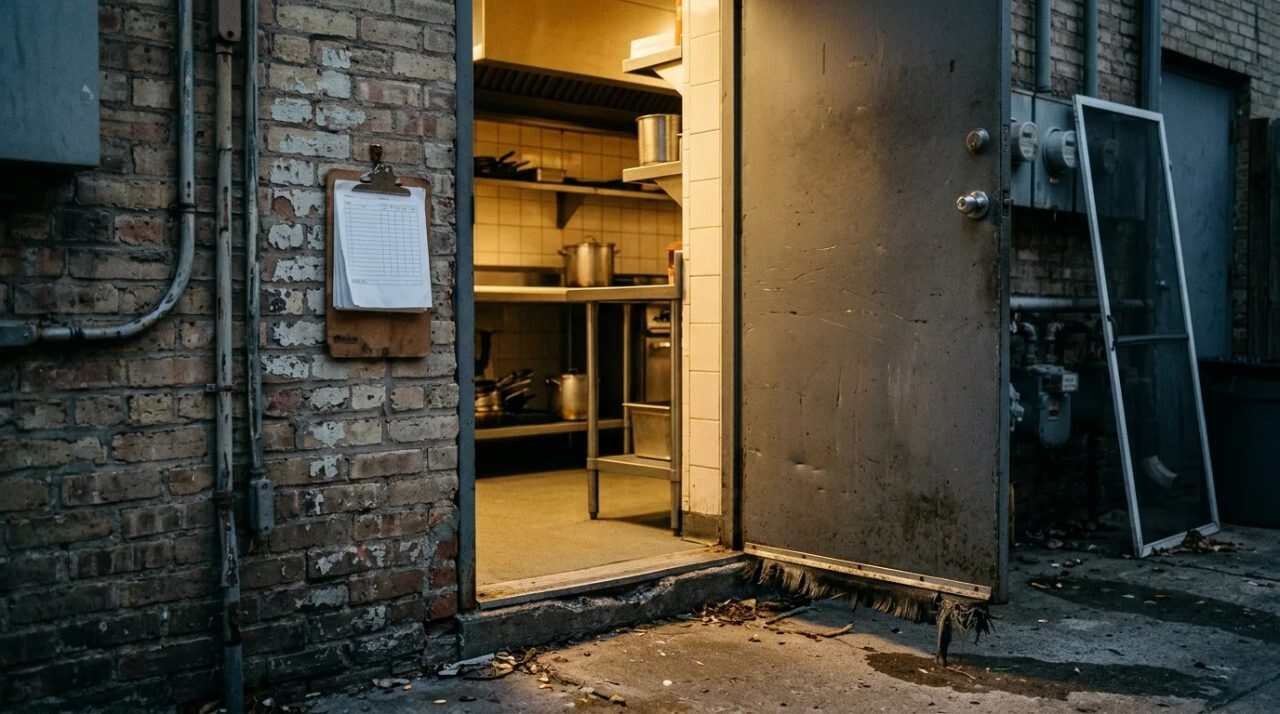
A pest control routine in a restaurant is mostly a short list of habits written down so that anyone on the staff could carry them out. I haven’t built a pest control program from scratch, and the family restaurant where I work is not the example here, so everything concrete below comes from New York’s food service rules and a guide from the New York City Health Department, linked where it is used.
The state rule is three sentences long
Sanitation first, poison second
New York’s food service regulation on pests, 10 NYCRR 14-1.160, is short enough to read standing at the pass. The premises are to be free of insects, rodents, harborage and breeding conditions. Openings to the outside are to be protected against the entrance of insects and rodents. And the third sentence sets the order of work for everything that follows: “Pesticides are not to be used in place of or as a substitute for proper sanitation.”
The word that does the most work in that rule is harborage. A pest does not need a dirty kitchen so much as a place to sit undisturbed, a source of food within walking distance and a way in, and a routine is a way of taking those three things away on a schedule instead of when someone notices a problem. The Justia page that carries the regulation says its version may not be the most recent, so check the current text with the state or your county health department before relying on it. The sources used for this article do not say what your county inspector will ask to see, whether that is a service contract, service reports or a log, and that is a question to put to the local health department directly.
The New York City Health Department guide used throughout this article, Best Practices for Pest Proofing Food Service Establishments, is written for New York City. It leans toward rodents, and it is a good outline of what a routine can contain anywhere in the state. Its limits are worth knowing, because it says little about cockroaches and other insects, and for those the state rule above is the only source here.
Closing the building
Gaps are measured in coins
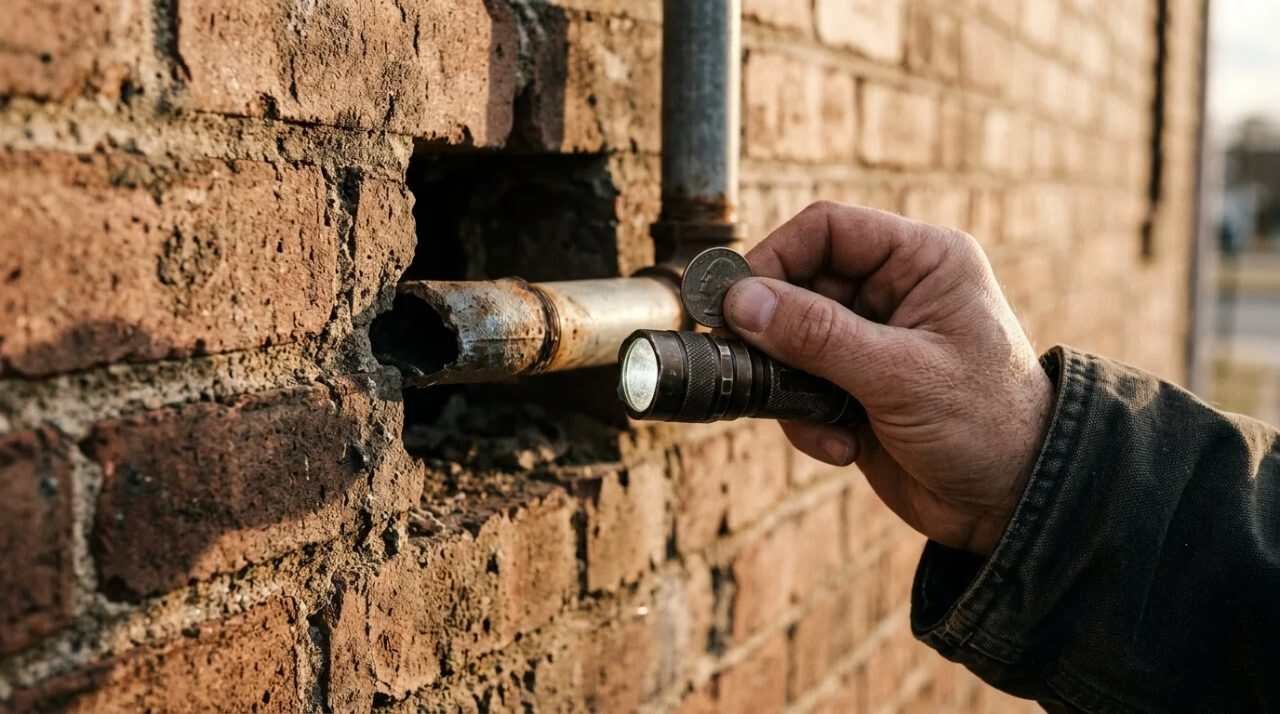
The NYC guide puts numbers on how small an opening has to be. A mouse can enter through a hole the size of a dime, and a rat through one the size of a quarter. It tells operators to look for openings larger than a quarter inch, including the places where utilities enter the building, and to close them with door sweeps, screens, escutcheon plates and sealant, using backer rods where a gap is wider than a quarter inch.
That turns an exterior check into something a person can do with a flashlight and a coin. Walk the outside of the building, look at the bottom of each door, at the screens, at every spot where a pipe, conduit or line goes through a wall, and note anything a quarter would fit through. The guide also recommends keeping vegetation at least 10 inches from the building and maintaining a 3-foot vegetation-free zone, which gives a rodent less cover on the way to the wall.
The rule in 14-1.160 says openings to the outside are to be protected, and protected means the repair has to hold. A gap stuffed with something a mouse can chew is a note in the log, not a repair. The same logic covers the doors that open and close all day, since a door sweep that has worn through or a screen with a torn corner is an opening that wasn’t there last month.
Inside: clutter, storage and the daily look
What a pest finds under the shelving
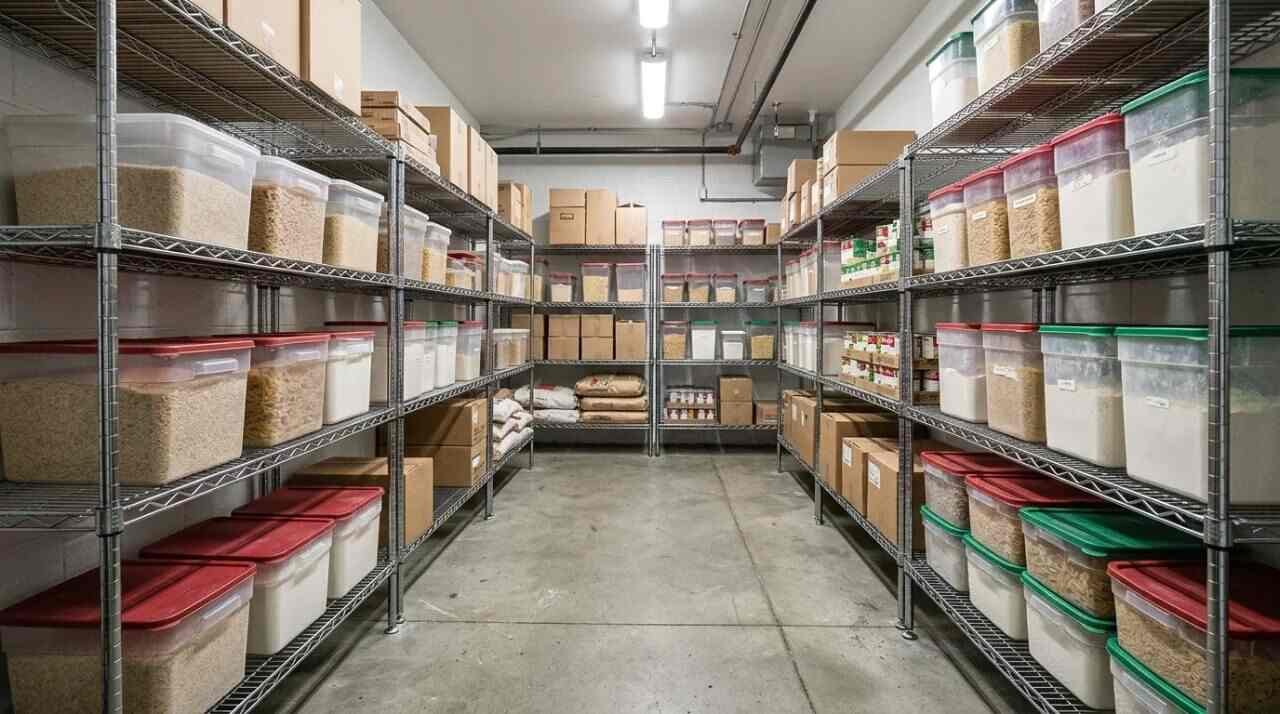
Inside the building, the guide’s advice reads like a description of ordinary kitchen discipline. Remove clutter, keep stored items off the walls, keep dry goods 6 inches off the floor and store food in tight-lidded, pest-resistant containers. Inspect the kitchen, the storage rooms and the garbage area daily. Clean under and behind equipment, and remove standing water.
Two of those items are the ones that tend to slide. Storage that sits against a wall is storage nobody can see behind, and floor stock is where a delivery goes when the shelf is full. The weekly cleaning list on this site, a weekly cleaning checklist for a restaurant, is a useful place to hang the under-and-behind-equipment items, because a pest routine and a cleaning routine are largely the same walk with a different question in mind. What a health inspector looks at first covers the other side of that walk, the view of the kitchen from an inspector’s side of the pass.
The guide also lists what to report to the pest management company right away: rodent droppings or urine, rub marks, runways, burrows, gnaw marks and holes in walls or sidewalks. It gives sizes for droppings, about 1/4 inch long for mouse droppings and about 3/4 inch for Norway rat droppings. Nobody on a line needs to become an expert in identification, but a staff that has been told what a rub mark is will report one, and a staff that hasn’t been told will wipe it off.
Garbage is where most of the rest of it starts
Cans, lids and pickup timing
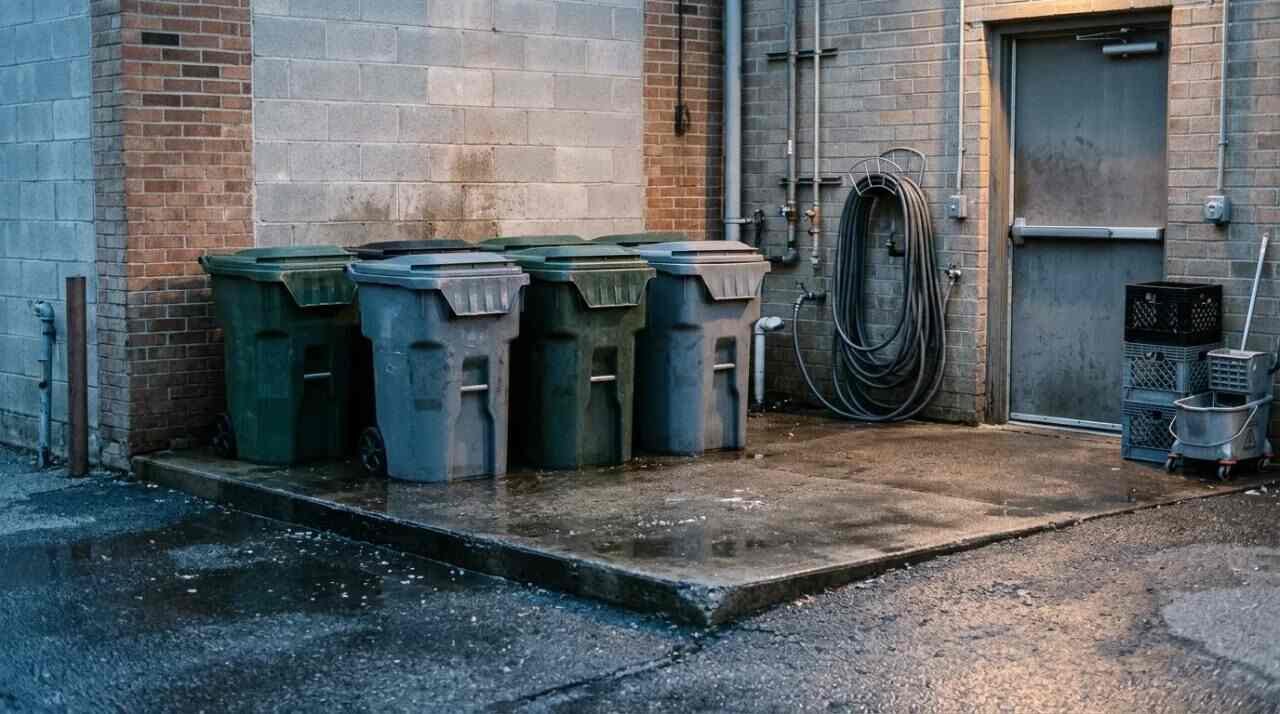
The garbage area is the one place on the property where food waste is stored on purpose, so the guide spends a long paragraph on it. Use hard plastic or metal cans with tight-fitting lids, sized to hold at least three days of garbage. Line the cans with heavy-duty bags, the guide specifies 1.9 mm, and set garbage out as close to pickup time as possible. Never leave it out on holidays or weekends. The guide also says to wash garbage areas, sidewalks and curbs with soap and water or a 10 percent bleach solution.
Pickup timing is the item a kitchen can control without spending anything. Bags that go out an hour before the truck are a different thing from bags that sit by the door for two days, and an overflowing can that waits through a long weekend is a feed station. The guide is written for New York City, and the same instinct applies anywhere: know the pickup schedule and the days it doesn’t happen.
The pest company, and what they are allowed to put down
Licensed professionals and the rules on materials
The NYC guide says to contract with a pest management company licensed by the New York State Department of Environmental Conservation. For an active indoor infestation it names bait blocks inside tamper-resistant bait stations as the preferred method. Snap traps inside tamper-resistant stations may be used in food preparation and storage areas, and they must be checked daily until the infestation is under control. Sticky traps are to be used only as part of an integrated pest management program and removed once they catch a rodent. After control, the guide says to follow the pest company’s maintenance recommendations.
The state’s rule on poisonous and toxic materials, 10 NYCRR 14-1.60, sets limits that matter when someone on staff reaches for a can of spray. According to the Justia text, insecticides and rodenticides stay in their original containers, they are stored apart from cleaning compounds and bactericides, and insecticide spraying is prohibited in food preparation and service areas while food is being processed. Unprotected bait stations are prohibited in food storage, service and preparation areas and in utensil washing and storage areas. The section also requires that these materials be used according to label directions.
Read together, those two sources describe a division of labor. The licensed company puts down and checks the bait and traps, in stations, on a schedule. The staff handles the other half of the rule, which is the building and the sanitation. One honest turn against all this tidiness: a written plan only helps if somebody reads the service report when the pest company leaves it behind.
The written plan: a map, a log and a weekly walk
Putting the routine on paper
The NYC guide recommends a written plan that lists monitoring devices, their locations and a daily checklist. It also describes a Rodent Prevention Checklist covering the exterior, the interior, dry storage or cellar, and the garbage area, with yes or no questions and corrective action for any item that fails. Where a restaurant has no form to copy, a single page built from the items above does the same job. The table below is one way to lay it out. It is built from the guide’s items, and the frequencies follow what the guide says.
| Area | What to check | How often |
|---|---|---|
| Outside walls and doors | Openings wider than a quarter inch, worn door sweeps, torn screens, utility entry points | Weekly walk |
| Landscaping | Vegetation 10 inches or more from the building, 3-foot clear zone | Weekly walk |
| Kitchen and storage rooms | Droppings, rub marks, gnaw marks, standing water, clutter, stock against walls | Daily |
| Dry storage | Dry goods 6 inches off the floor, food in tight-lidded containers | Daily look, weekly check |
| Garbage area | Lids closed, cans not overfull, area washed | Daily |
| Traps and bait stations | Snap traps checked, sticky traps removed once they catch | Daily for snap traps until control |
Put a date and initials next to each daily line, and keep the sheets in a folder next to the pest company’s service reports. The guide does not say how long to keep them, so that is another question for the health department.
A map belongs on the first page. Draw the floor plan, mark where each trap or bait station sits and number them, so that a new employee checking station six knows where it is without asking. The numbers in the log then tie to the numbers on the map, and the pest company’s report can use the same numbers.
When something turns up
Report, fix, record
A routine has to say what happens when a line on the sheet comes back wrong. The guide’s guidance on signs is to report droppings, rub marks and the other signs to the pest management company right away, and the checklist approach it describes calls for corrective action on any failed item. A practical way to write that down is three lines on the sheet: who calls the pest company, who fixes the gap or the storage problem, and who signs off that it was done.
That last name matters more than it looks. A log with a column for problems and no column for what was done about them turns into a record of things that were known and left alone, and that is a worse document to hand an inspector than a short one with the fixes noted. The routine does not have to be elaborate. It has to run every week whether or not anything has been seen, because the point of it is that nothing is seen.
For informational purposes only. This article is general information drawn from the sources listed, not legal or compliance advice, and the rules that apply to a specific restaurant depend on its location and health department, so confirm them with the local health department and a licensed pest management company.
Sources
- 10 NYCRR 14-1.160, Insect and rodent control: https://regulations.justia.com/states/new-york/title-10/chapter-i/part-14/subpart-14-1/insect-and-rodent-control/section-14-1-160
- 10 NYCRR 14-1.60, Toxic materials: https://regulations.justia.com/states/new-york/title-10/chapter-i/part-14/subpart-14-1/toxic-materials/section-14-1-60
- NYC Health Department, Best Practices for Pest Proofing Food Service Establishments: https://www.nyc.gov/assets/doh/downloads/pdf/rii/keep-pests-out-of-food-establishments.pdf
- Food Standards Agency, Food safety coaching (Part 3): Pest control: https://www.youtube.com/watch?v=gz0CVbFXtJg