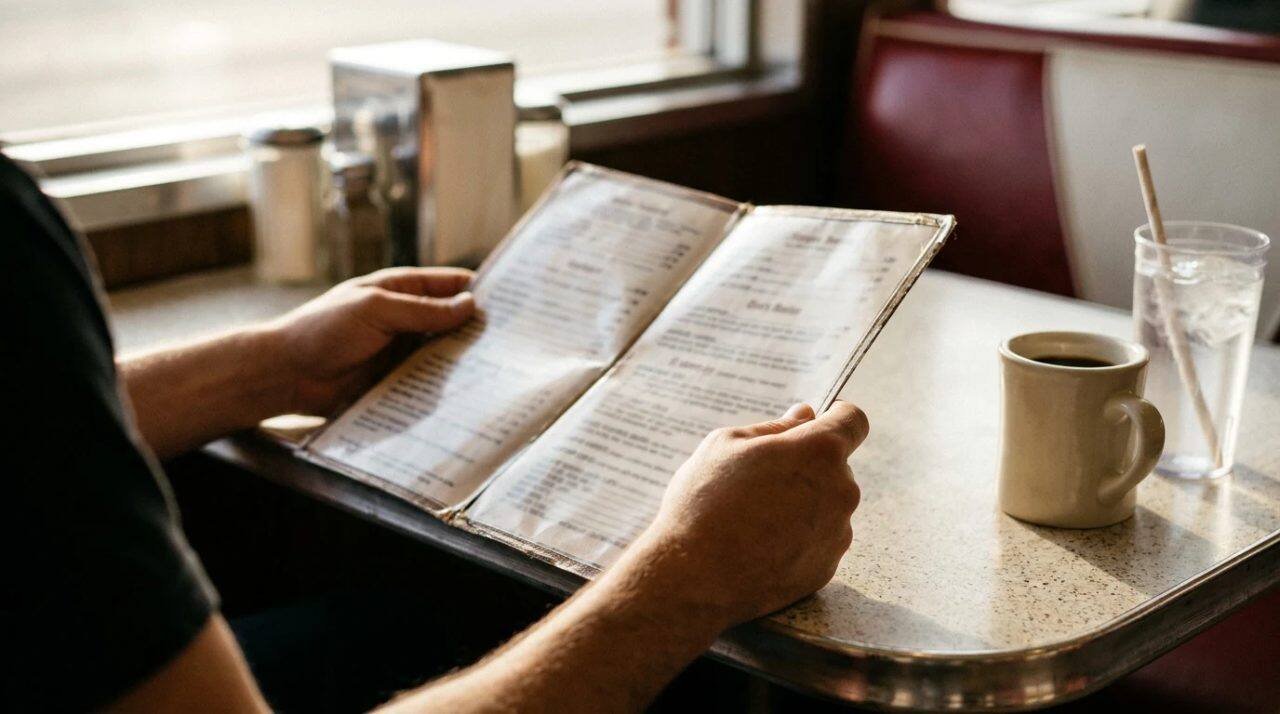

A menu description is a handful of words doing two jobs at once. It tells the customer what is on the plate, and it tells the customer what to expect when the plate arrives. The research on whether wording moves orders is real but thin, and the legal side is short and plain, so most of the work is in the discipline of writing a line you can stand behind in the kitchen. No controlled wording test on a menu was run for this post, so everything below comes from published studies and from the Federal Trade Commission, linked where it is used.
What one cafeteria study found about wording
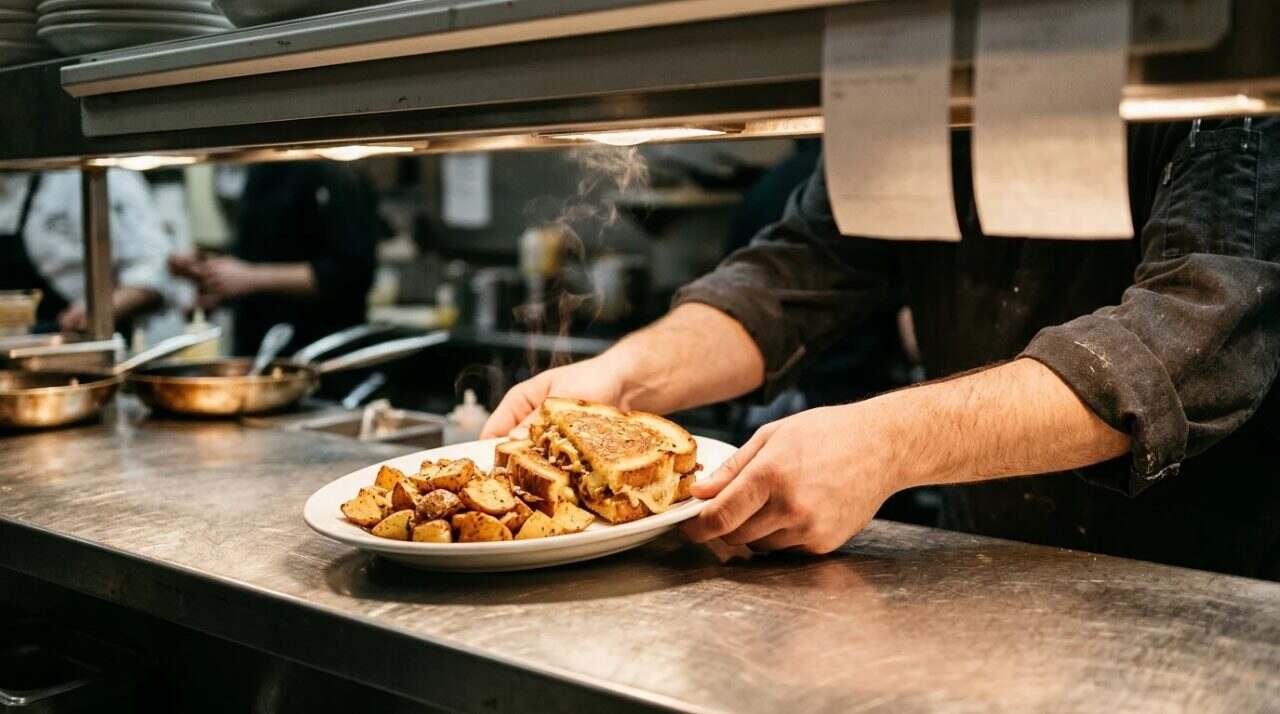
Same carrots, different name
In 2017 three Stanford researchers, Bradley Turnwald, Danielle Boles and Alia Crum, published a short paper in JAMA Internal Medicine called Association Between Indulgent Descriptions and Vegetable Consumption: Twisted Carrots and Dynamite Beets. According to a news report on the study, it ran over an academic quarter in a Stanford cafeteria that served about 600 people at weekday lunches. The vegetables were prepared the same way every time. Only the label changed, and it came in four kinds: basic, healthy restrictive, healthy positive and indulgent.
The same report says indulgently labeled vegetables were 25 percent more likely to be taken than basic-labeled ones. Nobody touched the recipe. The cook at the station did exactly what the cook did the day before, and the words on the sign were the only variable.
That matters for a printed menu because the words are the only part of the dish a customer can taste in advance. A customer reading a menu has no steam to smell and no plate going by on a server’s arm. The description is the whole sample.
There is a second reason the finding is worth holding onto. The indulgent label in that study was a description of the food, with a flavor or a texture or a manner of cooking in it. It was not a pile of adjectives. A line that says what the food is like gives the reader something to picture, which is a different thing from a line that says the food is wonderful.
What the research cannot tell you
The paper is modest about itself. Its abstract calls it an observational study of an association between labels and vegetable consumption. The journal later published an erratum, listed on the paper’s PubMed page as “Incorrect P Values in Results Section,” and the same page lists a published comment titled “Selection Does Not Equate Consumption.” The ABC15 report adds that the researchers could not measure how much diners actually ate, only what they took.
So what the study supports is narrow. In one cafeteria, with one lunch crowd, a label changed what people put on their trays. A family diner is a different room with different customers, and a dinner order is a different decision from a side vegetable at lunch.
A second study comes up whenever menu wording is discussed. A 2014 Cornell news release described a study of 217 menus and the selections of more than 300 diners, led by Brian Wansink, and repeated claims that descriptive names raised sales by 28 percent and that diners would pay about 12 percent more for a dish with a descriptive name. In 2018 Cornell’s provost announced that a faculty committee had found Wansink committed academic misconduct, including “misreporting of research data, problematic statistical techniques,” and that he had resigned. No source found says whether that particular 2014 paper was among the work the university reviewed. Until that is shown, those two percentages are best treated as claims, not as numbers to build a menu on.
None of this says plain wording is better. A menu that lists only ingredients is honest, and it may sell less than a menu that sounds like food. The evidence leans that way, loosely. What the evidence cannot give you is a number for your own dining room.
Where a description turns into a claim

The moment a line says something a customer could check against the plate, it stops being decoration. The FTC’s Advertising FAQs: A Guide for Small Business states the rule in two sentences: “Advertising must be truthful and non-deceptive,” and “Advertisers must have evidence to back up their claims.”
The guide defines an ad as deceptive when it includes a statement, or leaves something out, that is likely to mislead reasonable consumers and that matters to their decision to buy. Implied claims count along with express ones. Fine print cannot contradict the headline or clear up a misimpression the headline creates. Every state has its own consumer protection laws on top of that, the FTC adds, and New York is one of those states.
Food gets its own note in the same guide. The FTC handles most claims in food advertising and the FDA handles most food labels, and meat and poultry fall under the USDA. The guide has no section on restaurant menus, so it does not say where a menu sits between advertising and labeling. A New York attorney can.
The principle is the following, and it is not a rule found written for menus. Any word that a customer would reasonably take as a fact about the food needs something behind it. “Hand-cut” is a fact about a knife. “Local” is a fact about a map. “Fresh” is a fact about a delivery day and a walk-in. A word like “famous” or “legendary” is harder to back with evidence, and the FTC’s second sentence is the reason to be careful with it.
A method for each line
Start at the recipe card, not the thesaurus
The first draft of a description should be a list of what is in the dish, taken from the recipe card the line cook works from. If the card says the potatoes are roasted with rosemary, the menu can say roasted potatoes with rosemary. If the card says nothing about butter, the menu does not say butter.
The second pass adds one or two words about what happens to the food: griddled, slow-braised, finished under the broiler. Methods are facts, and facts are easy to defend. They are also what a customer can picture.
The third pass is the check, and it belongs to the person who cooks the dish, not the person who wrote the line. Each factual word gets read aloud to that cook. If the cook hesitates, the word comes out or the recipe changes, whichever is cheaper.
A simple habit helps with the evidence side. Next to each claim in the working copy of the menu, write down where the proof lives: the invoice, the spec sheet from the supplier, the recipe card. A claim with nothing written beside it is a claim to reconsider. This habit is a suggestion, not something the FTC guide requires, but it is the cheapest way to meet the guide’s second sentence.
Length and rhythm
Keep each description to one line where the layout allows. A line that wraps to a third row starts to read as an argument. A short dish name followed by a plain, specific line reads as confidence.
Then change one dish, not forty. If the shop has a sales report that breaks out items, as the post on reading a restaurant sales report describes, rewrite the description of a single dish and watch that item’s count for a few weeks against the weeks before. One change is a test. Forty changes at once are a new menu, and a new menu teaches you nothing about which words did the work.
One menu in every place it appears

Wording errors rarely live on the printed menu alone. The same line sits on the website, in the Google Business Profile, on a delivery listing and on the paper in a counter holder, and when one copy is corrected and the others are not, a customer sees whichever copy happens to be in front of them.
A description is an edit like any other. If the kitchen drops an ingredient or changes a method, the word has to leave every copy the same day.
The earlier posts on keeping the printed menu matched to the online one and the Google Business Profile checklist for a restaurant cover the mechanics. The point for this post is narrower. A description that is true in the kitchen and false on the screen is still a false description for the customer holding the phone.
For informational purposes only. The claim and wording guidance here is general and drawn from the sources listed below; consult a licensed attorney about the specific words on your own menu.
Sources
- Stanford study, Association Between Indulgent Descriptions and Vegetable Consumption (PubMed): https://pubmed.ncbi.nlm.nih.gov/28604924/
- ABC15 report on the Stanford study: https://www.abc15.com/news/national/how-people-refer-to-veggies-impacts-how-much-they-are-eaten-study-shows
- Cornell news release on menu design (EurekAlert): https://www.eurekalert.org/news-releases/765831
- Cornell provost statement on the Wansink investigation: https://news.cornell.edu/stories/2018/09/provost-issues-statement-wansink-academic-misconduct-investigation
- FTC, Advertising FAQs: A Guide for Small Business: https://www.ftc.gov/business-guidance/resources/advertising-faqs-guide-small-business
- Till Post, Reading a restaurant sales report: https://tillpost.com/reading-restaurant-sales-report/
- Till Post, Printing a menu that matches the online menu: https://tillpost.com/printing-menu-matches-online/
- Till Post, Google Business Profile checklist for a restaurant: https://tillpost.com/google-business-profile-restaurant-checklist/
- Video: https://www.youtube.com/watch?v=moDlFWUYaiI