A shop in France can bake bread all day and still be barred from painting the word “boulangerie” over its door. The test is not whether bread comes out of the oven. It is who kneaded the dough, where, and whether it was ever frozen, under article L122-17 of the French Consumer Code as quoted by the government in a 2020 parliamentary answer.
The rule protects a word, not a recipe. It is one of the clearest examples anywhere of a country deciding that a shop name is a promise about method.
Four steps, on site, by the baker
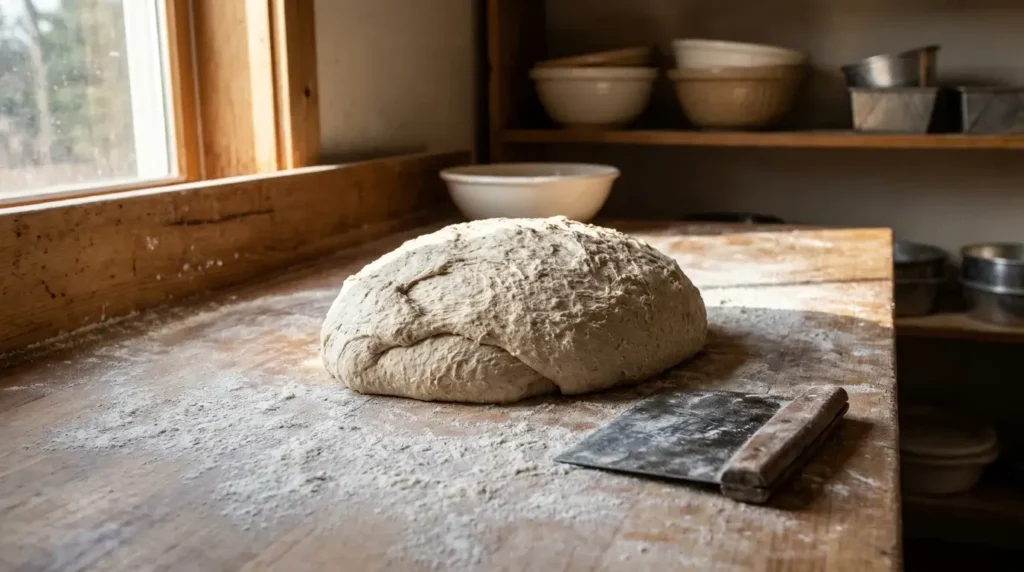
The law reserves the title “boulanger” and the shop sign “boulangerie” for professionals who, starting from raw materials they choose, carry out four steps themselves: kneading the dough, fermenting it, shaping it and baking the bread at the place where it is sold to the final customer, per the 2020 answer. The products may not be frozen or deep-frozen at any stage of production or sale.
| Requirement | What it rules out |
|---|---|
| Kneading done by the professional | Dough bought ready-made from a factory |
| Fermentation and shaping on the premises | Pre-shaped dough pieces delivered for baking |
| Baking where the bread is sold | A central bakery supplying several shops under the name |
| Never frozen or deep-frozen | Frozen dough baked off in a store oven |
The same restriction covers advertising and any name likely to cause confusion. Bread may still be sold off-site, from a delivery van for example, if the seller is the baker or works under the baker’s responsibility, according to the French Senate record.
How a word got a law of its own
The first attempt was a ministerial order of December 12, 1995, which set the same four-step test. France’s Conseil d’État annulled it on December 29, 1997, on procedural grounds, prompting a wave of questions from deputies on behalf of artisan bakers, as the National Assembly record shows. Parliament responded with law no. 98-405 of May 25, 1998, published in the Journal officiel the next day, per the Senate. The target, as one deputy’s written question put it, was the “terminal de cuisson”: a shop that bakes industrially made frozen dough.
The fine
The rule now sits at articles L122-17 and L122-18 of the Consumer Code, according to Légifrance. Breaking it is punishable by a fine of up to €300,000 under article L132-27, per an English rendering by French Business Law. Inspections fall to the DGCCRF, the consumer-fraud agency, the 2020 answer notes.

What the law does not cover
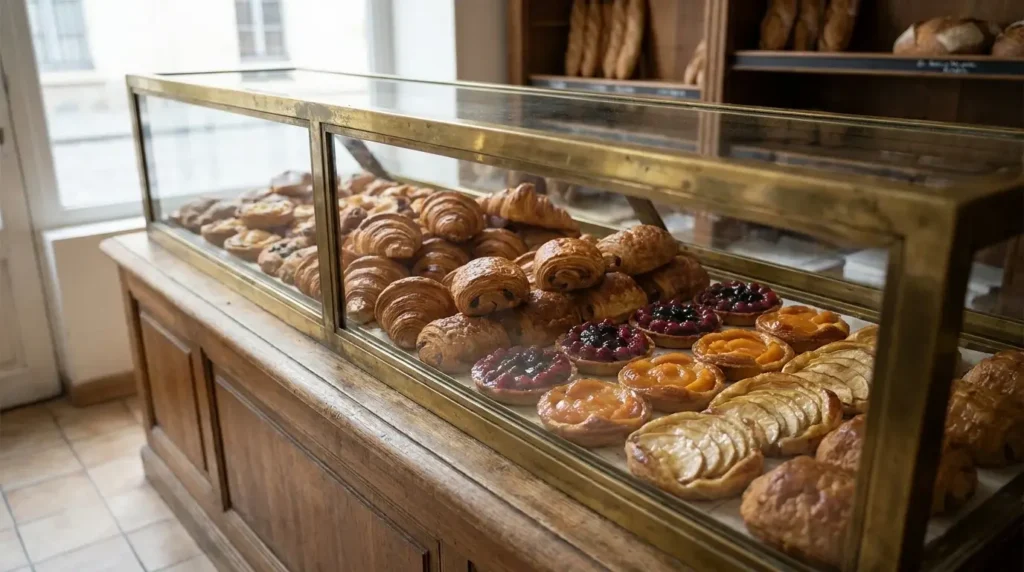
Pastry is the gap. The word “pâtisserie” is not regulated, so a shop may sell pastries and viennoiseries it did not make, the ministry told Parliament in 2020; frozen-then-thawed items only need an informative label under EU Regulation 1169/2011. A deputy in the 2012–2017 legislature complained that supermarket chains kept using “boulangerie” on in-store counters despite the 1998 law, according to the Assembly record.
Bakers built their own answer to the pastry gap. The national bakers’ confederation launched a “Boulanger de France” label in January 2020 for members who make their most common products in-house, per the same answer.
What it shows a shop owner anywhere
The French rule turns a production method into a legal claim on the sign out front. The cost falls on the operator who wants the word without the work: buy-and-bake shops in France can sell bread, but they have to call themselves something else.
- Who may use “boulangerie”: bakers who knead, ferment, shape and bake on site.
- Frozen dough: disqualifies the name at any stage.
- Penalty: fine of up to €300,000.
- Not covered: “pâtisserie,” which any shop may use.
Sources
- Assemblée nationale, Question écrite n° 26244 and answer (2020)
- Sénat, Question de M. Michel Barnier and ministry answer (1998)
- Assemblée nationale, Question écrite n° 11234 (1998)
- Assemblée nationale, Question écrite n° 11969 (1998)
- Assemblée nationale, Question écrite n° 90088 (14th legislature)
- Légifrance, Code de la consommation, table of contents
- French Business Law, Article L132-27 of the French Consumer Code