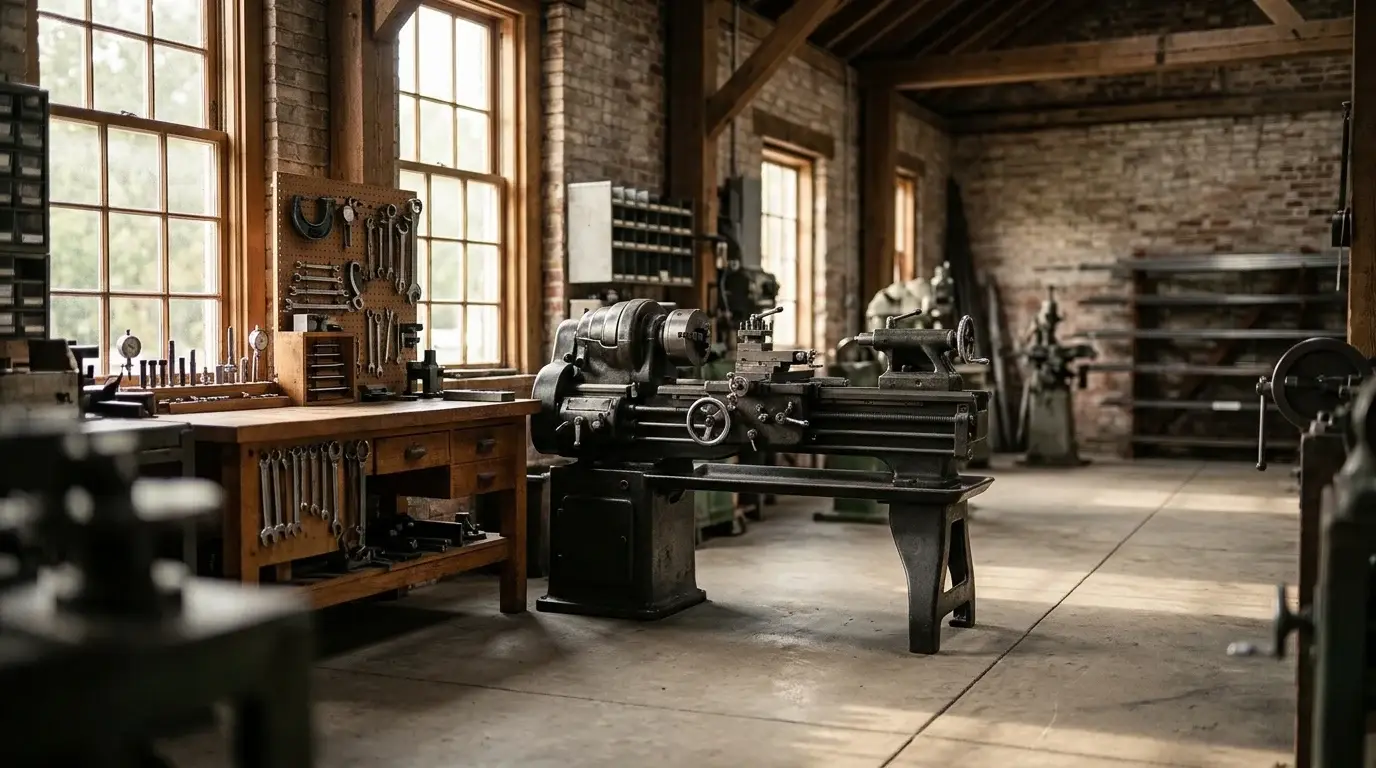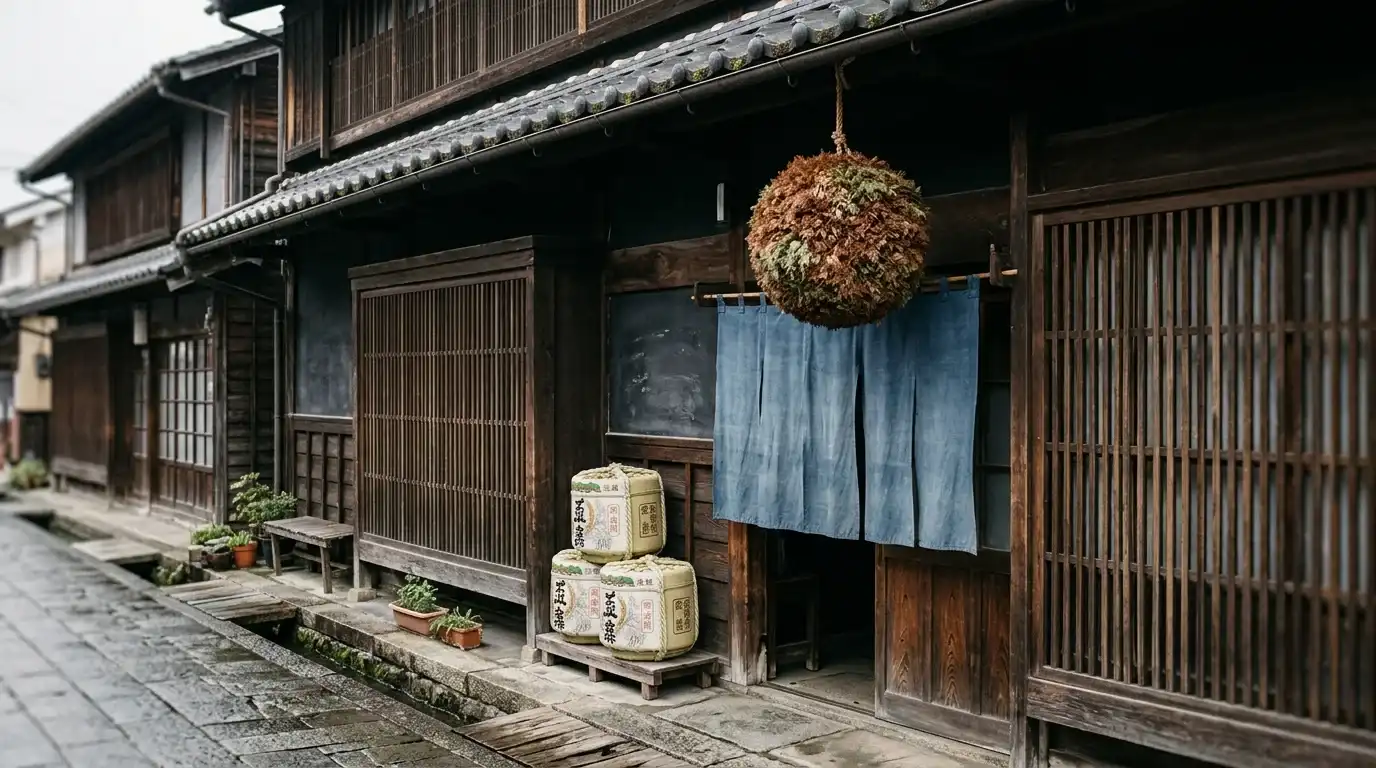
In 2006, a temple-building company in Osaka that traces its founding to the year 578 stopped being independent. Kongo Gumi was acquired by Takamatsu, another Osaka construction company, and the chairman Takamatsu sent over told Nikkei Asia that the key to reorganizing it was to make it an ordinary company. It still builds and repairs temples. Its carpenters are organized into eight independent groups, called kumi, that compete for work and share it.
Kongo Gumi is the extreme case of something common in Japan. A private credit research firm counts tens of thousands of Japanese companies that have been operating for a century or more. The reasons offered for that are usually cultural and vague. The data on how these companies are owned, financed and passed down is more specific, and some of it travels.
How many, and in which trades
Teikoku Databank, a Japanese credit research firm, publishes an annual count of what it calls shinise, companies at least 100 years old. Its survey released March 27, 2026 counted 46,708 as of December 2025. That is 3.11 percent of the roughly 1.5 million companies in its database, the first time the share has passed 3 percent. About 1,900 companies founded in 1925 joined the list that year, and the firm expects about 2,000 more in 2026.
| Age | Companies (Dec. 2025) |
|---|---|
| 100 years or more | 46,708 |
| 200 years or more | 1,836 |
| 300 years or more | 905 |
| 500 years or more | 47 |
| 1,000 years or more | 11 |
Kyoto has the highest share of century-old companies of any prefecture, at 5.45 percent, followed by Yamagata and Niigata. By broad industry, manufacturing, retail and wholesale account for roughly two-thirds of the total. By narrow industry, the largest group is office leasing, with 1,552 companies, followed by sake brewing at 938 and traditional inns at 795. Sake brewing has the highest concentration: 91.9 percent of the brewers in the database are at least a century old.
The list of thousand-year companies includes Nishiyama Onsen Keiunkan, an inn in Yamanashi founded in 705 that Guinness lists as the oldest hotel, according to a summary of the firm’s 2024 survey. Office leasing at the top of the count is a clue in itself. A family business that has owned its building for a century can end up in the real estate business whether it meant to or not.
The balance sheet behind the age
Teikoku Databank’s 2024 survey compared the financial ratios of about 10,000 century-old companies with roughly 300,000 companies across all industries for fiscal 2023, as ITmedia reported. The old companies carried an equity ratio, net assets divided by total assets, of 38.76 percent against 28.33 percent for the broader group. They had higher operating and ordinary profit margins, and the gap was widest on ordinary profit, which includes income outside the core business.
The firm attributed that gap to non-operating income from land, buildings and securities accumulated over decades. In plain terms, many of these companies are partly landlords and investors. The same comparison found them weaker on some efficiency measures, with slower turnover of fixed assets and inventory. A century-old sake brewery is not necessarily a fast-growing business; it is often a well-capitalized one.

Succession by adoption, and the argument over it
The most cited research on why Japanese family firms hold up is a study by Vikas Mehrotra, Randall Morck, Jungwook Shim and Yupana Wiwattanakantang, published in the Journal of Financial Economics in 2013. In most developed economies, firms run by heirs tend to underperform. The authors examined a nearly complete panel of postwar listed nonfinancial Japanese companies and found the opposite pattern: family firms run by heirs performed well on average.
The detail that drew attention was adult adoption. Japanese families have long adopted adult men, often a son-in-law, to take over the business, sometimes even when a biological son exists. In the NBER version of the paper, firms run by adopted heirs outperformed those run by blood heirs and roughly matched founder-run firms. The authors’ explanation was that adoption lets a family replace a weak heir with a capable outsider, while the possibility of being passed over pushes blood heirs to prepare.
Not everyone accepts the adoption explanation. Georg Blind and Stefania Lottanti von Mandach of the University of Zurich, in a 2015 working paper, argued that the adoption argument reduces to one about sons-in-law brought in through arranged marriages, and that the causation may run the other way: well-performing firms are more likely to attract capable sons-in-law in the first place. The disagreement is about cause. Neither side disputes that Japanese families have long treated the successor’s job as something other than an automatic birthright.
Kongo Gumi’s own history, as Nikkei Asia described it, fits that pattern. The company passed over an eldest son who lacked leadership ability, a chosen head carpenter could lose his position, and when there was no male heir a daughter’s husband could become head carpenter. By the time of the article, the only Kongo family member in the workforce was a daughter of the 40th head, serving as the 41st head in a symbolic role.
What 1,400 years did not prevent
Age is not protection. Teikoku Databank reported on September 25, 2026 that 112 century-old companies went bankrupt between January and August, according to SBBIT’s summary. That puts the year on pace for more than 160, above the record of 146 set in 2024. Manufacturing accounted for 34 of the 112, wholesale 24, retail 22 and construction 16. Half had debts under ¥100 million, and the firm pointed to successor shortages and rising prices as the main pressures.
The large failures had a different cause. Three of the four with debts of ¥1 billion or more were triggered by compliance problems such as off-balance-sheet debt and inflated receivables or inventory. One example was Karino-gumi, a water-works contractor founded in 1925, which entered bankruptcy in January with about ¥3.6 billion in debt after roughly ¥3.3 billion in off-the-books borrowing tied to bubble-era real estate came to light.
Kongo Gumi itself, the oldest of them all, needed a buyer. Under Takamatsu it introduced shared financial data, standardized processes and tighter cost control, and its workforce grew from about 80 at the acquisition to about 110, with annual sales of around ¥4 billion, Nikkei Asia reported.

The American survival curve
The United States does not publish a count of century-old companies in the same way, but the Bureau of Labor Statistics tracks how long new business establishments last. Its survival table follows every private establishment that opened in the year ending March 1995, a group of about 604,000.
| Years after opening | Share of 1995 establishments still operating |
|---|---|
| 1 year | 78.8% |
| 5 years | 48.8% |
| 10 years | 33.4% |
| 20 years | 20.4% |
About half were gone within five years and four in five within twenty. The comparison with Japan is loose: an establishment is a single location, not a company, and the Japanese count covers survivors rather than tracking a starting group. It still frames the scale of the Japanese number. A business that lasts a century has outlived several generations of competitors, owners and lenders.
What travels and what does not
Some of the Japanese pattern is tied to place. Teikoku Databank has attributed Kyoto’s lead to its long history as the capital and to comparatively light damage in the Second World War, according to a summary of its 2023 survey. A business district that was not bombed keeps its old shops. Other parts of the pattern are ordinary business decisions that any owner faces.
- Capital kept in the business. The century-old companies in the Teikoku Databank comparison carried more equity and fewer obligations relative to assets than the average company.
- Property owned rather than rented. Office leasing tops the count of century-old companies, and non-operating income from real estate explained much of their profit edge.
- Successors chosen for ability. The adoption research and Kongo Gumi’s history both point to families treating the top job as something to be earned.
- A narrow trade done well for a long time. Kongo Gumi stayed with temples; the brewers stayed with sake.
For an American family business, the closest equivalent to the adopted heir is a written succession plan that allows a non-family manager or buyer to step in. The tax and legal side of choosing an entity that can pass to the next owner starts with the LLC, S corporation or sole proprietorship decision. The 112 bankruptcies are the other lesson: a long history did not save companies whose books were not honest.
Sources
- Teikoku Databank, nationwide shinise analysis (2025), press release via Zaikei (Mar. 27, 2026)
- DIME, summary of Teikoku Databank 2024 shinise survey
- ITmedia Business Online, Teikoku Databank shinise financial analysis (Oct. 31, 2024)
- SBBIT, Teikoku Databank shinise bankruptcies January–August 2026 (Sept. 25, 2026)
- Nikkei Asia, Japan’s oldest company defies time with merit-based succession
- Mehrotra, Morck, Shim and Wiwattanakantang, Adoptive Expectations, Journal of Financial Economics 108(3), 2013
- NBER Working Paper 16874, Adoptive Expectations: Rising Sons in Japanese Family Firms
- Blind and Lottanti von Mandach, Not a Coincidence: Sons-in-Law as Successors in Successful Japanese Family Firms (2015)
- DIME, summary of Teikoku Databank 2023 shinise survey
- U.S. Bureau of Labor Statistics, Business Employment Dynamics establishment survival, Table 7