

A first violation of New York’s dig-safely law can cost an excavator up to $4,375. Each further violation within 12 months can add up to $17,500, according to the General Business Law text reprinted in the Department of Public Service’s Part 753 booklet, updated May 9, 2025. The rule behind those numbers is simple: call before digging, and wait.
The regulation is 16 NYCRR Part 753, often called Code 753, and the Public Service Commission enforces it.
Which call center covers which county
| One Call center | Counties covered | How to reach it |
|---|---|---|
| New York 811 | Bronx, Kings, New York, Queens, Richmond, Nassau, Suffolk | 811 or newyork-811.com |
| UDig NY | Every other county in the state | 811, 800-962-7962 or udigny.org |
Coverage from the Department of Public Service. Long Island contractors call New York 811, whose office is in Bohemia, per the Common Ground Alliance state page.
The timing rule
Notice has to go in at least two working days and no more than ten working days before excavation or demolition starts, not counting the day of the call, weekends or legal holidays, per the NYSEG and RG&E excavator manual and New York 811. If the start slips past ten working days, the excavator must notify again, according to the DPS booklet.
| Call placed | Earliest digging (no holidays) |
|---|---|
| Monday | Thursday |
| Tuesday | Friday |
| Wednesday | Monday |
| Thursday | Tuesday |
| Friday | Wednesday |
Two full working days after the day of the call. Weekend calls start counting on Monday.
Marking and the tolerance zone
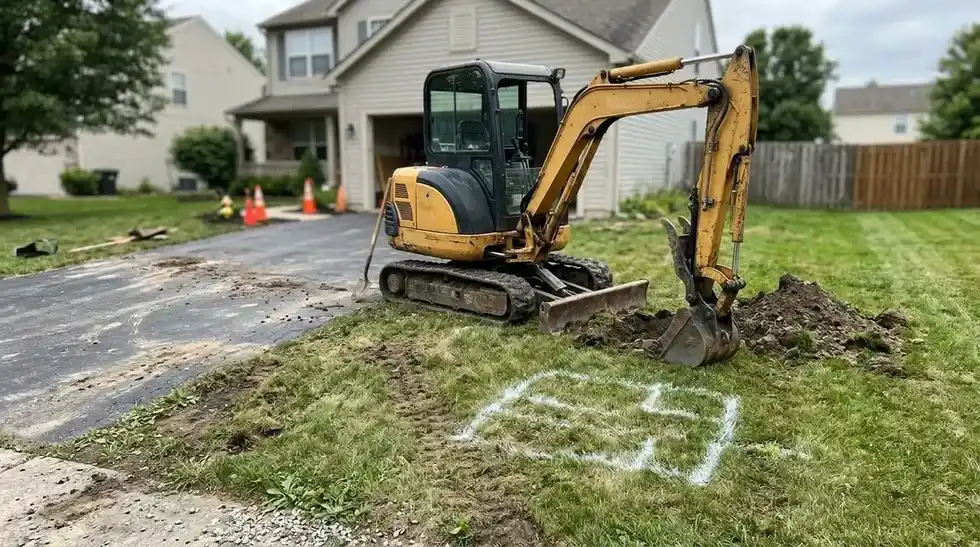
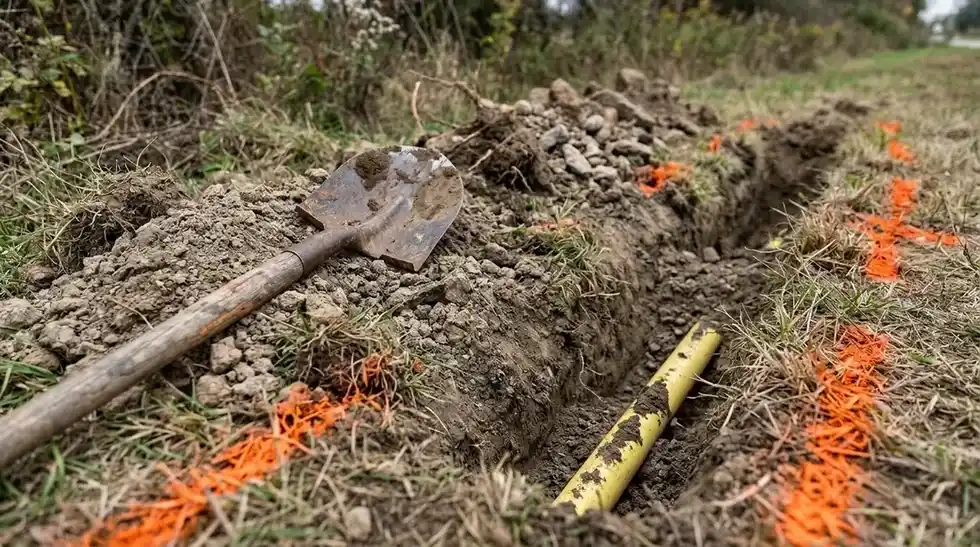
Before calling, the excavator outlines the planned work area in white paint. Utilities then mark their lines with colored flags, stakes or paint, and the marks must be kept in place until the work is done, per New York 811. Inside the tolerance zone only hand tools may be used until the exact location of the line is confirmed.
The zone is defined in § 753-1.2: half the known diameter of the facility plus two feet on either side of the marked center line, or two feet on either side when the diameter is unknown, per the booklet.
Training and penalties
Since May 4, 2019, amendments to General Business Law Article 36 require certain excavators to be trained, through UDig NY’s Certified Excavator Program or New York 811’s training program, the DPS says. Section 753-3.15 separately requires every excavator to make sure employees directly involved in digging are thoroughly familiar with the rules.
| Penalty under GBL § 765(1)(a) | Amount |
|---|---|
| First violation | Up to $4,375 |
| Each further violation within 12 months | Up to an additional $17,500 |
From the DPS booklet. An excavator whose violation forces the utility to make repairs is also liable for the reasonable cost of those repairs. The penalties do not apply when the damage was caused by the utility’s own failure to comply.
When a line gets hit
Contact the utility and New York 811 right away, even if no damage is visible. If gas or another substance is escaping, call 911 and leave the area, per New York 811. Plumbers running a new sewer lateral and landscapers setting fence posts fall under the same rule as a site contractor with an excavator; the licensing side of the plumbing trade is covered in Till Post’s guide to plumber licensing on Long Island.

- Long Island and NYC: call New York 811; everywhere else, UDig NY.
- Window: 2 to 10 working days before digging, not counting the call day.
- Tolerance zone: hand tools only within two feet plus half the line’s diameter.
- Fines: up to $4,375 first, then up to $17,500 each within a year.


