In the Village of Great Neck, every plumbing job has to be done by or under the direct, daily, on-site supervision of a plumber holding a village license, according to the village code. A license from Suffolk County, or from a town ten miles away, is something to apply with, not something that works on its own. On Long Island, a plumbing license is not one credential but a collection of them, issued by a county, by towns and by villages, each with its own board and its own idea of whose exams it trusts.
New York has no single statewide plumbing license. A licensing guide from Contractor License Requirements puts it in one line: the state does not issue one plumber credential, and the work is licensed locally. What follows maps the three systems a Long Island plumber is most likely to deal with, New York City, Suffolk County and the towns and villages of Nassau, using each one’s own code or licensing page.
New York City: the most demanding path
The Department of Buildings issues the master plumber license for the five boroughs, and its license page spells out the standard route. An applicant must be at least 18, able to read and write English, and have at least seven years of experience within the ten years before applying, working under a licensed master plumber in the United States. At least two of those years must be as a Department of Buildings registered journeyman plumber.
Shorter routes exist for people with engineering credentials. A bachelor’s degree in mechanical engineering or an appropriate engineering technology from a New York-registered college cuts the requirement to five years within seven, with at least two in the city. A New York licensed architect or professional engineer needs three years within five, at least one in the city.
There are two exams. The written test costs $585, is multiple choice, covers the city’s construction codes and allows no reference materials; 70 percent passes. The practical exam costs $530 and must be passed within 24 months of the written result. After both, a background application follows, with a physician’s form, notarized experience verification from every supervisor and a Social Security earnings history. The DOB’s license fee page lists a $200 license fee and a $50 seal for a three-year term, renewing at $150 plus a $75 seal.
The city also licenses the business, not only the person. The master plumber must be an officer, partner or sole proprietor of a business with a place of business in a commercially zoned location in the city, carrying general liability, workers’ compensation and disability insurance, with a phone bill in the business name. In a corporation, master plumber licensees must hold at least 51 percent.
The journeyman and gas steps underneath
The city’s journeyman registration is the rung below. Its registration page requires at least five years of full-time experience under a licensed master plumber or equivalent. Gas work has its own qualification. The DOB’s gas work page allows a registered journeyman to qualify, or a worker with at least six months of full-time plumbing experience under a master plumber who meets further training requirements.
For an owner hiring in the city, the practical point is that the person turning wrenches and the person whose license is on the permit are often different people. The license holder answers for the work.
Suffolk County: one county license, plus town boards
Suffolk licenses plumbers and electricians under Article XI of its county code, administered by the Department of Labor, Licensing and Consumer Affairs. The code is short on the essentials. Applicants must be at least 21 and able to read and write English. Each application carries a $200 fee. And every applicant must show “at least seven years’ experience, within the past 10 years, in the trade” before sitting for the exam.
The exam is written. An applicant who fails must wait three months to try again, and each attempt requires a new application fee. The only exception written into the article is historical: masters who were already working before January 1, 1971 in Suffolk towns or villages that required no license at the time could be licensed without an exam. The same article requires applicants to represent that they comply with federal rules on verifying employees’ work eligibility and that they are paying payroll taxes for their workers, and makes failing to do either grounds for a fine, suspension or revocation.
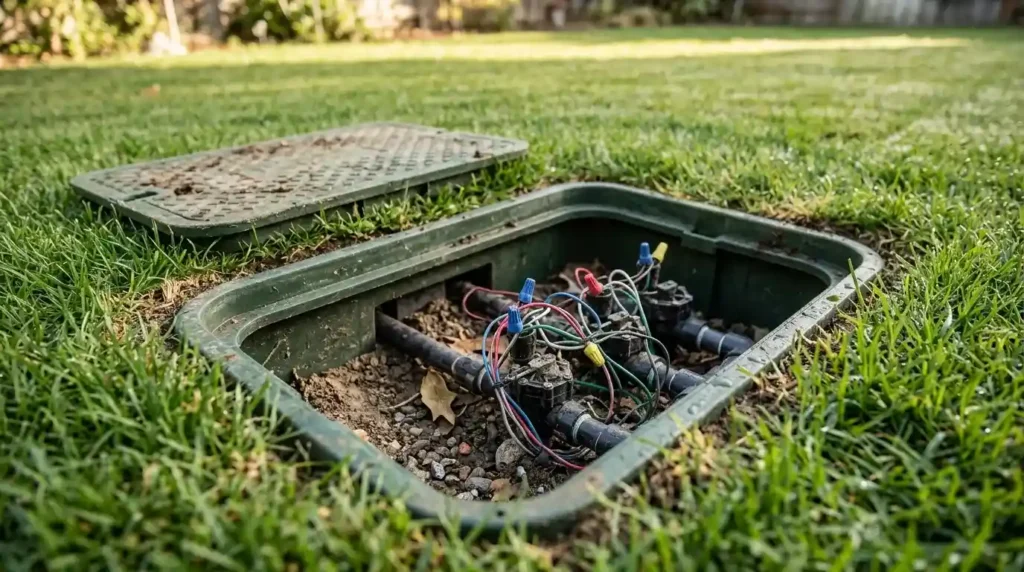
Suffolk also issues restricted plumbing licenses for narrow kinds of work. The county’s rules for restricted licensed plumbers describe, for example, a restricted license for lawn sprinkler systems, which covers branch water piping in irrigation systems downstream of the backflow device, and state that gas connections are reserved for licensed master plumbers.
Several Suffolk towns run their own boards on top of the county system. Huntington’s plumbing license instructions set out its own qualification rules, exams and a $150 fee for a reciprocal master plumber license, for plumbers already licensed elsewhere whose credential the town accepts.
Nassau: town and village licenses
In Nassau, the licensing authority usually sits with the town or village. The Town of Oyster Bay’s plumbing chapter makes it unlawful to install, repair or alter plumbing or heating systems in the town, or to run a plumbing business there, without a master plumber’s license “issued or recognized by the Town.” It also bars anyone without the license from calling themselves a plumber on signs, cards, vehicles or estimates, and treats each week of a continuing violation as a separate offense.
Villages often keep their own boards too. The Village of New Hyde Park’s plumbing code defines terms that show how the pieces connect: a certificate of competency, a reciprocal licensing agreement, a recognized reciprocating municipality and a “Tri-Town Plumbing Agreement.” Great Neck’s code, cited above, allows a master plumber licensed by another New York municipality with substantially equivalent requirements to apply for a village license, on top of the supervision rule.
The result is a map of reciprocity that changes at municipal borders. A plumber planning to work across both counties usually needs one primary license earned by exam, then reciprocal licenses from each town or village that will accept it, each with its own paperwork and fee. Which municipalities accept which licenses is a question to put to each building department before taking the job.
| Jurisdiction | Who issues it | Experience before the exam | Key fees |
|---|---|---|---|
| New York City | Department of Buildings | 7 years in last 10, incl. 2 as registered journeyman | $585 written, $530 practical, $200 license, $50 seal |
| Suffolk County | Labor, Licensing and Consumer Affairs | 7 years in last 10; minimum age 21 | $200 per application |
| Town of Huntington | Town board | Set by town rules | $150 reciprocal master license |
| Town of Oyster Bay | Town | Set by town code | Set by town; liability insurance required |
Why the paperwork is worth it
The Bureau of Labor Statistics’ occupational outlook counts 510,600 plumber, pipefitter and steamfitter jobs nationally, with a median wage of $63,800 a year, or $30.67 an hour, in May 2025. It projects 7 percent growth from 2025 to 2035, much faster than average, and about 42,000 openings a year, mostly to replace workers who retire or change fields. The same page notes that most states and some localities require plumbers to be licensed, which makes the Long Island patchwork less unusual than it feels. Most plumbers learn through a four- or five-year apprenticeship with about 2,000 hours of paid on-the-job training a year, and 8 percent are self-employed.
For a plumber who wants to own the business rather than work for one, the master license is the line between the two. Under codes like Oyster Bay’s, employees can work under a master plumber’s license, but only the license holder can run a plumbing business or advertise as a plumber. Building the business around that license, from the entity it operates under to the insurance a town will ask to see, starts with the structure decision covered in LLC, S corporation or sole proprietorship.
Books for the exam table
Code books are the core study material for any of these exams. Two references below cover the state code and the principles behind plumbing and mechanical codes generally; New York City candidates study the city’s own construction codes instead.
- 2025 Plumbing Code of New York State (2025 PCNYS): The International Code Council’s state edition, which the publisher describes as a fully integrated custom code based on the 2024 International Plumbing Code. See it on Amazon (affiliate link)
- Code Check Plumbing & Mechanical 6th Edition: An Illustrated Guide to the Plumbing & Mechanical Codes: Douglas Hansen’s illustrated field guide to code requirements for supply, drainage, venting and mechanical installations. See it on Amazon (affiliate link)
As an Amazon Associate I earn from qualifying purchases. A commission may be earned if you buy through this link, at no extra cost to you.
Sources
- Contractor License Requirements, New York plumber license requirements
- NYC Department of Buildings, Obtain a Master Plumber License
- NYC Department of Buildings, Master Plumbers license fees
- NYC Department of Buildings, Journeyman Plumber registration
- NYC Department of Buildings, Gas Work Qualification
- Suffolk County Code, Chapter 563, Article XI: Electricians and Plumbers
- Suffolk County, Code of rules governing restricted licensed plumbers
- Town of Huntington, Plumbing license instructions
- Town of Oyster Bay Code, Article VIII: Plumbers’ Licenses
- Village of New Hyde Park Code, Plumbing
- Village of Great Neck Code, Plumbing
- U.S. Bureau of Labor Statistics, Plumbers, Pipefitters, and Steamfitters