In Virginia the cap on selling home-pickled food is $3,000 a year. In Florida and Wyoming a home food business can gross $250,000. Both figures come from the Institute for Justice’s homemade food survey, which tracks every state’s cottage food rules, and the distance between them is the whole story of selling food from a home kitchen in the United States.
Every state and the District of Columbia now has some form of cottage food program, letting residents sell baked goods and other shelf-stable foods, per the Institute for Justice. What varies is everything else.
The national picture in numbers
| Rule | How many states (Institute for Justice) |
|---|---|
| Annual sales cap on homemade food | 26 states, from $3,000 to $250,000; half of capped states at or under $50,000 |
| Online sales banned | 8 states |
| Mail delivery banned | 15 states |
| No inspection ever required to open | 32 states |
| No license, permit or registration | 25 states |
| Extensive inspection and permitting | 6 states plus D.C. |
| Pickles and other acidified foods allowed | 26 states |
| Home-cooked dishes with meat allowed | 5 states |
Counts from the Institute for Justice’s homemade food page. Its separate reform timeline gives slightly different totals for online sales (43 states plus D.C. allowed), so figures can shift by a state as laws change. IJ is an advocacy group that favors loosening these rules; its Baking Bad report grades each state against its own model bill.

What “cottage food” usually means
Most states limit cottage foods to items that do not need time or temperature control for safety, the category the FDA Food Code calls non-TCS foods, according to the National Agricultural Law Center. Breads, cookies and jams usually qualify. Anything that needs refrigeration usually does not, though a handful of “food freedom” states now allow more.
New York: the home processor registration
| New York home processor rule | Detail |
|---|---|
| Who registers | Anyone processing allowed foods at home for sale |
| Training | An approved food handler course plus Basic Sanitation Practices training |
| Fee | None currently |
| Review time | Up to 16 weeks |
| Sales cap | None stated |
| Inspection | Complaint basis only |
| Where to sell | In New York only: farms, farmers’ markets, craft fairs, home delivery, the processor’s website, and wholesale to local restaurants and grocers |
| Not allowed | Shipping or selling out of state |
All from the Department of Agriculture and Markets. Private-well users also submit a water test from a certified lab, and commercial equipment is not allowed in the home kitchen.

What New York allows and bans
| Allowed (examples) | Prohibited (examples) |
|---|---|
| Breads, bagels, rolls | Buttercream and cream cheese frostings |
| Cookies, brownies, biscotti | Cheesecake and cream pies |
| Cakes and cupcakes without cream frostings | Pickles, sauces, salsas |
| Double-crust fruit pies, high-acid jams | Nut and fruit butters |
| Fudge, peanut brittle, popcorn | Chocolate for dipping, raw-nut products |
| Granola with commercially roasted nuts | Meat, fish, poultry, dairy, beverages |
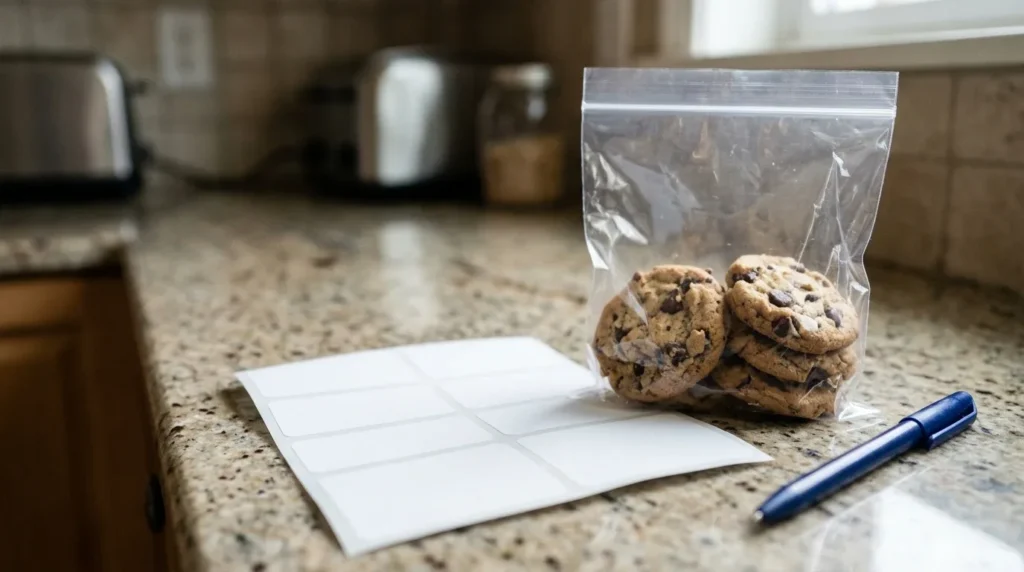
From the state’s home processing page. Labels must carry the product name, ingredients by weight, net quantity, the processor’s name and full address, the major allergens, and a phrase such as “Made in a Home Kitchen” in type at least 1/16 inch tall. Pricing a homemade product so the labor is paid for is its own problem, covered in Till Post’s guide to pricing a custom product.
Where New York sits
Against the national map, New York is permissive on venues and caps and strict on the food list. It allows website sales and wholesale to local stores, which many states do not, and it states no sales cap. But it is one of the states that limits sellers to approved products, and its ban list rules out acidified foods such as pickles that 26 states allow, per the Institute for Justice and Agriculture and Markets.
- Every state allows some homemade food sales; caps range from $3,000 to $250,000.
- New York: free registration, training required, no stated cap, in-state sales only.
- New York bans pickles, sauces, cream frostings and anything needing refrigeration.
- Label everything: name, ingredients, weight, address, allergens, “Made in a Home Kitchen.”