The federal government, which buys more services than anyone, has a blunt rule about hourly billing. A time-and-materials contract, the Federal Acquisition Regulation says at section 16.601, provides no positive profit incentive to the contractor for cost control or labor efficiency. For that reason it may be used only when the extent or duration of the work cannot be estimated with any reasonable confidence.
A plumber, electrician or HVAC shop on Long Island faces the same choice on every call, just with smaller numbers. Quote one price for the job, or charge for the hours and the parts. The choice decides who carries the risk when the job runs long, who benefits when it runs short, and, in New York, how the paperwork and the sales tax have to be handled.
The two models in one table
| Flat rate (fixed price) | Time and materials | |
|---|---|---|
| Customer pays | One price agreed before work starts | Hours at a set rate, plus materials |
| Who carries overrun risk | The contractor | The customer |
| Reward for working faster | Contractor keeps the savings | Contractor bills fewer hours |
| Paperwork during the job | Low | Time records, parts receipts |
| Fits best | Repeatable, well-defined jobs | Diagnosis, unknown conditions, open scope |
The federal rules describe the trade-off in the same terms. A firm-fixed-price contract, under FAR 16.202-1, places maximum risk and full responsibility for all costs on the contractor, gives the maximum incentive to control costs, and imposes a minimum administrative burden. Time and materials, under 16.601, pays labor at fixed hourly rates that already include wages, overhead, general and administrative expense and profit, with materials at actual cost. Because it rewards nobody for speed, the government requires surveillance of the contractor and a ceiling price, which the contractor exceeds at its own risk.
A homeowner cannot surveil a plumber. That gap explains most of the friction around hourly billing in residential trades.
Where each one earns its keep
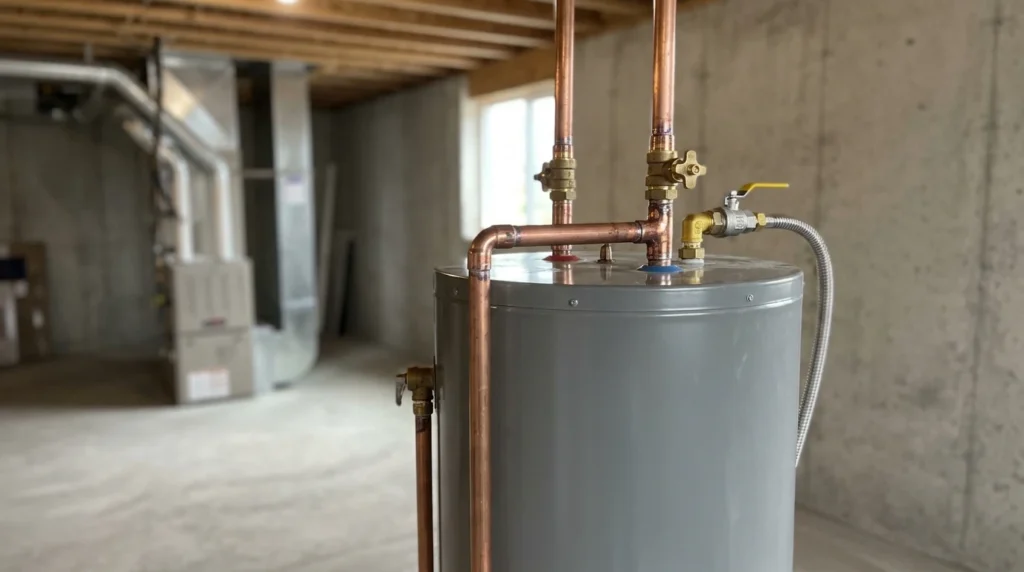
Flat rate works when the job repeats. Replacing a faucet, swapping a water heater of a standard size, installing a ceiling fan on an existing box: the shop has done enough of them to know the average time, the parts list and the spread. Pricing at the average plus a margin means some jobs win and some lose, and the shop keeps whatever efficiency its crew builds.
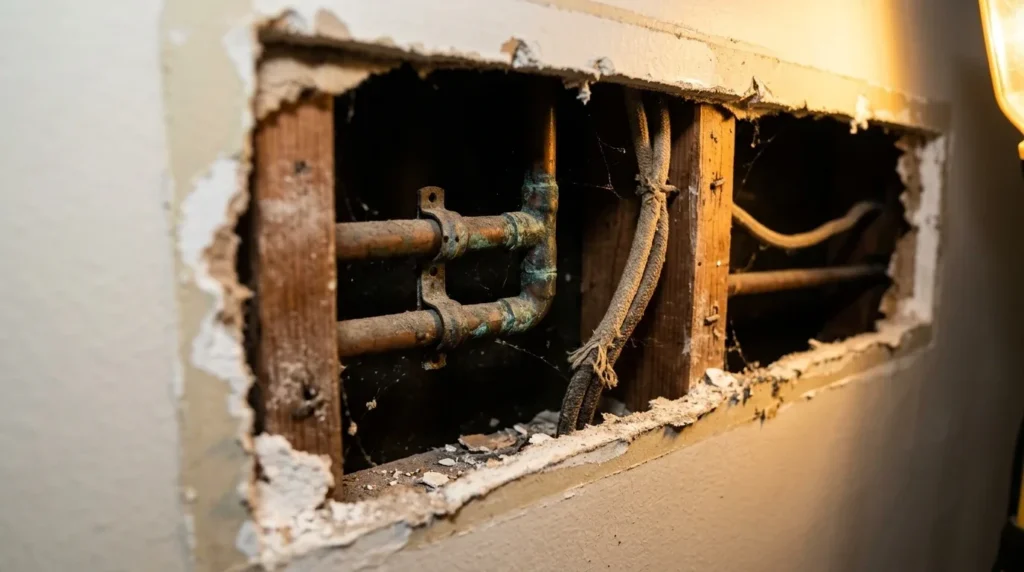
Time and materials fits the opposite case. A leak behind a finished wall, an intermittent electrical fault, an old house with unknown wiring are jobs where nobody can say how long it will take until the work starts. Quoting a fixed price there forces the contractor to pad it heavily or gamble.
Many shops blend the two: a flat diagnostic fee to find the problem, then a fixed price for the repair once the scope is known. That keeps the open-ended part short and puts the repeatable part on a fixed number.
The same job priced both ways
An illustration, with invented round numbers rather than any real shop’s rates: a job that usually takes two hours, with $150 in parts. A shop that bills $125 an hour on time and materials, with a 30 percent markup on parts, charges $250 in labor and $195 in parts, $445 in total, if the job goes to plan.
| Actual time on the job | Time and materials bill | Flat rate of $445 | Flat-rate shop’s gain or loss vs. T&M |
|---|---|---|---|
| 1.5 hours | $382.50 | $445 | +$62.50 |
| 2 hours | $445 | $445 | $0 |
| 3 hours | $570 | $445 | −$125 |
| 4 hours | $695 | $445 | −$250 |
The flat-rate shop wins when its crew is faster than average and loses when the job fights back. Over hundreds of calls, the result depends on how well its price book reflects reality. A shop with no history of its own job times is guessing, and the losses on the bad jobs arrive all at once.
Pay is part of the arithmetic. The Bureau of Labor Statistics puts the national median wage for plumbers, pipefitters and steamfitters at $63,800 a year, or $30.67 an hour, as of May 2025, according to its Occupational Outlook Handbook. The hourly rate a shop charges has to cover that wage plus payroll taxes, insurance, the truck, unbilled drive time and the owner’s return, which is why billed rates run well above the wage.
What New York requires in writing
For home improvement work, the method has to fit a written contract. New York’s General Business Law § 771 requires that contracts state the agreed consideration for the work and materials, describe the work and the materials with make and model where applicable, give approximate start and completion dates, and include a notice that the owner can cancel until midnight of the third business day after signing.
The statute also treats the two models differently. Progress payments have to follow a schedule in dollars and cents and track the state of the work, and pre-completion payments must be deposited under the Lien Law or covered by a bond or letter of credit. Payments made on a specified hourly or time basis for work completed or materials supplied are not treated as progress payments under the same section, so they fall outside that deposit requirement.
Home improvement contractors must also be licensed in Nassau and Suffolk, as well as New York City, Westchester, Putnam and Rockland, the state Attorney General’s home improvement fact sheet notes. The same page advises homeowners never to pay the full price upfront and to write a detailed list of work so they can lock in firm prices, which is a nudge toward fixed pricing from the consumer side. Licensing for the trades themselves is covered in the posts on plumber licenses and electrician licenses on Long Island.

Sales tax changes the invoice
New York taxes repair, maintenance and installation work on real property but not capital improvements. On taxable repair work, Tax Bulletin TB-ST-129 says all charges for materials and labor billed to the customer are taxable, including expenses and markups. Its sample repair bill shows $130 in materials and $250 in labor, taxed together.
Capital improvements work differently, per TB-ST-104. The customer pays no sales tax on the job, but the contractor pays tax on the materials it buys and may build that tax into its price like any other project expense. The bulletin’s example bill shows materials including tax and markup at $600 plus $1,000 in labor, with no sales tax line. The customer should give the contractor Form ST-124, which relieves the contractor of liability for the tax.
Itemizing can matter in other places too. For interior cleaning and maintenance contracts that mix taxable and nontaxable services, the state regulation at 20 NYCRR 527.7(c)(3)(ii) makes the entire charge taxable if the contract or bill does not separately state the two. Before quoting one flat number for work that crosses tax categories, a shop should confirm with its accountant how the invoice needs to be split.
Choosing for a small shop
- Track actual job times first. A flat-rate price book built on guesses moves risk onto the shop without the data to price it.
- Separate diagnosis from repair. A fixed diagnostic fee followed by a fixed repair price covers the open-ended part without an open-ended bill.
- Write the contract to § 771. Price, description, dates, cancellation notice and the deposit rules apply either way.
- Classify the work for tax before quoting. Repair or capital improvement changes what the customer pays and what the invoice shows.
- Put a cap on hourly jobs. The federal ceiling-price rule exists because open-ended billing erodes trust; a not-to-exceed figure does the same work for a homeowner.
Training crews to work to a standard time is part of what makes flat rate pay, which ties back to the earlier post on registered apprenticeship. The price on paper is only as good as the crew that has to meet it.
For informational purposes only — consult a licensed attorney or financial advisor.
Sources
- Federal Acquisition Regulation 16.601, Time-and-materials contracts
- Federal Acquisition Regulation 16.202-1, Firm-fixed-price contracts
- New York General Business Law § 771
- New York State Attorney General, Home improvement fact sheet
- NYS Department of Taxation and Finance, TB-ST-129
- NYS Department of Taxation and Finance, TB-ST-104
- 20 NYCRR 527.7 (Cornell LII)
- BLS Occupational Outlook Handbook, Plumbers, Pipefitters, and Steamfitters