
The Heritage Diner at 275 Route 25A in Mount Sinai, New York, runs on Square, and the diner uses Square Loyalty on the same account as the register. I own the diner along with my parents. It opened running NextPOS and later Aldelo, and it used that system for 20 years. That covers what I will say about our own use: the program is in use at the diner. Everything below about how the program works and what it costs comes from Square’s published pages, and the reward arithmetic is mine.
Disclosure: Peter Kalafatis has a financial interest in Square referrals; the referral link on this site earns a reward when a referred business takes its first payment.
Why it matters that Loyalty shares the register’s account
Before the diner moved to Square, I ran Nanos Media, a restaurant POS installation and training company, and I was a reseller of NextPOS, which eventually became Aldelo. Through Nanos Media I installed POS and security systems for many restaurants in my area. I looked at software for a restaurant from the installer’s side for a long time before I looked at it from the owner’s side.
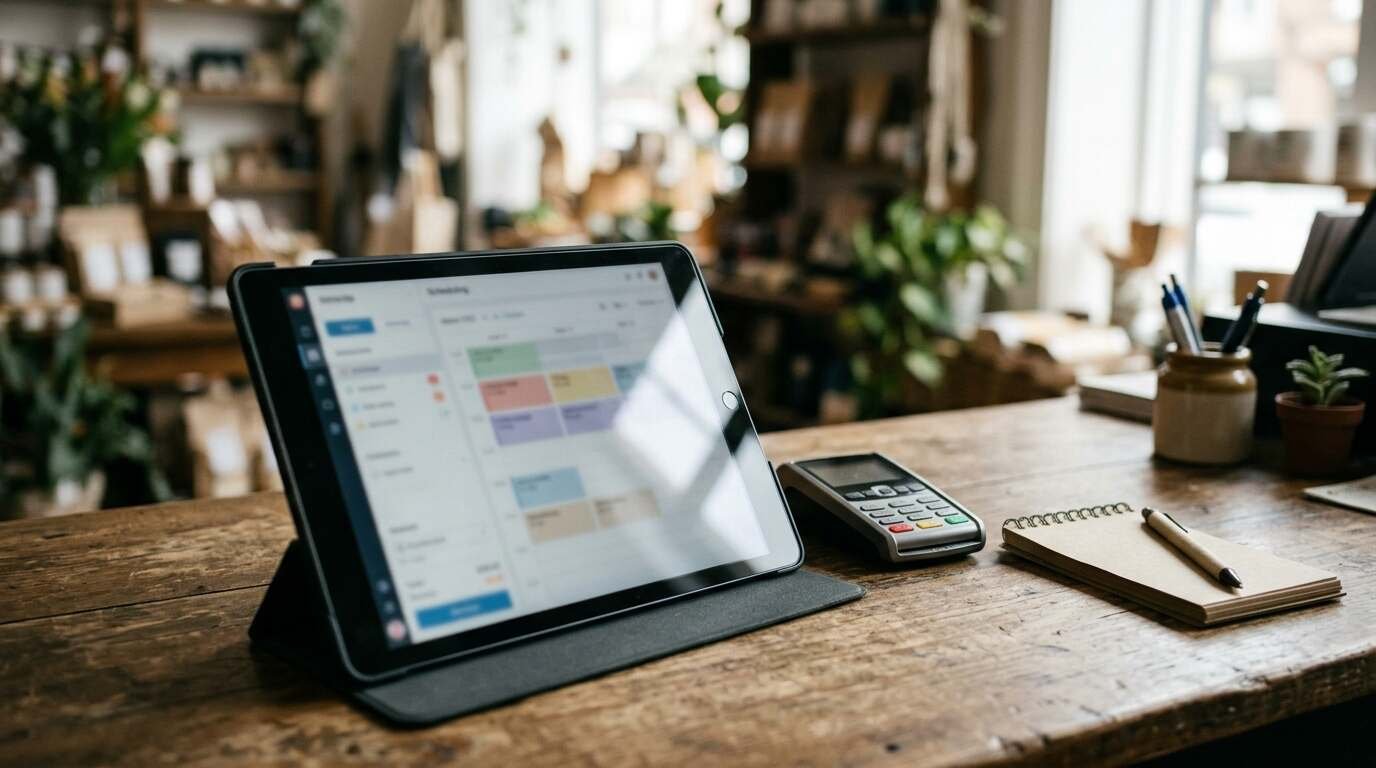
What I value in Square is that the pieces sit on one account. Loyalty, Square Payroll, gift cards, time tracking, marketing and online ordering through the diner’s website can be integrated with the register. Orders from delivery platforms such as DoorDash, Uber Eats and Grubhub go straight into the kitchen. The old system did one job well. This one lets the loyalty program, the checkout and the rest of the business be managed from the same place, including from home or a phone.
For a loyalty program that matters in a specific way. Square’s Loyalty page describes enrollment at the point of sale, so the points are tied to the order being rung and not to a separate list someone has to reconcile later.
How points are earned
Square’s Loyalty page gives the restaurant four ways to award points: by visits, by amount spent, by items purchased, or by categories purchased. The page says the choice is meant to match a specific business goal, and that framing is the right one. A diner that wants a second breakfast visit in the week rewards visits. A place trying to lift the average check rewards dollars. A kitchen trying to move a slow-selling category rewards items or categories.
Each rule rewards a different behavior, and each breaks differently. A visit-based program is simple to explain across a counter and is easy to game with a $2 coffee. A dollar-based program tracks revenue but asks the customer to do arithmetic. Item and category rules are the sharpest tool and the hardest to keep legible, because the menu changes and the rule has to follow it.
Customers enroll three ways according to the page: at the point of sale, through a Square website, or by an invoice. At a counter that means a phone number typed into the register at checkout. The method works only if a cashier asks every time, a habit that collecting email addresses at the counter covers from the other direction.

Rewards, texts and the wallet pass
Once a customer reaches a threshold, the program issues a reward, and the page says the customer can redeem it in the store or online. Texts go out automatically when a customer earns points or a reward. The page calls them transactional text notifications.
Customers can also add a digital loyalty pass to Apple Wallet to track points and rewards. The page names Apple Wallet only. It does not say anything about other wallets, so a restaurant with a customer base on Android phones should not assume an equivalent.
Promotions come in two forms on the page, limited-time and recurring, built around bonus points. A bonus-point offer aimed at a slow day is the obvious use. The reporting side of promotions is covered by a line saying the owner can track performance of loyalty promotions in the Square Dashboard.
A phone-number prompt also adds seconds to a transaction, and seconds at a counter are a cost of their own. The leaks described in where small shops lose customers at checkout apply here: if the enrollment question slows the line at the busiest hour, the program is taxing the customers it is meant to keep.
VIP tiers
Tiers are listed on the Loyalty page with a “NEW” tag. The copy says the most loyal customers can earn rewards faster the more often they visit, and that the name and structure of each tier can be customized. The page does not state how many tiers a program can hold, what the thresholds can be, or what multipliers are allowed, so none of that is stated here.
A tier structure is a pricing decision in disguise. A top tier that earns points at three times the base rate means the best customers are redeeming a reward in a third of the visits. That customer is the least likely to leave, which makes the discount the program’s most expensive and most defensible line. A restaurant that cannot say what its top customers spend in a month should not build a top tier until it can.
What the program costs
On the restaurant pricing page, Square lists Free at $0, Plus at $49 and Premium at $149 per location per month, as listed on the restaurant pricing page fetched at the time of writing. In the feature comparison further down, the Loyalty row (loyalty rewards program and promotions) shows a dash in the Free column, which marks the program as not part of Free. The Loyalty page itself offers a 30-day free trial.
So the cost of Square Loyalty, as published, is the cost of the plan that holds it. Plus works out to $588 a year per location and Premium to $1,788. Per-location billing matters for a restaurant with more than one door.
The plan also carries a card rate. Plus lists 2.5% + 15¢ for tapped, dipped or swiped cards, against 2.6% + 15¢ on Free, so a restaurant that moves up for Loyalty gets a slightly lower in-person rate as a side effect. Whether that rate cut covers the monthly fee on its own depends on card volume, since each tenth of a percentage point saves $1 per $1,000 processed.
Text marketing is a separate meter. The same table shows 500 text messages included on Plus, then 3¢ per message, and 2,500 included on Premium, then 1.5¢. The loyalty texts described above are transactional; whether they count against that allowance is not stated on the pages fetched, and a restaurant that texts heavily should ask Square before assuming either answer.

What a reward really costs
The plan fee is the smaller number. The reward is the larger one, and it runs through the kitchen, not the software.
Take a hypothetical diner with a $15 average check. The program awards one point per dollar, and a reward of a free $8 menu item arrives at 150 points. A customer who earns a reward spends $150 first. The menu price of the reward is $8, which is 5.3% of the spending that earned it. The kitchen does not hand over $8 of cash, though. It hands over the food cost of that item. If food cost runs at 30% of menu price, the real cost is $2.40, or 1.6% of $150.
Those figures are made up for the illustration and only the method is the point. The cost of a reward is the food cost of the item divided by the spending needed to earn it, and the method for the first half of that sum is the one in writing a recipe costing card. Menu price overstates the cost of a free item. A reward structured as money off the check costs its full face value, which makes it the most expensive version for a restaurant working at a thin margin. The pages fetched do not say which reward types the program supports, so that setup detail has to be confirmed inside the Square Dashboard.
The comparison worth making is with the card fee already being paid. If processing runs near 2.5% of a sale, a reward costing 1.6% to 5% of the spending behind it is in the same range as the fee. It is a real cost and has to earn its place.
What Square says it does
Square’s page makes a claim about results. It says customers enrolled in a Square Loyalty program spend more and visit more often, citing global Square Loyalty 2022 data. The figures are animated on the page and did not come through in the text I read, so none are repeated here. The source is the vendor, the data is from 2022, and it covers all business types globally rather than restaurants in New York. It is a reason to run the numbers on a trial, not a forecast.
What the program can measure for a restaurant is on the page too. Square lists top loyalty customers, loyalty-attributed sales, and the average spend of loyalty customers against non-loyalty customers. That last comparison is the one that answers the question. It has a known flaw, since customers who enroll are the ones who already come often, so a gap in average spend does not prove the program caused it.

The honest part
The sourced facts fit on a few lines. Points can be earned several ways, the reward is the restaurant’s to define, tiers exist, and the program lives on a paid plan. Square publishes no loyalty fee beyond that plan, and no cap on customers or rewards appears on the pages I read. The unknowns are the ones that matter in practice, namely the ceiling on tiers and whether the loyalty texts use the marketing allowance.
The diner has special custom pricing and processing fees from Square because of its volume, which is multimillion in sales a year. I am not stating those figures. What I can say is that the published plan price is a fixed charge, the rewards are variable, and the variable part is the one that deserves a spreadsheet.
For informational purposes only — consult a licensed attorney, tax professional or financial advisor.
Referral: The Heritage Diner runs its register, loyalty program and payroll on Square. A business that signs up through this Square referral link and takes its first payment earns a reward for both sides. Disclosure: Peter Kalafatis has a financial interest in Square referrals.
Sources
- https://squareup.com/us/en/software/loyalty
- https://squareup.com/us/en/point-of-sale/restaurants/pricing
- https://www.youtube.com/watch?v=LUPrpYla0DI
All pages fetched at the time of writing.