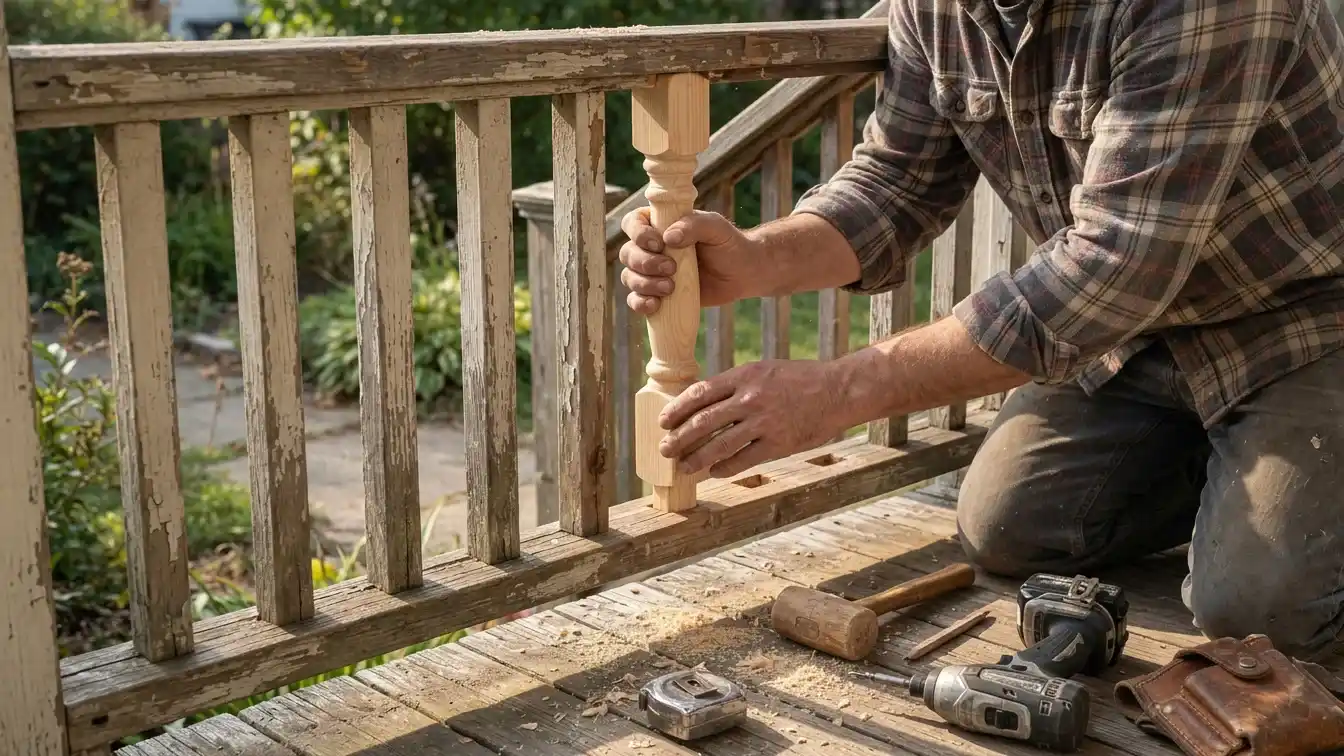
A boot company told customers its footwear was handcrafted 100 percent in the United States. Since May 2023, according to the Federal Trade Commission, the uppers had been made in the Dominican Republic and the outsoles came from Brazil. Oak Street Bootmakers settled with the agency for $75,000 in consumer redress, one of three cases the FTC announced together on April 14, 2026.
“Made in USA” sells. It also carries a legal standard stricter than most small manufacturers and online sellers assume, and since 2021 a federal rule that adds civil penalties to the risk. For a shop that makes things, or resells things it describes as American-made, the rule is worth reading before the next product page goes up.
The standard: all or virtually all
The FTC’s business guide, Complying with the Made in USA Standard, sets the test for an unqualified claim: the product must be “all or virtually all” made in the United States. That means final assembly or processing happens here and the product contains no, or negligible, foreign content.
The agency weighs three things:
- Where final assembly or processing takes place. It must be in the United States.
- How much of the total manufacturing cost comes from U.S. parts and processing.
- How far removed any foreign content is from the finished product.
The last factor is the one that surprises people. Foreign raw material deep in the supply chain may not matter; a foreign part that sits one step from the finished item usually does.
The FTC’s own examples
| Product | Facts | Unqualified “Made in USA” or “Assembled in USA”? |
|---|---|---|
| Table lamp | Assembled in the U.S. from American brass and an American shade; the base is imported and a small share of cost | Not OK as Made in USA: the base is too close to the finished product and a significant part of it |
| Gold ring | Made in the U.S. from imported gold | Not OK: the gold is a significant part of the value and one step from the finished ring |
| Clock radio | Plastic case made from imported petroleum | Likely OK: the petroleum is far removed and insignificant |
| Lawn mower | Assembled in the U.S.; about 15 to 20 percent foreign parts | “Assembled in USA” is appropriate |
| Computer | Imported major parts joined in a simple “screwdriver” operation | “Assembled in USA” is deceptive |
All five come from the FTC guide. The lamp is the most useful for a small maker: low foreign cost was not enough, because of where the imported part sat in the finished product.

Qualified claims and “Assembled in USA”
A product that does not meet the standard can still say something true. The guide allows qualified claims that describe the extent, amount or type of domestic content, such as “60% U.S. content” or “Made in USA of U.S. and imported parts,” provided they are truthful and substantiated. It recommends avoiding even qualified claims unless the product has significant U.S. content or processing.
“Assembled in USA” is available without qualification when principal assembly takes place in the United States, but not for a simple screwdriver assembly of foreign components. Claims about a single part or process have to be clearly limited to that part or process, and the guide warns that words like “produced,” “created” or “manufactured” in the U.S. can be read as covering the whole product.
On supply chains, the guide says marketers can generally rely on good-faith information from suppliers about domestic content, and recommends asking suppliers for the specific U.S. percentage.
The 2021 rule and the penalty
The FTC finalized its Made in USA Labeling Rule in August 2021, codifying the “all or virtually all” standard for labels. Under the rule, the guide says, marketers are subject to civil penalties if they use an unqualified Made in USA label on a product that does not meet the standard. The rule reaches online and mail-order marketing materials that include a seal, mark, tag or stamp labeling a product as Made in USA.
The maximum penalty for a knowing violation of an FTC rule was set at $53,088 per violation in the commission’s January 2025 inflation adjustment. In a notice published September 15, 2026, the FTC said its civil penalty amounts would remain unchanged for 2026, because the Office of Management and Budget cancelled the 2026 adjustments after a government shutdown left the Bureau of Labor Statistics unable to produce October 2025 inflation data.
Enforcement in 2026
The April sweep followed a March 2026 executive order titled “Ensuring Truthful Advertising of Products Claiming to be Made in America,” the FTC’s announcement notes. The three settlements:
| Company | Products | What was foreign | Consumer redress |
|---|---|---|---|
| TouchTunes Music Company | Electronic dartboards | Chips, cameras and flatscreen monitors; final assembly was in the U.S. | $625,000 |
| Americana Liberty and Three Nations | American flags and flag displays | Some products wholly imported from China; others with significant Chinese components | $167,743 |
| Oak Street Manufacturing (Oak Street Bootmakers) | Boots and other footwear | Uppers from the Dominican Republic, outsoles from Brazil | $75,000 |
The FTC described the TouchTunes payment as the largest consumer redress in a Made in USA Labeling Rule case to that point. It also closed investigations of two other companies after they agreed to fix their claims. On July 6, 2026, it sent warning letters to seven companies over Made in USA claims and one over a “Made in Texas” claim, covering drums, industrial laser machinery, coordinate measuring machines and e-cigarettes. Christopher Mufarrige, director of the Bureau of Consumer Protection, said the agency will hold accountable any company that “undermines Americans’ trust” with misleading origin claims.
The TouchTunes case is the one a small manufacturer should study. Final assembly in the United States did not save the claim, because high-value components that sit close to the finished product came from abroad.
A checklist before using the label
- List every component and its origin. Ask each supplier in writing for the U.S. percentage, as the FTC suggests.
- Rank components by cost and closeness to the finished product. A significant imported part near the end of the process is the red flag.
- Check every place the claim appears. Labels, packaging, product pages, marketplace listings and ads all count.
- Use a qualified claim when it is the true one. “Made in USA of U.S. and imported parts” or a stated percentage is lawful when accurate.
- Keep the file. Supplier statements and cost breakdowns are the substantiation if the FTC asks.
Rules from Washington tend to arrive in clusters for a small business; the post on OSHA rules for a business with few employees covers another set that applies no matter how small the shop is.
For informational purposes only — consult a licensed attorney or financial advisor.
Sources
- FTC, Complying with the Made in USA Standard
- FTC, Made in USA sweep press release (Apr. 14, 2026)
- FTC, warning letters press release (July 6, 2026)
- Federal Register, FTC Adjustments to Civil Penalty Amounts (Jan. 17, 2025)
- Federal Register, FTC Civil Penalty Inflation Adjustments notice (Sept. 15, 2026)