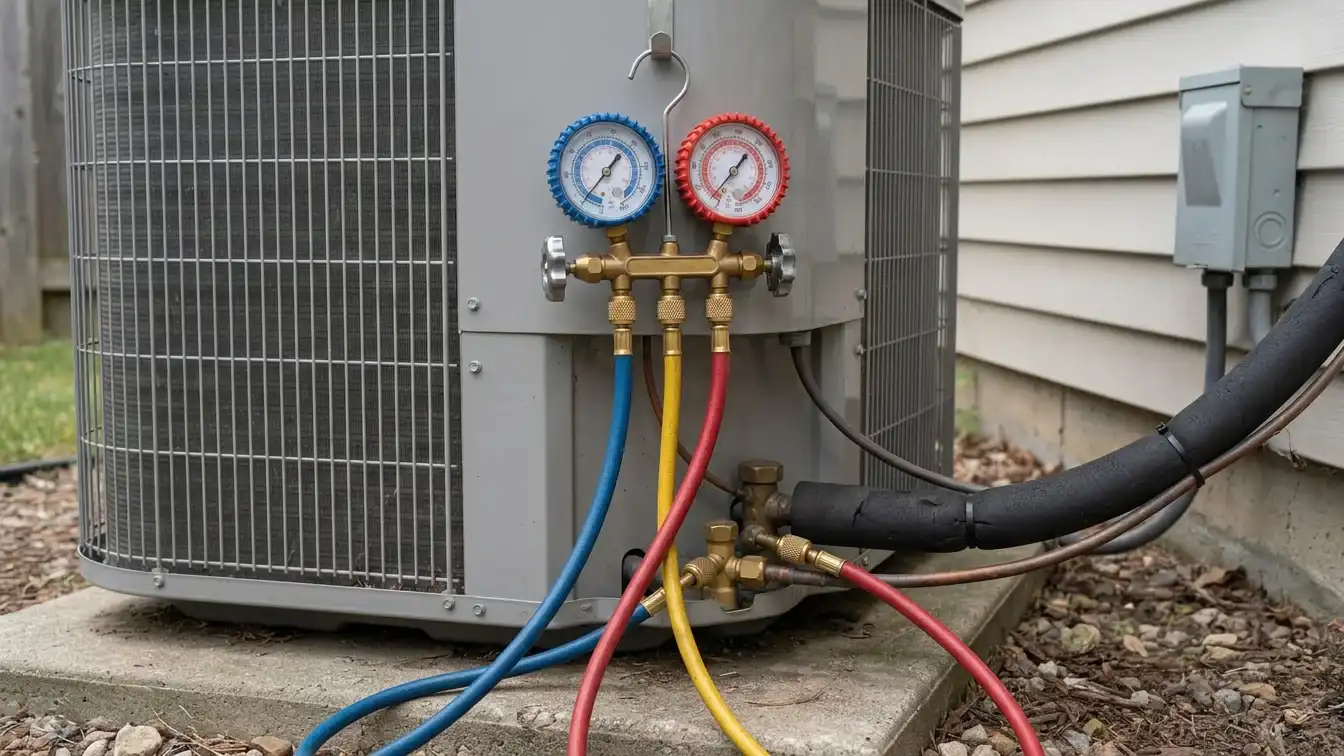
Anyone who services an air conditioner, a walk-in cooler or a reach-in refrigerator in the United States needs a card that the EPA does not issue. Technicians who maintain, service, repair or dispose of equipment that could release refrigerants must be certified under 40 CFR Part 82, Subpart F, according to the EPA’s Section 608 page, but the agency itself hands out no cards. Approved organizations give the test, and the credential never expires.
Two things are changing around that card at once. The refrigerants inside new equipment are moving to lower global warming potential under the EPA’s Technology Transitions rule, and New York has its own HFC regulation with registration deadlines for equipment owners. A small HVAC shop and a restaurant with a walk-in both feel it.
The four certification types
The EPA’s certification requirements define four levels:
| Type | Covers |
|---|---|
| Type I | Servicing small appliances |
| Type II | Servicing or disposing of high- or very high-pressure appliances, except small appliances and motor vehicle air conditioning |
| Type III | Servicing or disposing of low-pressure appliances |
| Universal | Servicing all types of equipment |
Every test has a Core section plus the section for each type. Tests must be given by an EPA-approved certifying organization. A Core test taken open book cannot count toward Universal certification, which requires a proctored Core exam. Apprentices are exempt while they are closely and continually supervised by a certified technician.
The refrigerant transition in new equipment
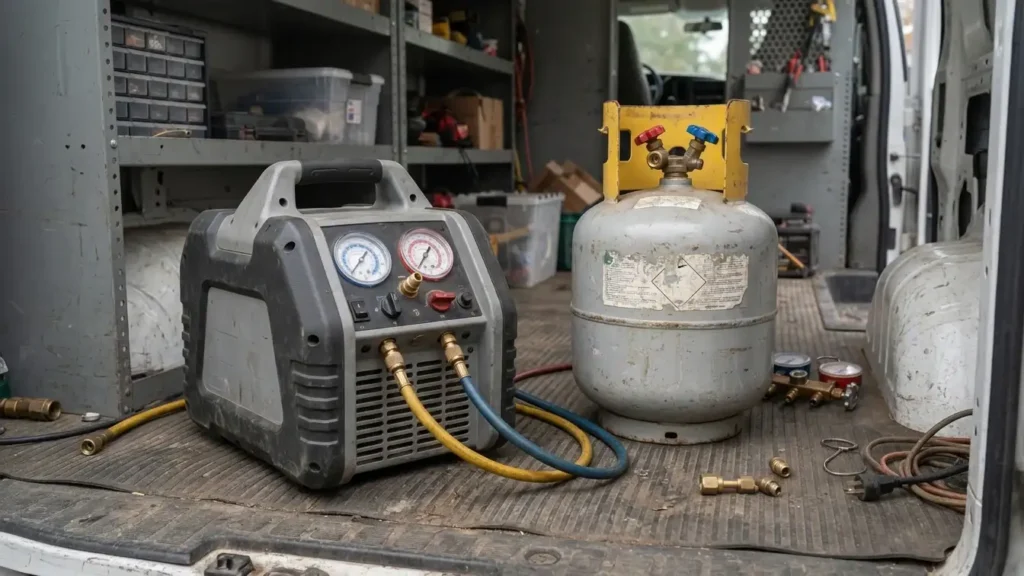
Under the EPA’s Technology Transitions rule, new equipment in many sectors must use refrigerants below set global warming potential (GWP) limits. The agency’s sector table, last updated August 28, 2026, lists these dates for the equipment small businesses buy most:
| Equipment | GWP limit | Compliance date |
|---|---|---|
| Residential and light commercial AC and heat pumps (manufacture and import) | 700 | January 1, 2025 |
| Residential and light commercial AC and heat pump systems (installation) | 700 | January 1, 2025, with an exception for systems whose components were all made or imported earlier |
| Retail food stand-alone refrigeration units (manufacture and import) | 150 | January 1, 2025 |
| Refrigerated food processing and dispensing equipment, 500 g or less | 150 | January 1, 2027 |
| Remote condensing units (installation) | Interim 1,400, then 300 or 150 by charge size | July 27, 2026, then January 1, 2032 |
| Supermarket systems (installation) | Interim 1,400, then 150 or 300 | January 1, 2027, then January 1, 2032 |
The EPA notes that the tables are for information only and that the full requirements are in 40 CFR Part 84, Subpart B. For a technician, the practical effect is more new equipment arriving with lower-GWP refrigerants.
New York’s own HFC rule
New York regulates HFCs separately under 6 NYCRR Part 494, administered by the Department of Environmental Conservation, whose regulation page posts the rule and a frequently asked questions document revised in May 2026. Empire State Development’s small business flyer lists the registration deadlines for owners and operators of refrigeration and air conditioning equipment:
| Equipment size (refrigerant charge) | Registration deadline |
|---|---|
| Large: 1,500 pounds or more | June 1, 2025 |
| Medium: 200 to 1,499 pounds | June 1, 2026 |
| Small: 50 to 199 pounds | June 1, 2028 |
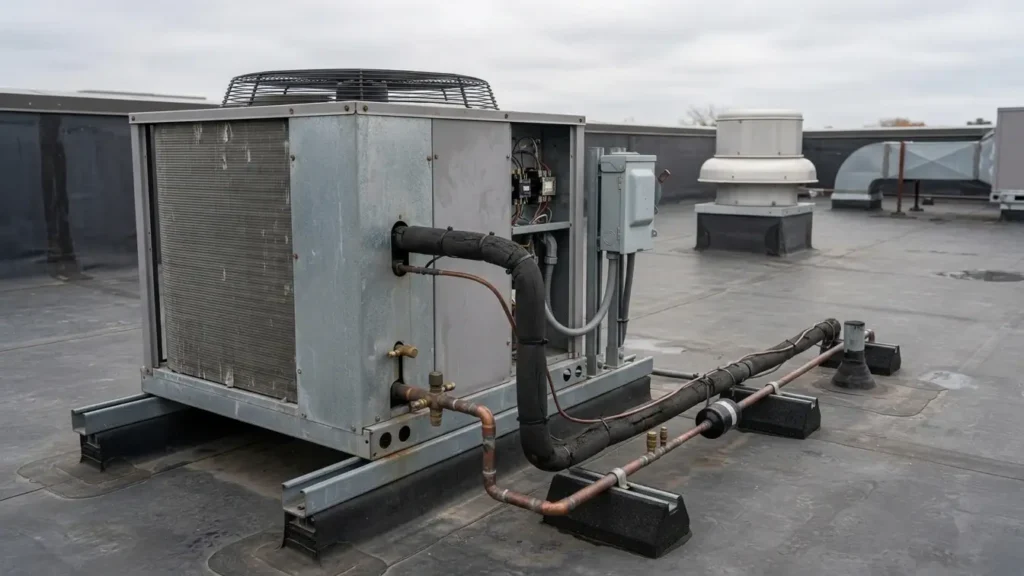
The same flyer says the state’s Refrigerant Management Program, in effect since January 9, 2025, requires owners or operators of commercial equipment with more than 50 pounds of high-GWP refrigerant to keep records, monitor for leaks and repair them. Owners must register facility and equipment information and label the equipment, and larger systems may need annual reporting or automatic leak detection.
Free help for small businesses
The flyer points New York businesses with 100 or fewer employees to the Small Business Environmental Support Office for free, confidential HFC compliance help, at 1-877-247-2329 or SBESO@esd.ny.gov. For air permitting questions it lists the Small Business Environmental Assistance Program at (585) 475-7869.
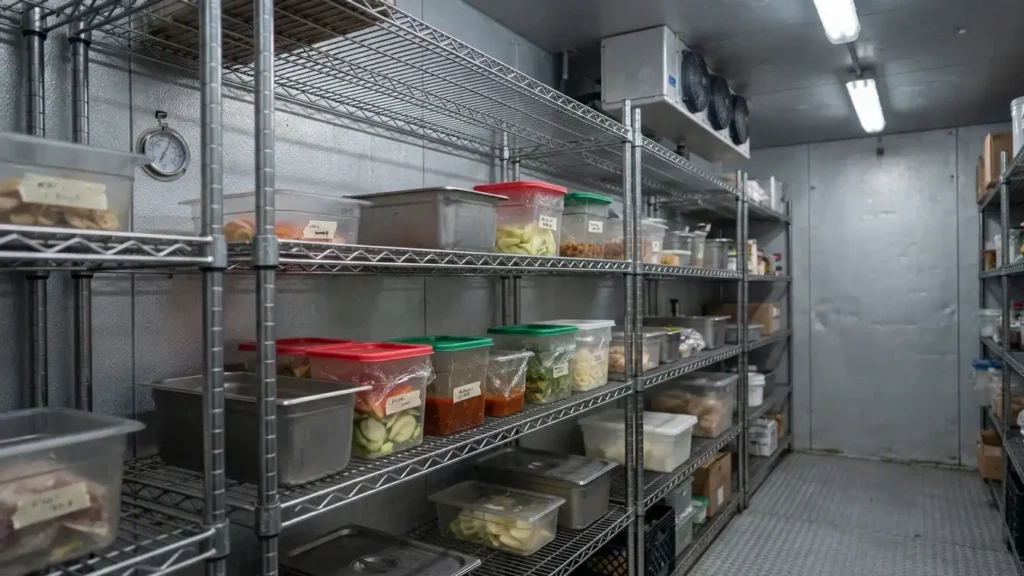
A restaurant owner whose walk-in is near the 50-pound line has a reason to find out its charge now. The equipment side of keeping a walk-in in order is covered in the post on walk-in cooler inventory.
Checklist for an HVAC or refrigeration shop
- Match certification to the work. Type I for small appliances, Type II for high-pressure systems, Type III for low-pressure, Universal for all.
- Keep proof of certification. The EPA does not issue cards; the certifying organization does.
- Supervise apprentices closely. That is the condition for their exemption.
- Check GWP limits before quoting new installs. Use the EPA sector table and the date that applies.
- Ask commercial customers about Part 494. Registration, labeling and leak records may apply to their equipment.
Sources
- EPA, Section 608 Technician Certification (updated March 3, 2026)
- EPA, Section 608 Technician Certification Requirements
- EPA, Technology Transitions HFC Restrictions by Sector (updated August 28, 2026)
- Empire State Development, Small Business Environmental Support Office HFC flyer
- NYS DEC, Part 494 Hydrofluorocarbon Standards and Reporting