In 2003 an office supply company from Brockton, Massachusetts, painted its name on the Green Monster at Fenway Park, the first ad painted on that wall since 1947, according to W.B. Mason’s own history. The same company is also the official office products supplier of the New York Yankees. Selling paper clips to both sides of that rivalry takes either nerve or a very good sales team. It also sells me register tape.
Nobody opens a diner dreaming about the supply closet. The food distributor gets the attention, the coffee roaster gets the loyalty, and the company that keeps the thermal paper, toner, gloves and trash bags coming gets noticed only on the night something runs out. The closet is where a diner keeps the things it forgets it needs.
A rubber stamp shop in a shoe town
William Betts Mason was born in Auckland, New Zealand, in 1865, and his family settled in Brockton, then called North Bridgewater, in 1872, the company history says. He founded W.B. Mason in 1898 selling printing and engraved products, rubber stamps and stencils. Office supplies came later, during Brockton’s shoe industry boom. Shoe towns run on order forms.
The ownership line after that reads like a family business passed hand to hand across a kitchen table. Mason died in 1912, and his wife Marcena ran the company. In the late 1920s she sold it to Samuel Kovner and Charles P. Brooks Jr. Brooks died in 1942, and Kovner carried on with sales at $243,000. Around 1963 Kovner passed it to his daughter Helen and son-in-law Joseph Greene, who added furniture and pushed sales close to $1 million. Their son Steve took over after Joseph died in 1973, and in 1983 Steve and his brother John took ownership, bringing in two top sales reps, Leo Meehan and Thomas Golden. By 1993 sales were $20 million and Meehan was president and CEO.
A widow, two partners, a son-in-law and two salesmen. That is not a corporate history so much as a diner’s history with more stationery.
Free next-day delivery on its own trucks
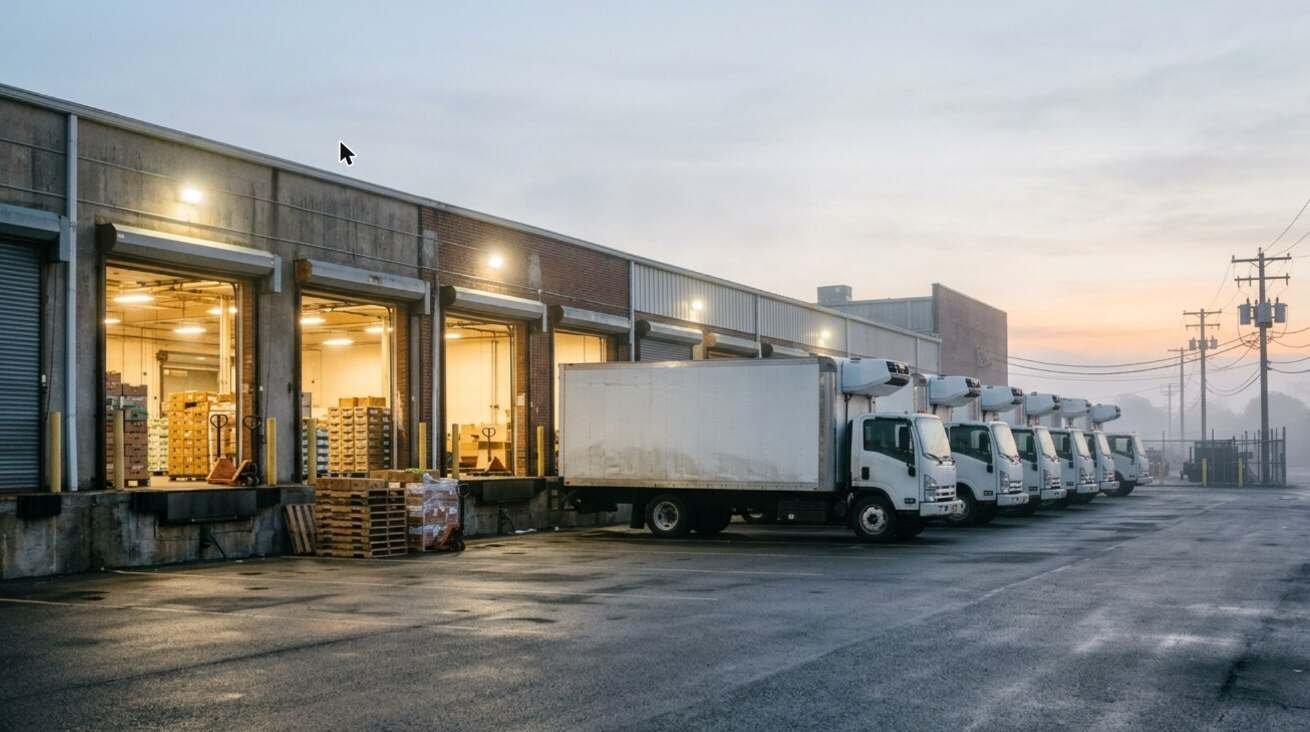
Under Meehan, the company built its pitch around local service and free next-day delivery in its fully decorated trucks, and sales reached $247 million by 2001 and $1 billion by 2011, per the history page. The Wikipedia entry on W.B. Mason puts the operation at more than 60 distribution centers serving over 300,000 businesses, with more than 1,000 delivery trucks leased from Ryder. In October 2017 the company introduced an all-electric truck built with Workhorse Group, rated at a 120-mile average range per charge.
The truck is the product, more than the paper is. Anybody can sell a case of thermal rolls. The question a restaurant cares about is whether it shows up tomorrow without a delivery charge stacked on a twenty-dollar order.
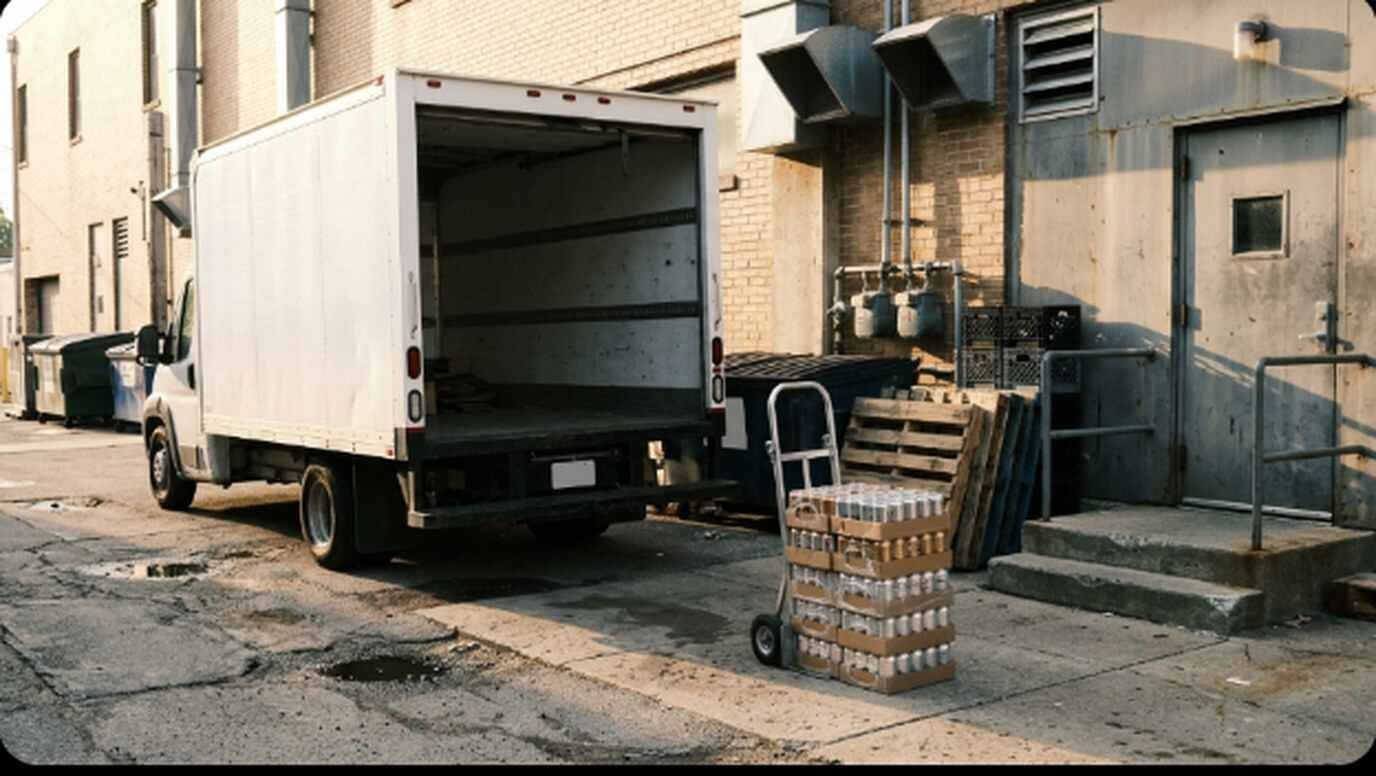
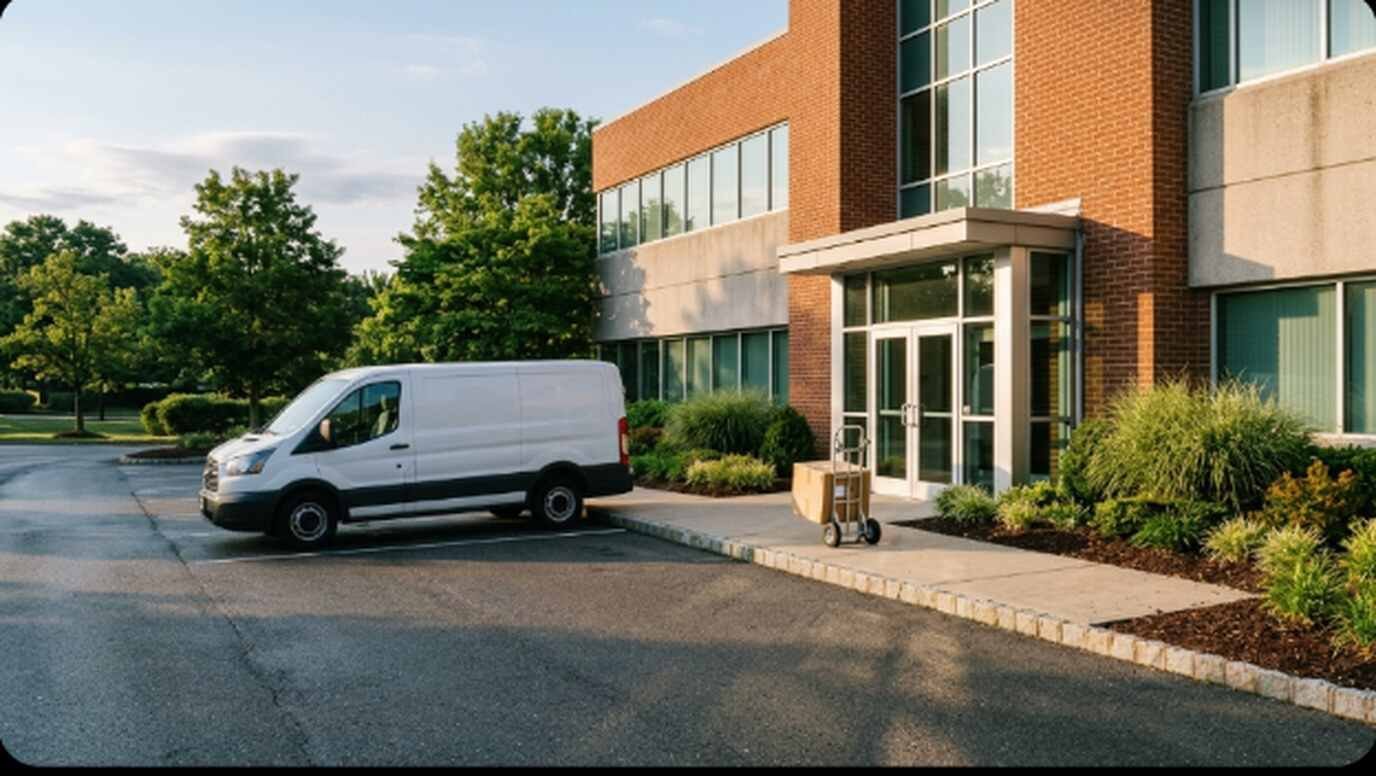
Ours pulls into the lot mid-morning, after breakfast settles and before the lunch crowd starts circling for spots. The driver comes through the side door with a hand truck stacked three boxes high, gloves on top, the register rolls on the bottom where they won’t crush, and he knows to leave everything by the office instead of in the kitchen where somebody will put a sheet pan on it. I sign the tablet. He’s gone in four minutes. Nobody ever writes a review about a four-minute delivery, which is exactly how I like it.
What a diner buys from an office supply company
W.B. Mason’s category list covers office supplies, paper, technology, break room, coffee, facilities maintenance, food service, furniture, industrial packaging, school supplies and medical supplies. Read that list in a restaurant office and half of it is useless and the other half is the stuff that stops service cold when it’s missing.
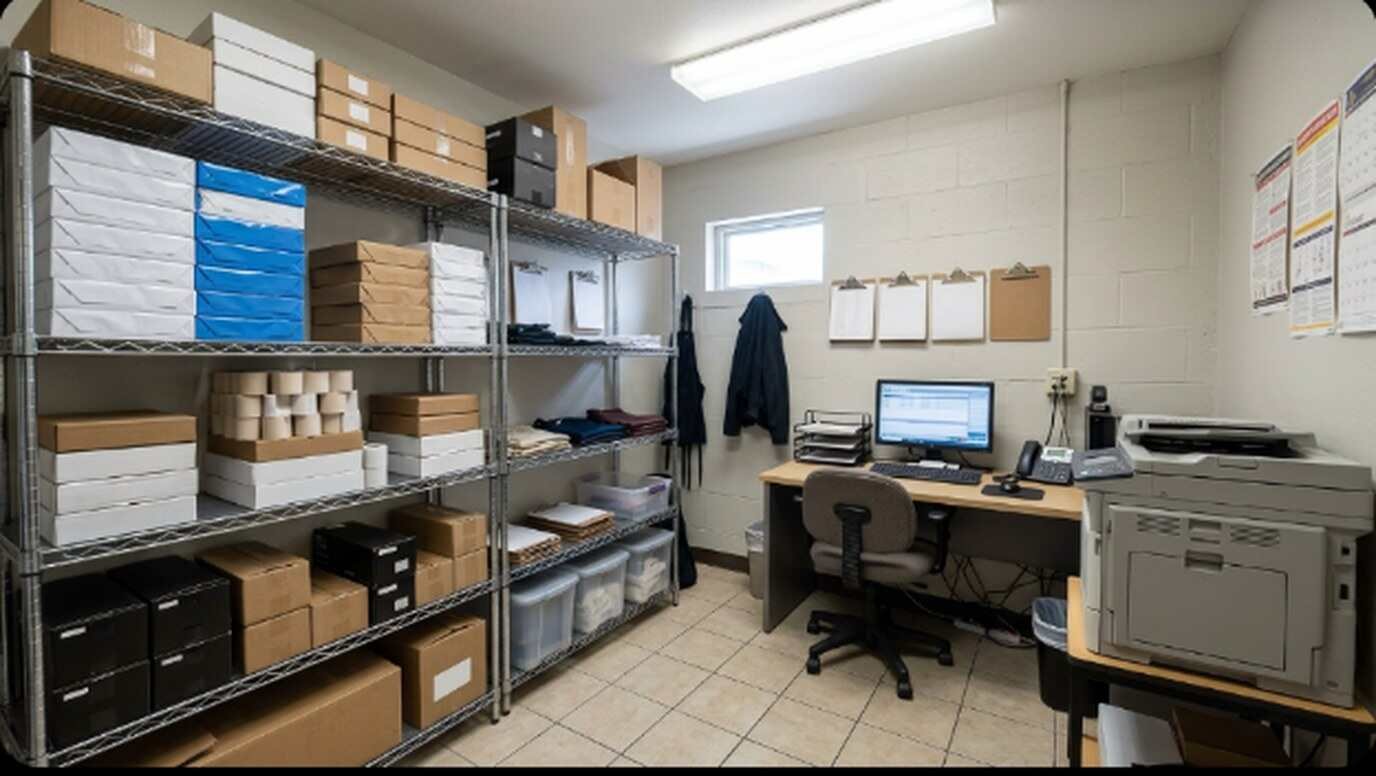
Our closet holds thermal rolls for the register and the kitchen printer, regular paper and toner for the office, nitrile gloves in three sizes, contractor bags, paper towels, a backup case of sanitizer, and the coffee filters the staff use on the break pot. The printer paper matters more than it looks; the guide to receipt and kitchen printers covers which thermal sizes go where, and buying the wrong width is a mistake a person only makes once. The sanitizer side has its own rules, laid out in wash, rinse, sanitize.
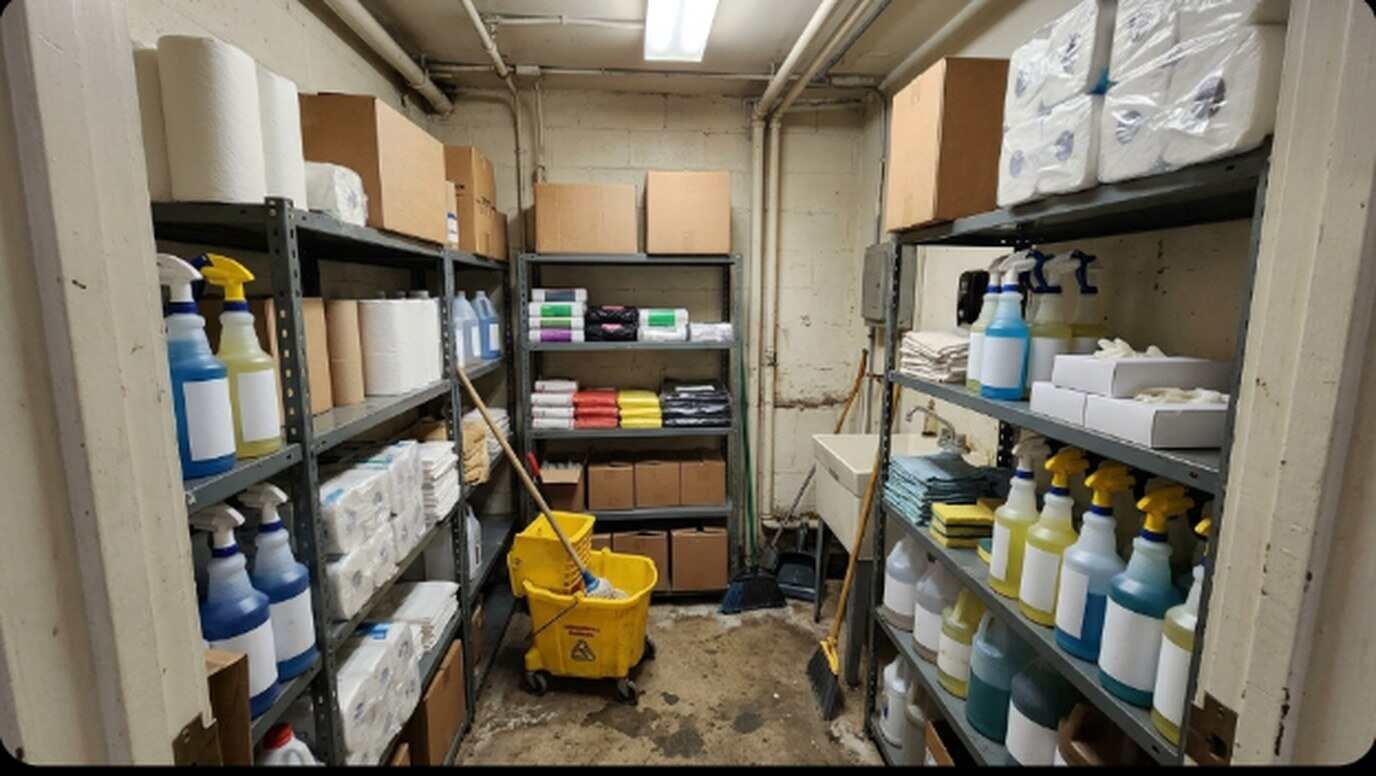
I learned the printer-paper lesson on a Friday night. The kitchen printer coughed out half a ticket and went quiet in the middle of the dinner push, and for six or seven minutes the line was cooking off a server reading orders out loud over the hood fans. The box of rolls was in the office, behind the mop bucket, where somebody had put it so it would be out of the way. It was out of the way. My shoulders stayed up around my ears until close.
The par sheet on the office door
The fix was boring, which is how good fixes usually are. A sheet taped to the inside of the office door lists each closet item, the number we never go below, and the number we order up to. Monday someone counts. Anything under the line goes on the order. It works for the same reason a walk-in count works, and the same template does the job: the restaurant order guide template handles gloves and toner as easily as it handles eggs and butter, and the thinking behind it is in writing a weekly order guide.
The sheet doesn’t care who the vendor is. That’s the point of it.
What a vendor like this adds is the speed of the correction. If Monday’s count misses something, next-day delivery means the hole lasts a day instead of a week. A broadline food truck on a fixed schedule can carry the same trash bags, and my food distributor will happily sell them to me, but if that truck comes twice a week and the miss happens the morning after it left, the closet stays empty a long time.
Who but W.B. Mason
The slogan “Who But W. B. Mason” dates to 1986, according to Wikipedia. Besides the Yankees, the company is the official office products supplier to the Red Sox and the Phillies, and its Yankees post-game show airs on YES. The headquarters is at 59 Centre Street in Brockton, and the company is privately held by the Greene and Meehan families.
Being that visible draws lawsuits. In October 2018 Dairy Queen, owned by Berkshire Hathaway, sued over W.B. Mason’s use of “Blizzard” and a related logo on its private-label bottled water. A federal judge ruled for W.B. Mason in June 2022 and let it keep the name. I have never confused a bottle of water with a soft-serve shake, but I have worked enough Sunday doubles to believe somebody has.
The other case is less funny. In April 2023 the company agreed to pay $5.65 million to settle a class action claiming it failed to tell commissioned sales reps about changes to their commission terms, a settlement covering reps in New Jersey, New York and Pennsylvania, per the same entry. The people who sell the toner are the people who carry the account, and they were the ones arguing over the math.
An office supplier when the offices emptied
The headcount depends on who is counting. The company’s page says more than 3,600 employees across more than 60 locations. A 2020 Wall Street Journal figure cited on Wikipedia put it near 1,900, down from 4,000 before the pandemic. Think about spring 2020. A company that lives on delivering paper to offices woke up one morning and the offices were locked, the lights off, the mail piling against the glass. Restaurants went through the same stomach drop at the same time, so I don’t read that number as a knock. I read it as a company that took the same hit we did and kept its trucks moving.
Here’s where my own case for a separate supply vendor runs into a wall. Every vendor is another invoice to match, another delivery to check, another rep, another login, another statement at the end of the month. The money on the closet is small, and the time it eats is not. If I lumped all of it onto the food order, I’d lose the next-day cushion and gain an hour a week back.
The harder part is that the cheap items are where the night goes wrong. Nobody’s dinner service has ever been sunk by a ribeye shortage the way mine was nearly sunk by one roll of register paper. The expensive stuff gets watched because it’s expensive. The cheap stuff gets watched only after it bites.
The rolls we use have a colored stripe near the end, a warning that the paper is about to quit. In our place it always seems to show up on a Saturday at seven-thirty, when the board is full and nobody has a free hand to walk to the closet.
For informational purposes only — consult a licensed attorney or financial advisor.