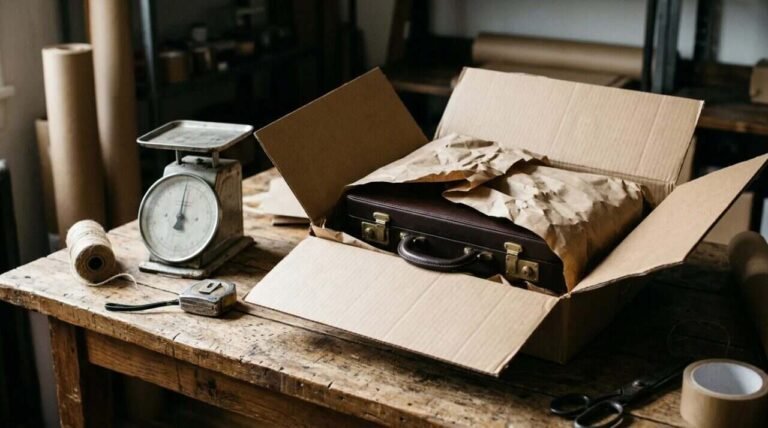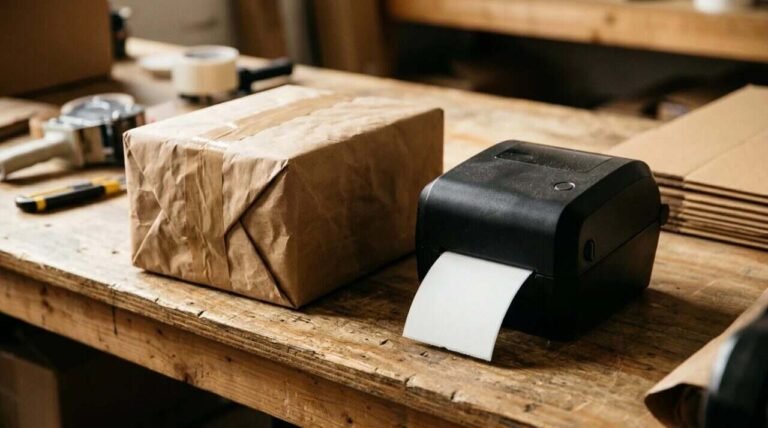


The box is the last thing a customer sees before the product, and on the way to the door it is the only thing between the product and a conveyor belt. I ship leather briefcases through Marcellino NY, my own business since 2010, so this is a subject I have had to learn. This post is not about how I pack; it is about what the carriers publish, which is more useful than my habits would be. Everything below comes from the carriers’ own guidance and is linked.
The six ways a package gets hurt
A packaging engineer’s list
FedEx publishes an interview with one of its packaging engineers, Tips from a Packaging Engineer. He lists six forces that act on a package in transit. Drops, where cushioning has to absorb the impact. Vibration from conveyors, trucks and aircraft, which can loosen lids and screws, peel edges and wear soft materials. Compression from the weight above and the cargo shifting at the sides. Temperature swings. Humidity, which weakens cardboard and can produce condensation inside the package. And changes in air pressure with altitude.
Read that list as a packer and it stops being abstract. A box does not get one hard knock. It gets hours of small ones, and the item inside either moves against its neighbors or it does not. The high-value item is the one where that difference matters most, because a scuffed corner on a ten-dollar candle is a shrug and a scuffed corner on a handmade leather bag is a return.
Protect the weak point first
The engineer’s advice is to identify the most fragile part of the product and protect that. For some products it is a corner, for some a hinge, for some a finish. If you ship more than one item in a box, he suggests compartments, nested boxes, careful arrangement or splitting the shipment. He also says not to assume the manufacturer’s packaging is enough, since a case that survives on a pallet may not survive alone in the mail.
One box or two

What UPS says
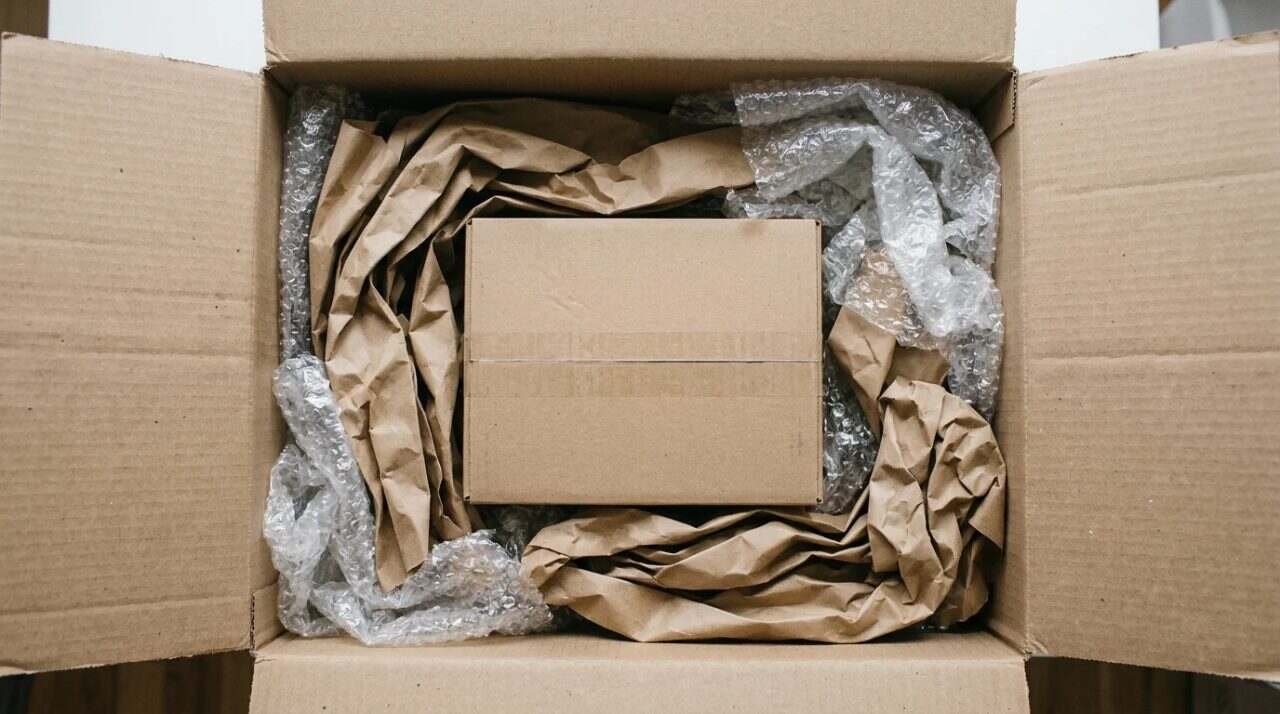
UPS’s packaging tips sort items by how many boxes they need. One box for pre-packaged, soft or durable goods. Two boxes for sharp or fragile items, bags and accessories, and travel or luxury goods. The two-box method has steps. Choose an inner box. Fill the empty space inside it with bubble sheeting, loose-fill or paper. Choose an outer box that is six inches larger in each dimension. Put cushioning between the two boxes and fill any gaps. Tape every closure and seam.
The page lists a figure for the cushioning between boxes that appears to be a unit mistake, so I will not repeat it. Check the current page or call the carrier before using any number from it.
What FedEx says
FedEx’s page on packing breakables lands in the same place with its own numbers. Double-box the item. Keep about three inches of cushioning in and around the interior box. Center the item with padding on every side. Wrap each fragile item in air-cellular material, three inches thick at minimum, and fill the leftover space with loose fill. The page does not mention a shake test.
The two carriers do not agree to the inch, and they do not need to. The agreement is in the principle: an inner box, a bigger outer box and padding in between that is measured in inches, not in a handful of paper.
Cushioning, filling and sealing
Materials
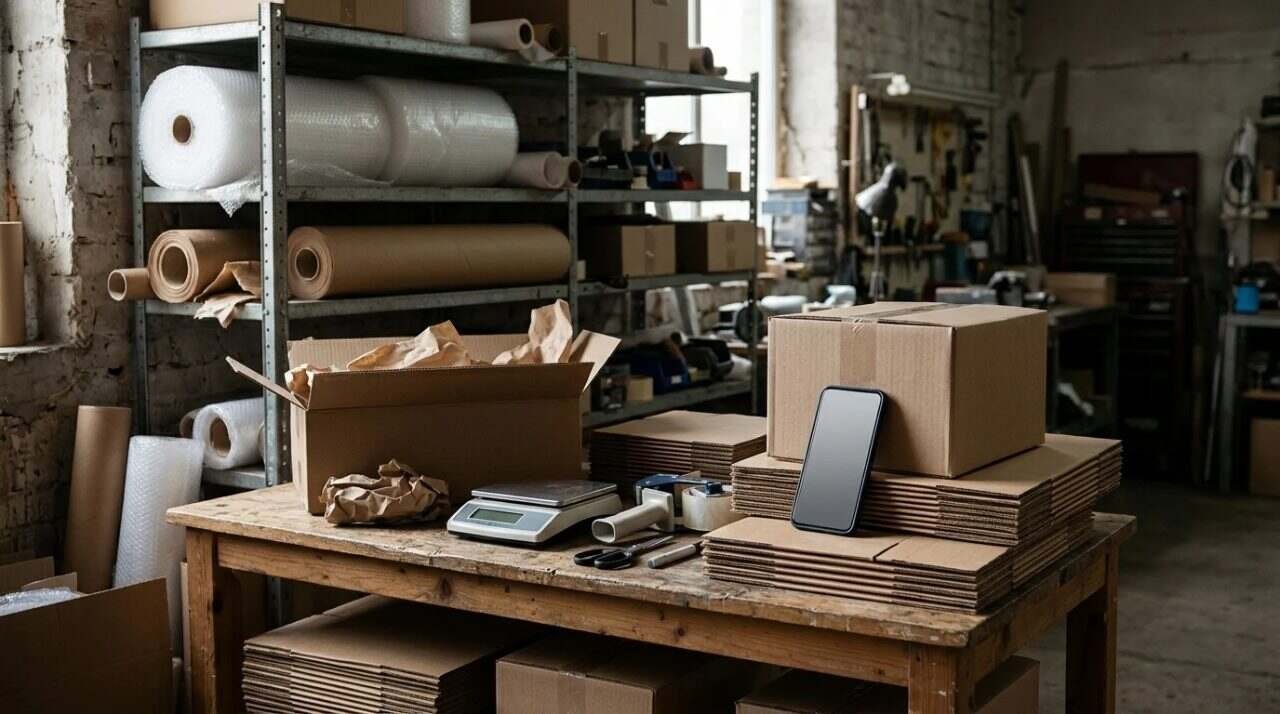
UPS gives rules for each kind of cushioning. Loose-fill peanuts should be at least two inches thick around lightweight items, are poor for flat narrow items that can shift and create static, so anti-static foam is advised for electronics. Bubble wrap goes on in several layers with extra on corners and edges, flat side against the product. Air bags are for void fill in light items without sharp edges, and extreme temperatures can reduce their effect. Crumpled kraft paper is for lightweight, non-fragile items, tightly crumpled and at least two inches from the outer box.
The UPS packaging guidelines PDF (Packaging Guidelines) says at least two inches of cushioning should separate items from each other and from the corners, sides, top and bottom of the box. Notice the word separate. Two items in one box without a divider are hurting each other.
The box itself
The same UPS document says to use a rigid corrugated box with flaps, with strength rated for the weight, and the maximum gross weight is printed on the box maker’s certificate on the bottom. It says not to reuse boxes. The FedEx engineer says reuse is acceptable if you inspect the box and reseal it securely. That is a disagreement between two carriers, and for a high-value item I would side with the stricter one and use a new box. A corrugated box that has been through the mail once may have lost some of its strength even where it looks fine.
Tape
Both carriers care about tape. UPS says to use pressure-sensitive plastic or nylon-reinforced filament tape and not masking, cellophane, duct or water-activated paper tape, and to put three strips on the top and bottom. FedEx describes the H seal: tape down the middle seam and along each edge of a corrugated box, so the tape traces the letter H. USPS, in the Domestic Mail Manual’s Preparing Packages, asks for tape two inches wide and says not to use cord, string, twine, masking tape or cellophane tape.
The shake test
USPS adds a test that costs nothing: shake the closed box, and if anything moves, add more padding. FedEx’s page did not mention it, but the test is sound for any carrier. The sound of something shifting in a box is a measure of how far it will travel at the next drop.
Labels
Where the label goes
On the label itself, the carriers repeat each other with small differences. FedEx says to put the label on the largest surface and keep it off the taped seams. The FedEx engineer adds to avoid the edges, where scanning errors are more likely. UPS says not to place a label on a seam, edge or closure or over sealing tape, and to remove or cover any old labels. USPS goes the other way on tape over the label and recommends covering the shipping label with a strip of clear packaging tape so the address will not smear. Check which your carrier prefers before taping over anything.
A second address inside
UPS says to put a duplicate address label inside the box with complete delivery and return information. USPS says the same, in case the outer label is lost or damaged. That is one slip of paper and it is the cheapest insurance in the whole process.
Handling notes
The FedEx engineer says to mark boxes with handling notes like “fragile” but not to rely on them to protect the contents, since boxes pass through machines and usually rest on their largest side. USPS says to mark fragile packages “Fragile.” The sticker is a courtesy, not a defense.
Declared value is not insurance
What FedEx says about it
FedEx’s page on declared value and limits of liability is blunt. A first portion of value is included in the shipping rate, you can declare more and pay a fee on the amount above it, and the page says declared value is “not shipping insurance.” Declaring a value does not guarantee reimbursement. You must file a written claim and prove the loss or damage and that the carrier was at fault. For some categories, such as artwork, jewelry and antiques, the carrier sets maximum declared values.
Then comes the sentence that ties this post together: a shipment that is improperly packed and damaged is not the carrier’s fault, so reimbursement is unlikely. The page’s advice is to pack securely and document the item’s value before shipping. UPS’s packaging guidelines have a similar line, putting responsibility for proper packaging on the shipper, and pointing to the carrier’s contract and tariff terms for liability limits.
I am not giving dollar amounts here. These figures change, and the published limits and fees are on the carriers’ pages. Read them for your carrier, your service and your item before you ship something expensive, and ask your carrier or a broker about insurance as a separate matter.
Before it leaves the building
A photograph and a record
The FedEx page advises documenting the item’s value. Photographs of the item packed, the box sealed and the label applied give you evidence if a claim is needed. They also take less than a minute. The point is to have the record before the problem, not after.
Ask the carrier
The FedEx engineer’s most important recommendation is to involve the shipping provider early, before you buy packaging materials or set shipping rates, and he mentions a packaging design consultation. UPS notes that The UPS Store can help choose a box size. A carrier that has a stake in the package arriving whole will usually answer a question about how to pack it, and the answer is free.
Watch the damage rate
The engineer closes with a plain point: track shipping costs and damage rates, then change your process. Packaging that is too light costs you returns. Packaging that is too heavy costs you shipping fees, since weight and size feed the price. The right amount is found by looking at what came back broken and what it cost to prevent it.
For informational purposes only. Carrier rules, liability limits and fees change and vary by service; read the current terms of your carrier, and consult a licensed insurance professional or attorney about coverage for high-value goods.
Sources
- FedEx, Tips from a Packaging Engineer: https://www.fedex.com/en-us/small-business/articles-insights/tips-from-a-packing-engineer.html
- FedEx, Packing breakables: https://www.fedex.com/en-us/shipping/packing/how-to-pack/breakables.html
- FedEx, Declared Value and Limits of Liability: https://www.fedex.com/en-us/shipping/declared-value.html
- UPS, How to Pack a Box or Pallet for Shipping: https://www.ups.com/us/en/support/shipping-support/packaging-tips
- UPS, Packaging Guidelines (PDF): https://www.ups.com/assets/resources/webcontent/en_US/Packaging_Guidelines.pdf
- USPS, Domestic Mail Manual, Preparing Packages: https://pe.usps.com/text/dmm100/preparing-packages.htm
- YouTube, How To Effectively Pack, Seal, and Label a Shipment, Easyship: https://www.youtube.com/watch?v=fRn5hDnmH54