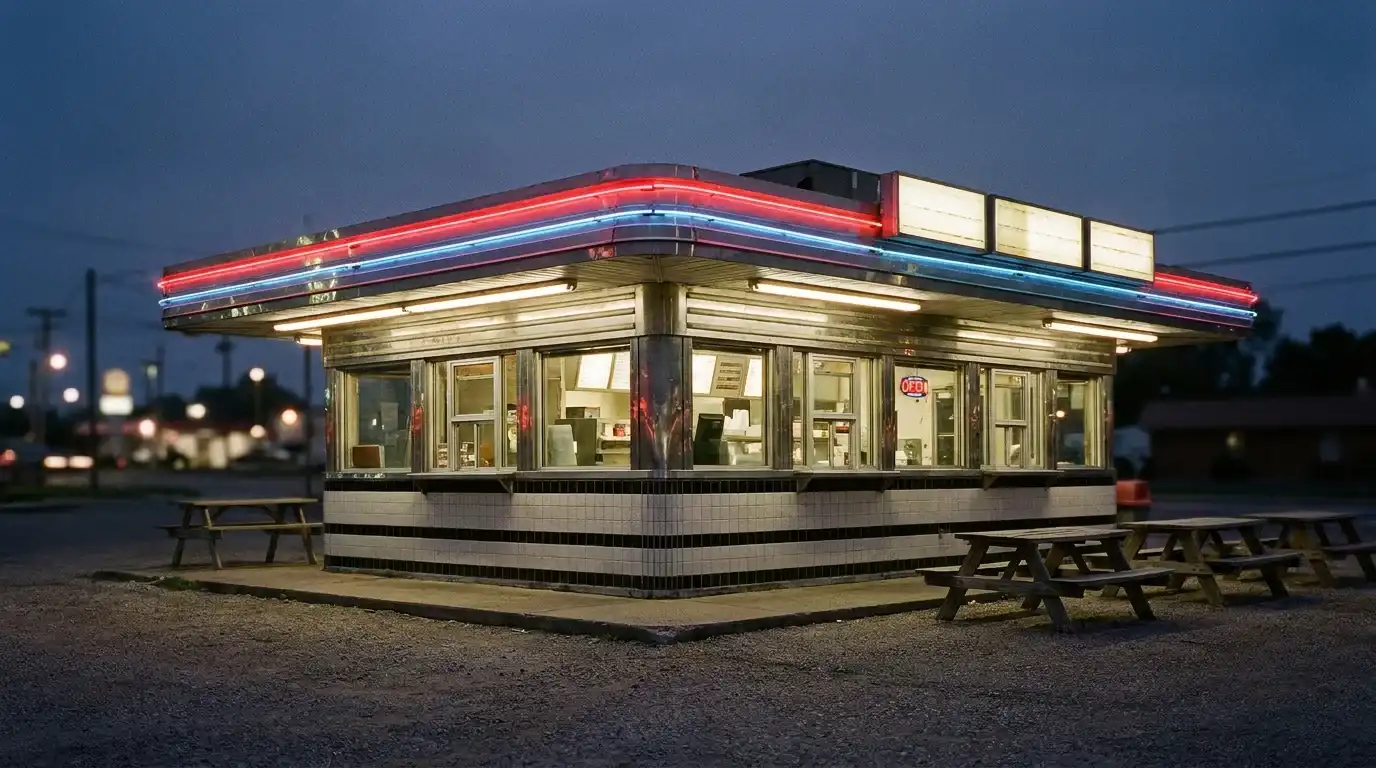
In 1948 Dick and Mac McDonald closed a busy, profitable drive-in in San Bernardino for three months. They reopened with nine menu items, no carhops and a 15-cent hamburger, and called the new way of working the Speedee Service System, as the company’s own history tells it.
Profits fell at first. By 1951 they were 40 percent above where they had been before the change, according to PBS SoCal.
What the brothers noticed first
The brothers had opened a barbecue drive-in at Fourteenth and E streets in 1940, a typical place with a large menu and carhop service. After the war they found about 80 percent of sales came from hamburgers, History.com reports, quoting Richard McDonald: “The more we hammered away at the barbecue business, the more hamburgers we sold.”
That one number drove everything that followed. They built the restaurant around what customers were already buying.

What changed in 1948
| Before | After the Speedee conversion |
|---|---|
| Large drive-in menu, barbecue focus | Nine items: hamburger, cheeseburger, three soft drinks in one size, milk, coffee, potato chips, pie |
| About 20 carhops | No carhops; customers ordered at service windows |
| Plates and silverware | Paper wrappers and cups |
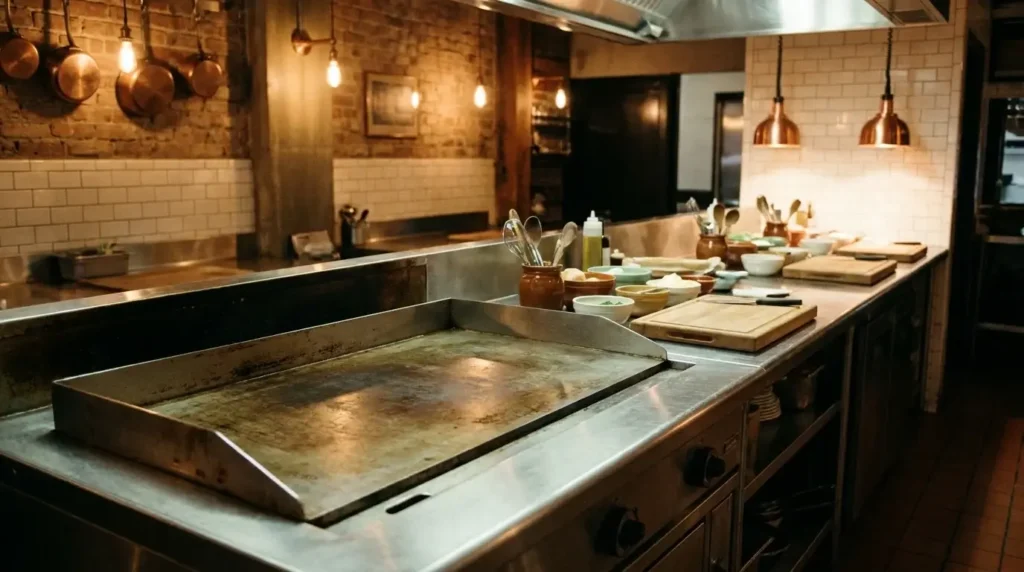
| Conventional drive-in kitchen | A 12-person crew with specialized tasks, food partly preassembled |
| Higher prices | Prices cut roughly in half; 15-cent hamburger |
The menu, carhop and crew details come from History.com, drawing on John F. Love’s McDonald’s: Behind the Arches; the price cut and service windows from PBS SoCal. History.com describes the approach as borrowing from Henry Ford’s assembly line.
Speed, price, volume
Richard McDonald summed it up in one line quoted by History.com: “Our whole concept was based on speed, lower prices and volume.” Dick McDonald’s version, per PBS SoCal, was blunter: “If we gave people choice, there would be chaos.”
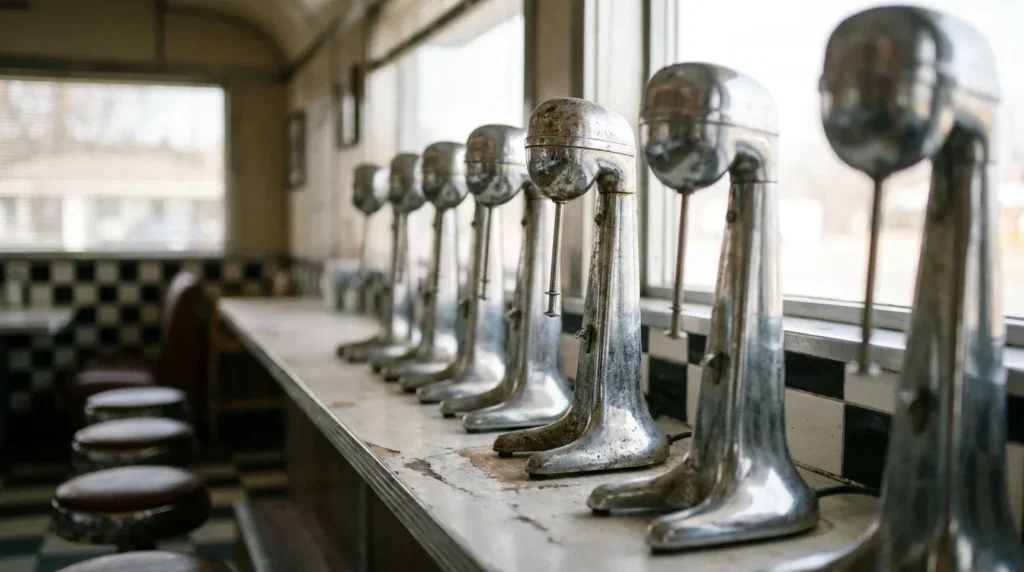
Volume showed up in odd places. When Ray Kroc, a milkshake-mixer salesman, visited in 1954, he wanted to know why one restaurant needed eight Multimixers, machines that could make 48 shakes at once. The brothers franchised the system themselves too; per McDonald’s, they sold 14 franchises, of which 10 became operating restaurants beyond the original. Kroc opened his first McDonald’s in Des Plaines, Illinois, in 1955 and bought the company from the brothers in 1961 for $2.7 million, History.com reports.
What a small restaurant can take from it
Few independents should cut to nine items. The method, though, translates: look at what sells, design the kitchen around it, and price for volume. The post on how menu layout changes what customers order picks up the menu side, and restaurant menu pricing the pricing side.
- Pull item sales for 90 days. The McDonalds found 80 percent came from one item.
- Find the items that barely sell. The McDonalds dropped barbecue from a barbecue restaurant.
- Map the kitchen to the best sellers. Station by station.
- Test before committing. Their profits dipped before they rose.
Further reading
- McDonald’s: Behind The Arches: John F. Love’s history of the company, a main source on the San Bernardino conversion. See it on Amazon (affiliate link)
- Grinding It Out: Ray Kroc’s own account of finding the brothers’ restaurant and building the chain. See it on Amazon (affiliate link)
As an Amazon Associate I earn from qualifying purchases. A commission may be earned if you buy through this link, at no extra cost to you.