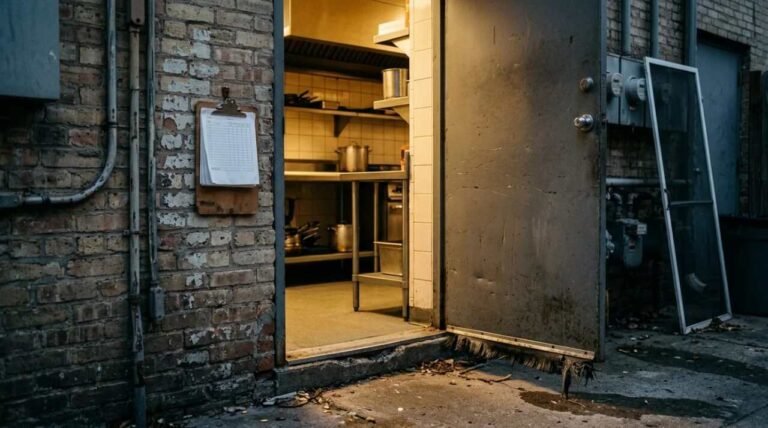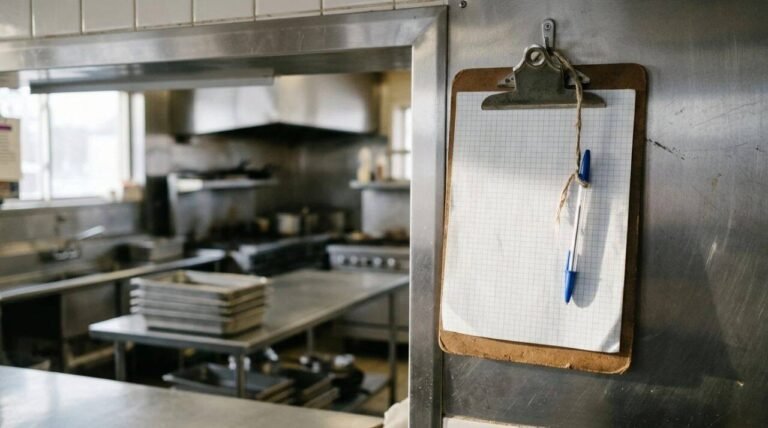

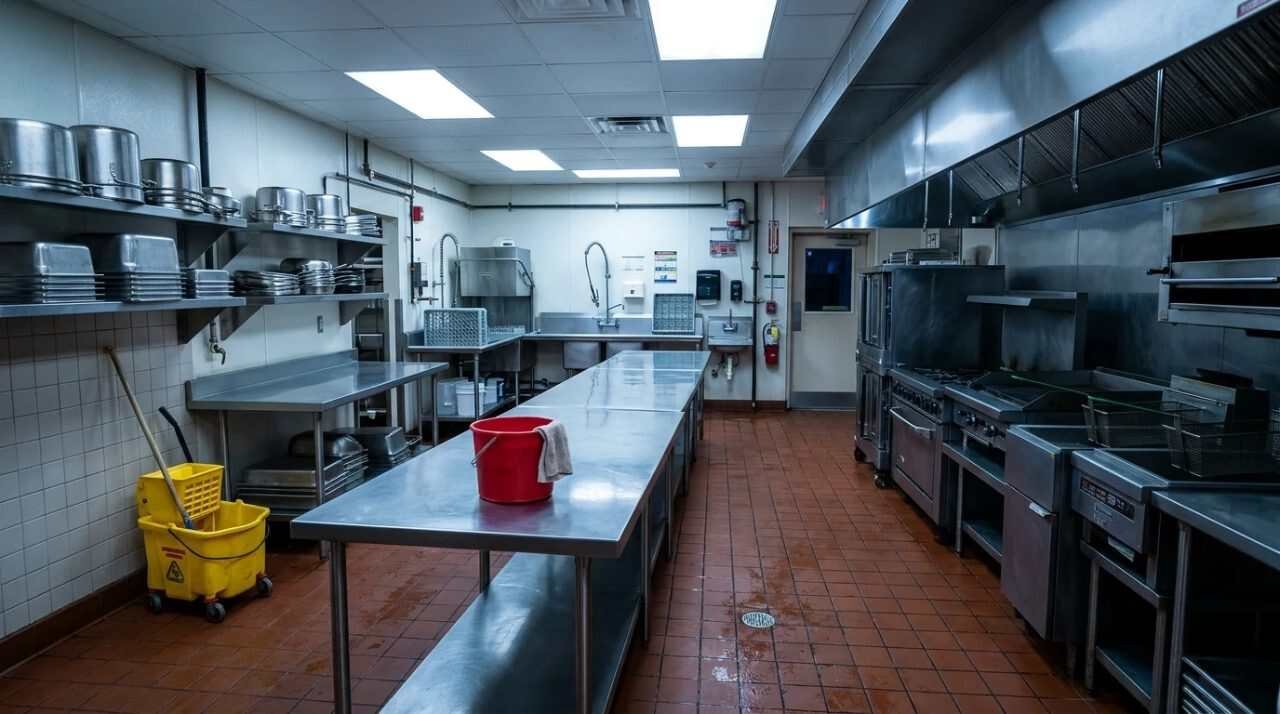
The sanitary code does not hand you a weekly cleaning schedule. It sets minimums: some things after every use, some once a day, and some “as often as needed,” which is a phrase that leaves the decision with the person holding the rag. A weekly checklist is what a kitchen builds to fill the gap between those minimums and the day an inspector walks in. I have worked in the family restaurant since 2000 and have written and kept lists like this one, so this is the version I would hand to a new manager, with the rules under it linked.
What the state code fixes, and what it leaves open
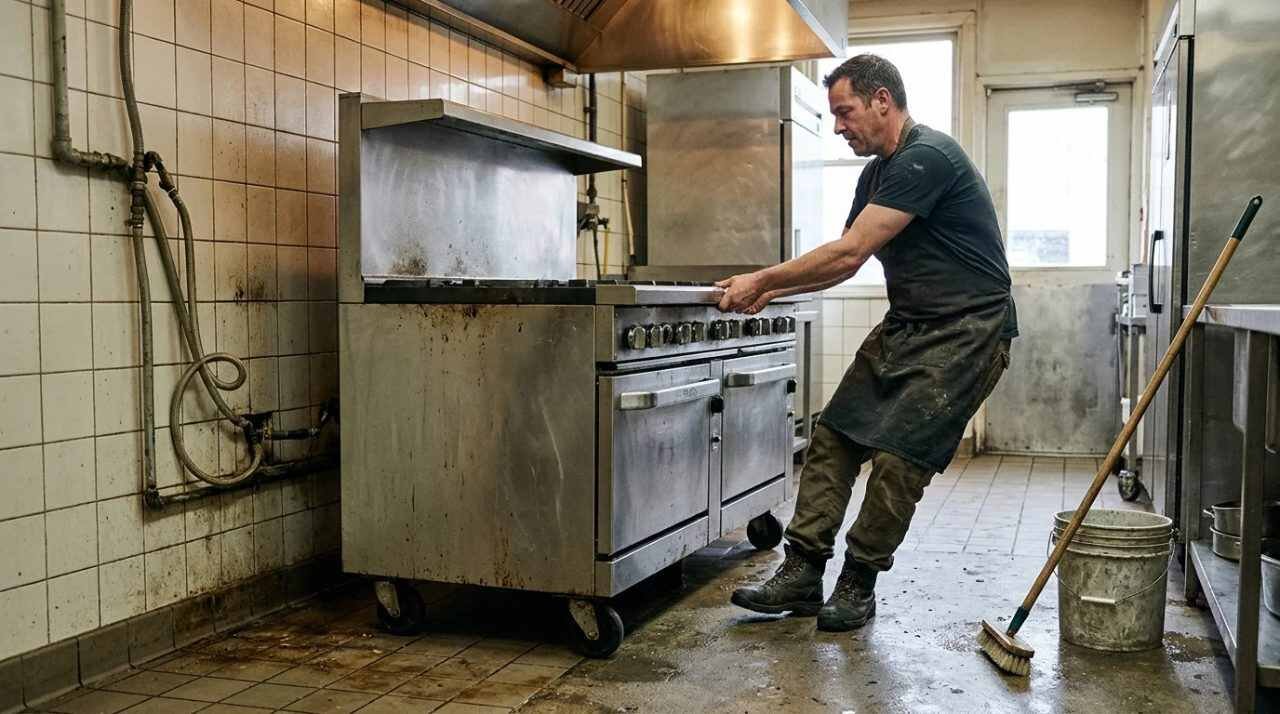
New York’s Sanitary Code sets cleaning frequency in 10 NYCRR section 14-1.110. A summary of it, with the caution that the site hosting it says its text may not be the current version:
- Tableware is washed, rinsed and sanitized after each use.
- Food-contact surfaces are washed, rinsed and sanitized after each use and after any interruption in operations where contamination may have occurred.
- Equipment used for potentially hazardous foods on a continuous or production-line basis is cleaned at intervals through the day, depending on the food temperature, the type of food and the amount of food particle buildup.
- Grills, griddles and similar devices, along with microwave cavities and door seals, are cleaned at least once a day. Hot oil cooking equipment and hot oil filtering systems are exempt from that daily requirement.
- Food-contact surfaces of cooking equipment stay free of encrusted grease and other accumulated soil.
- Non-food-contact surfaces are cleaned as often as needed to remove dust, dirt, food particles and other debris.
Nothing in that list says “weekly.” The code covers the work that cannot wait. What falls to the weekly list is the work that can wait a few days without causing harm, but cannot wait forever without the kitchen slipping.
The ordinary phrase “as often as needed” is where a written schedule earns its place. A list turns “as needed” into “Thursday, by close, done by this person,” and makes it checkable.
Start with the daily work, so the weekly list stays short
If the daily closing routine is sloppy, the weekly list grows until nobody does it. So fix the daily list first. Everything the code puts on a daily or after-each-use basis belongs there: the griddle, the grill, the microwave cavity and door seal. The dish machine, the cutting boards and the slicer belong on it too.
Wiping cloths belong there as well, and the code is specific. Under section 14-1.117, the rule on wiping cloths separates their jobs:
- Clean, dry cloths used to wipe food spills from tableware, plates or bowls served to customers are used only for that.
- Damp cloths used to wipe food spills from kitchenware or food-contact equipment surfaces are used only for that, and are kept in a sanitizing solution between uses.
- Damp cloths used on counters, dining table tops and shelves are kept in a sanitizing solution between uses and used only for that.
A cloth that does the prep table and then the dining room counter breaks the rule twice. It is also the sort of problem that nobody notices until a person with a clipboard does.
What the county looks at
Suffolk County’s list of foodborne illness risk factors includes cleaning and sanitizing as its own item, F012: food-contact surfaces cleaned and sanitized at set intervals, with proper water temperatures and sanitizer concentrations. The county’s separate category of Good Retail Practice violations is described on its Food Protection page as covering cleanliness, maintenance and sanitary practices, such as grimy floors or equipment, unlabeled containers and improperly stored utensils.
That second category is where a weekly list pays. The things that earn a Good Retail Practice note are rarely a single event. They are accumulations: the shelf nobody pulled the bins off, the gasket on the reach-in, the floor behind the fryer.
The weekly list itself
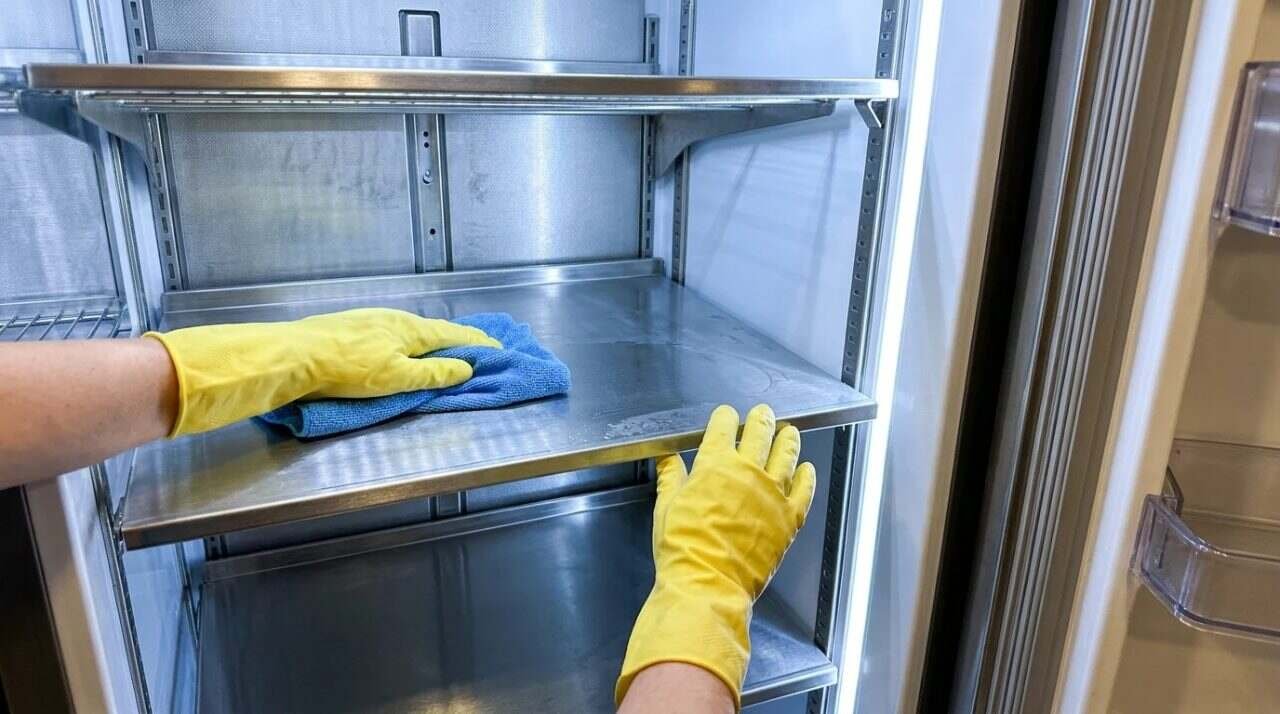
The sources above do not give a weekly list, so what follows is my own sorting of the work that sits between the daily minimums and the code’s “as often as needed.” Adjust it to your equipment. The point of putting it in groups is so that one person owns each group, and so a missed item has a name next to it.
Cold side
- Pull everything out of one reach-in or one section of the walk-in each week and wash the shelves, rotating through all of them over the month.
- Wipe down gaskets and door handles.
- Check date labels on everything while it is out, and discard what is past its date. The county lists date marking as its own risk factor, F018.
Hot side
- Pull the fryer, broiler and range-top parts that come off, and wash them in the sink and not just with a rag.
- Clean the sides and back of equipment that the daily wipe-down misses.
- Clean behind and beneath equipment that is on wheels, where it can safely be moved.
Floors and drains
- Scrub the floor at the walls and under the prep tables, where a daily mop does not reach.
- Clean the floor drains.
- Wash the mop sink and the area around it.
Dry storage and the back door
- Wipe shelves and look for signs of pests while the shelves are clear.
- Sweep behind stored boxes.
- Check the back door seal and the threshold.
Front of house
- Clean the wall behind the pass, the soda gun holders and the underside of the counter.
- Wash the restroom walls and the area around the fixtures, and check that the handwashing signs are in place and readable.
- Wipe down menus and condiment bottles.
That is a long list, and the answer to its length is to spread it across the week: a section each day, so no single shift carries all of it.
Washing is one step and sanitizing is another
Read the state wording again and notice the sequence: wash, rinse, sanitize. The code does not say “clean” and stop. A surface that looks clean has had the dirt removed, and a surface that has been sanitized has also had something applied to reduce what the eye cannot see. Both steps are named, and an inspector can ask about both.
This matters most for the weekly jobs that involve a lot of scrubbing. A shelf that comes out of the walk-in, gets scrubbed and goes back in damp has been washed. If it is a food-contact surface, the Suffolk risk factor adds that sanitizer concentrations and water temperatures have to be proper, which means somebody has to know what the sanitizer in the bucket is supposed to be, and has to be able to check.
The practical version is a short note on the checklist itself, next to any item that touches food: the word “sanitize” and the place where the test strips or the instructions are kept. I would not trust anyone’s memory of the dilution on a Friday night.
Making it checkable
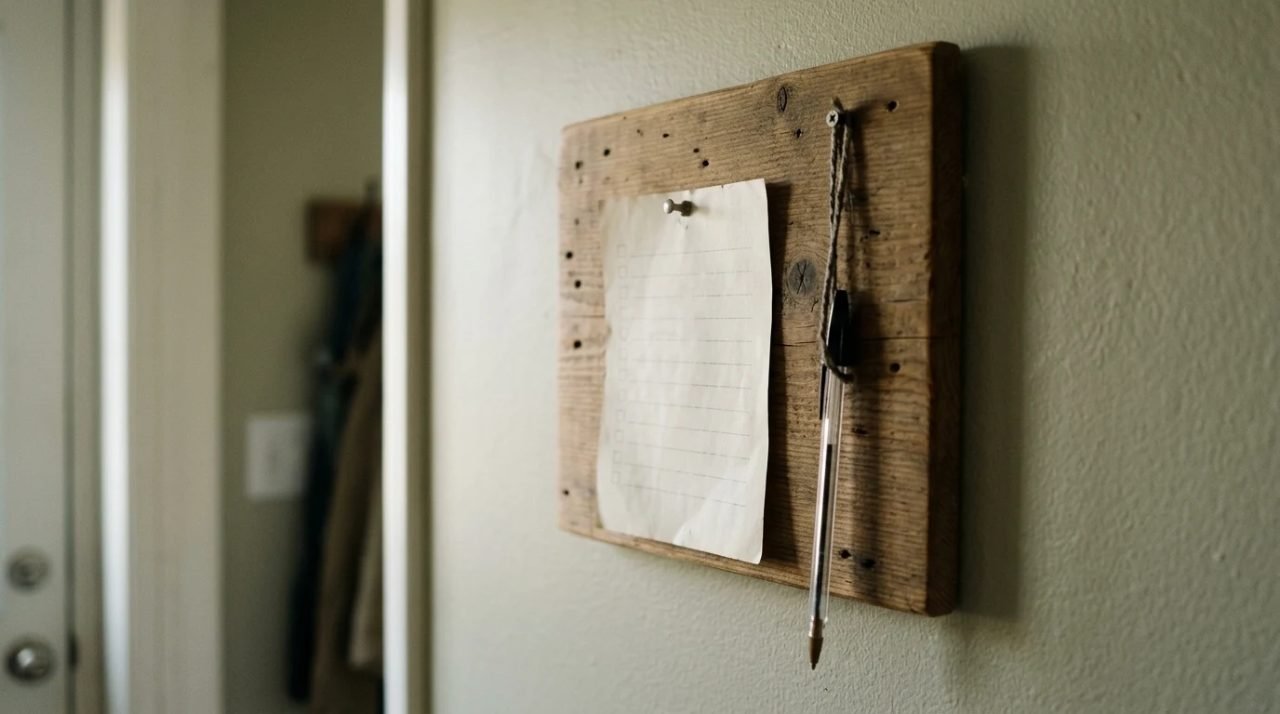
A checklist that nobody signs is a wish. Each task on it needs three things next to it: who does it, which day, and a place to initial when it is done. If a list has only the task, it will be nobody’s job by the second week.
Post it somewhere visible, near where the work happens, and not in an office drawer. The county notes that postings in a kitchen include a handwashing sign for restrooms used by food workers, and a weekly list can sit on the same board.
I wrote about the same habit on the line in a post about station procedures in a restaurant. The principle carries over: a written task is much easier to hand to someone else than a remembered one.
When the same item keeps getting missed
Every list develops one item that never gets done: the drain, the gasket, the shelf behind the fryer. The usual reaction is to remind people louder. A better one is to ask why it is missed.
Sometimes the task is badly placed. It lands on the closing cook, who is already holding the daily list, at the hour he is least able to do it. Sometimes the tool is missing, and nobody wants to say so. Sometimes the item is simply too large for the time allowed, and it needs to be split across two days or moved to a slow shift.
Move it before you blame anyone. A task that has been skipped three weeks in a row is giving you information about the schedule, and the schedule is the manager’s to fix.
An honest limit
A weekly list does not tell you how clean the kitchen is. It tells you the work was assigned and marked off. Someone still has to look at the result. The better version has the manager walk the area after the task and check it against what the code and the county say: no encrusted grease on cooking equipment, no grime on floors or equipment, no unlabeled containers, no utensils stored where they will pick up dirt.
There is also a gap in the sources. The state code gives minimums for equipment and utensils, and the county describes violations, but neither says how often to clean a walk-in cooler shelf or a floor drain, so those intervals are a management call. I would rather say that than pretend the code answers it.
For informational purposes only. Cleaning requirements, sanitizer concentrations and equipment rules vary by establishment and change over time, so confirm them with your local health department, and consult a licensed attorney about any compliance question.
Sources
- 10 NYCRR 14-1.110, Cleaning frequency: https://regulations.justia.com/states/new-york/title-10/chapter-i/part-14/subpart-14-1/equipment-and-utensil-cleaning-and-sanitation/section-14-1-110
- 10 NYCRR 14-1.117, Wiping cloths: https://regulations.justia.com/states/new-york/title-10/chapter-i/part-14/subpart-14-1/equipment-and-utensil-cleaning-and-sanitation/section-14-1-117
- Suffolk County, Foodborne illness risk factors: https://suffolkcountyny.gov/Departments/Health-Services/Public-Health-Protection/Foodborne-Illness
- Suffolk County, Food Protection: https://suffolkcountyny.gov/Departments/Health-Services/Public-Health-Protection/Food-Protection
- Video: https://www.youtube.com/watch?v=fWB0wiMiswY