
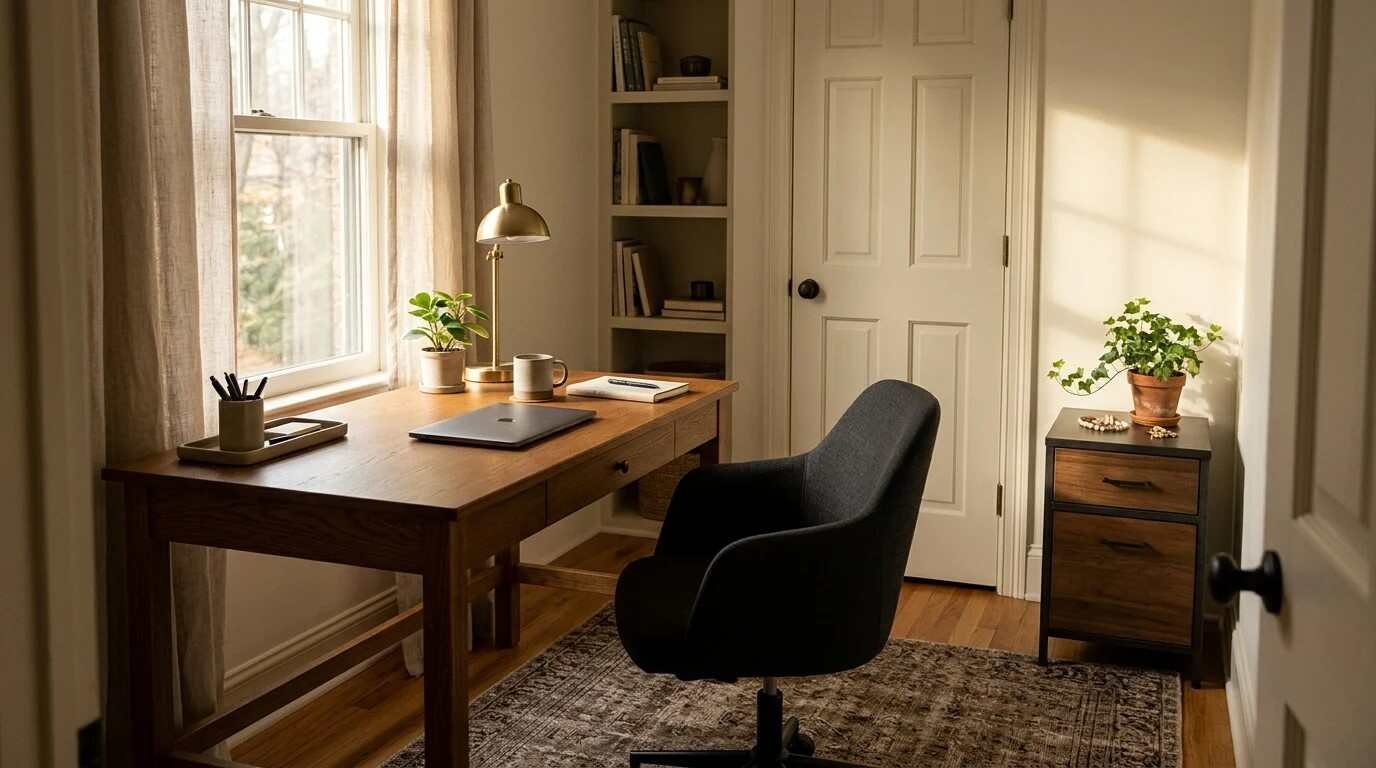
A 150-square-foot spare room used only for business is worth a $750 deduction under the IRS simplified method, and the arithmetic takes one line: $5 a square foot, up to 300 square feet. The IRS page on the simplified option sets those numbers, which put the most anyone can take that way at $1,500 a year.
The harder part is whether the room qualifies at all. The rules are short, strict and the same under either method, and the most common mistake is a room that is mostly an office.
The two tests a home office has to pass
The IRS home office deduction page sets two requirements. The first is “regular and exclusive use”: part of the home has to be used regularly and only for business. A room that is an office by day and a guest room on weekends fails, and so does a kitchen table, however many invoices are written there.
The second is that the home has to be the principal place of business. A business run elsewhere can still qualify if the owner uses the home space “substantially and regularly” for it, and meeting clients or customers at home in the normal course of business can satisfy the test.
Two variations help. A separate structure, such as a studio, garage or barn, can qualify if it is used regularly and exclusively for business, without having to be the principal place of business. And the IRS rules out the halfway case plainly: use that is “merely appropriate and helpful” does not count.

Who cannot take it
Employees generally cannot, even with a dedicated room. The simplified-option page explains that “miscellaneous itemized deductions for employee business expenses were eliminated” for tax years after 2017, and that applies to both methods. The deduction is for the self-employed, which is why it is figured on Schedule C and, under the regular method, on Form 8829.
Someone with a W-2 job and a side business can still claim it for the side business, if the space is used regularly and exclusively for that business. The day job does not count toward the test.
Simplified method or regular method
| Simplified method | Regular method | |
|---|---|---|
| How it is figured | $5 × square feet of business space, up to 300 sq ft | Actual expenses × business share of the home |
| Largest deduction | $1,500 a year | No fixed cap; limited by business income |
| Depreciation | None, and none to recapture on sale | Yes, on the business share of the home |
| Mortgage interest and property tax | Claimed in full on Schedule A | Split between Schedule A and Schedule C |
| Form | Schedule C worksheet | Form 8829 |
Sources: IRS simplified option and home office deduction pages. The regular method counts actual costs such as mortgage interest, insurance, utilities, repairs and depreciation, multiplied by the percentage of the home used for business.
Under either method, the deduction cannot exceed the gross income from the business use of the home, less other business expenses. Under the simplified method any excess is lost; it “may not be carried over.”
A worked example
The figures below are an illustration, not anyone’s actual return. Take a 1,500-square-foot rented apartment with a 150-square-foot room used only for a design business, so 10 percent of the home. Rent is $2,400 a month and utilities and renter’s insurance come to $3,000 a year.
| Simplified | Regular | |
|---|---|---|
| Calculation | 150 × $5 | 10% × ($28,800 rent + $3,000) |
| Deduction | $750 | $3,180 |
For a renter, the regular method often wins by a wide margin, because rent is a large expense and it is all deductible in proportion. For a homeowner the gap is usually narrower, because under the simplified method the mortgage interest and property tax still go on Schedule A in full, and the regular method brings depreciation that is taxed back, or recaptured, when the home is sold.

Switching between methods
The choice is made one year at a time. The IRS lets a taxpayer use either method for any tax year, but the choice is made on the timely filed original return and cannot be changed for that year afterward. Someone who uses the simplified method one year and the regular method later has to calculate depreciation in the later year using the IRS optional depreciation tables.
That makes a reasonable approach to calculate both each spring, keep the worksheet with the year’s records, and take the larger one. The records that back up the regular method, rent statements, utility bills and a floor plan with measurements, belong in the same files discussed in business records and the IRS.
What gets people in trouble
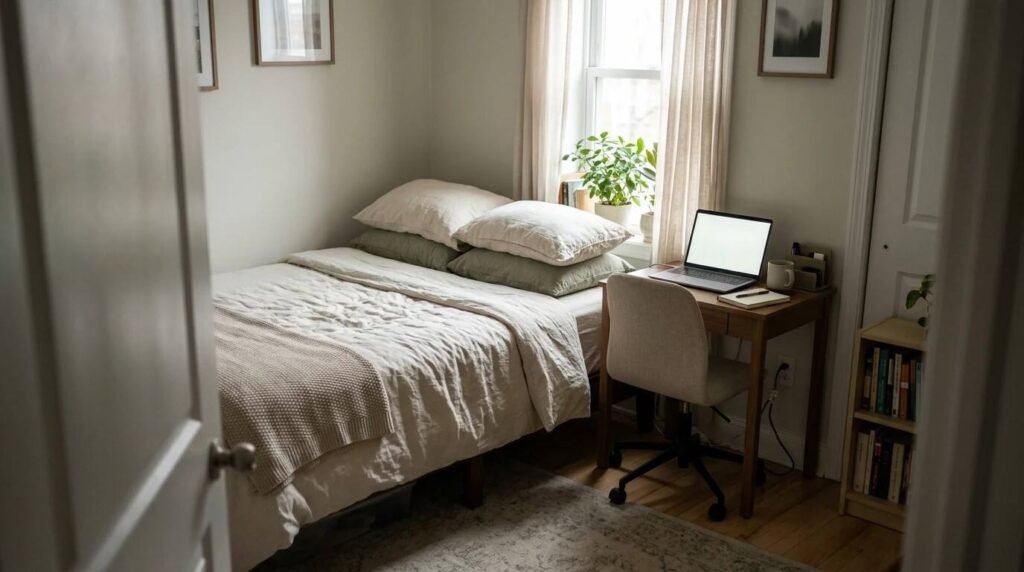
- A room with a guest bed, a television or a child’s homework desk in it.
- Measuring the whole floor of a house when only one room is used.
- Claiming the deduction as an employee with no business of their own.
- Taking more under the regular method than the business earned, and expecting to carry it forward without the Form 8829 to show it.
An accountant can check the numbers in a few minutes. The questions worth bringing to that conversation are collected in what to ask an accountant at the first meeting.
For informational purposes only — consult a licensed attorney or financial advisor.