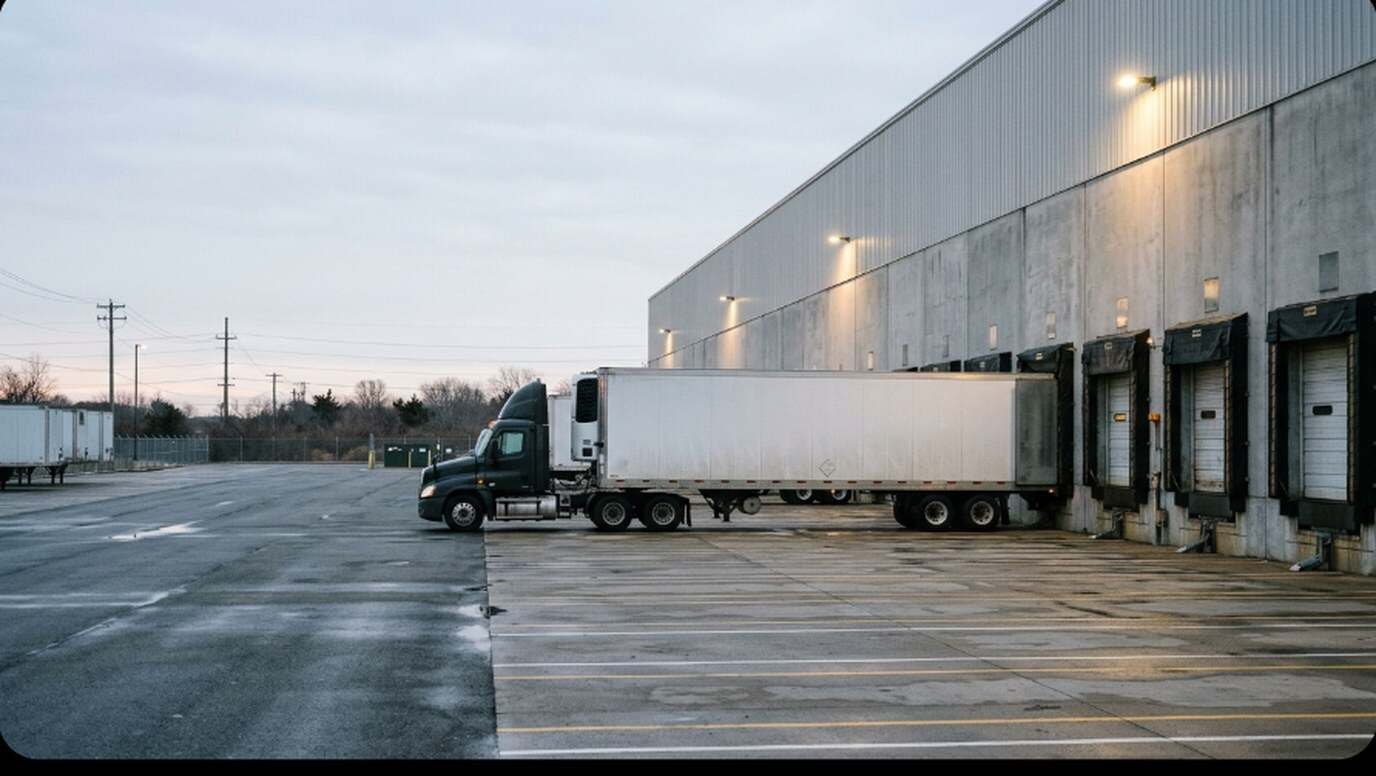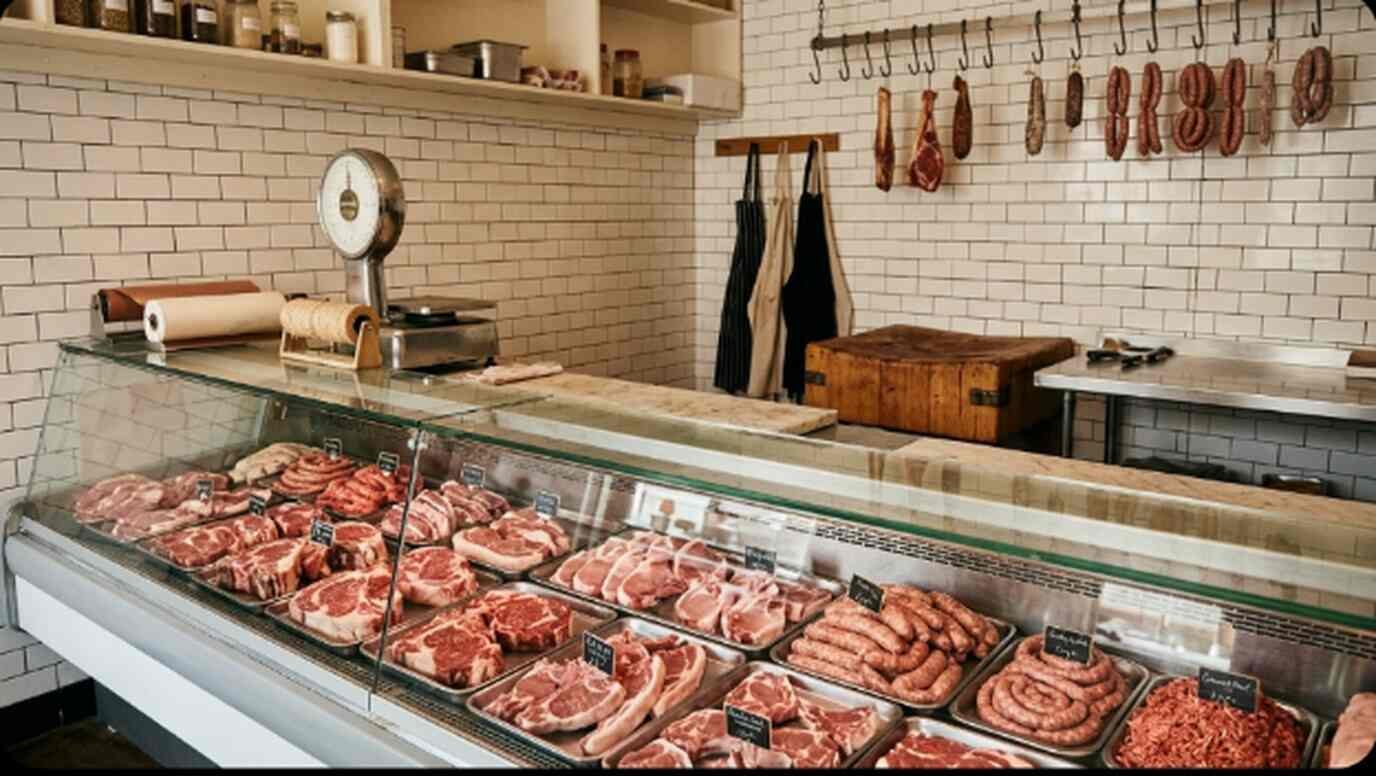
For 2026 the number is $109,600. That is the most a retail butcher shop can sell in meat to hotels, restaurants and similar institutions in a calendar year and keep its exemption from federal inspection, under a Food Safety and Inspection Service notice published April 28, 2026, which raised the figure from $103,600 and set a separate poultry limit of $76,100. I have bought meat for a diner on Route 25A since 2000, and those two numbers sit underneath the oldest arrangement in the business: the shop with a counter for households and a back door for kitchens.
Middle Island, 1976
Cow Palace started with one store. Jerry Masotto opened the first one in Middle Island in 1976, according to a January 2012 Patch report, and his son Tino started working in the family business at 12 and took it over when his father retired. By the time that story ran there were five stores: a 10,000-square-foot flagship in Rocky Point, plus Middle Island, Moriches, Patchogue and a new shop in Westhampton Beach.
Tino’s reasoning for the expansion, as Patch put it, was that customers would buy meat to cook at home instead of eating out. A butcher betting that people will cook at home rather than go to a restaurant is betting against my whole line of work. He kept opening stores on that bet, which tells me who was reading the market better. He also called Westhampton Beach “a seasonal community,” which is a butcher’s way of saying the cases have to be stocked for July and still make sense in February.
The Rocky Point store is at 457 Route 25A, where MapQuest’s listing describes it as a wholesale and retail butcher shop with a deli counter, prepared foods and catering. The company behind it is registered with the federal motor-carrier database as Cow Palace of Rocky Point Inc, doing business as Cow Palace Butcher Shop, which is what a butcher shop looks like on paper once it owns a truck.
Twenty thousand pounds a week
The best account of how the business ran is a 2012 Patch piece by Meryl Spiegel on the Westhampton Beach opening. The new store was about 1,000 square feet on Mill Road, in the space Dean’s Country Market used to occupy, and it carried meats, Boar’s Head products, groceries, prepared foods and store-made chicken burgers. Across the retail stores the company sold about 20,000 pounds of meat a week, and it ran a wholesale business supplying restaurants, hotels, schools and country clubs.
Tino explained the pricing with the plainest sentence in the butcher trade: “We can sell chicken cutlets for $1.99/lb year-round because we sell 20,000 pounds a week.” Those were 2012 prices and nobody should walk in expecting them in 2026. The logic has not aged a day. Volume sets the price, the way the size of a gas line sets how many burners a kitchen can run at once, and a shop that moves that much meat through its cases can buy, cut and price in a way a small counter cannot. Of a weekly ribeye special, he said, “it’s soft as butter,” which is the only tasting note a butcher ever needs.
The federal line between a household and a restaurant
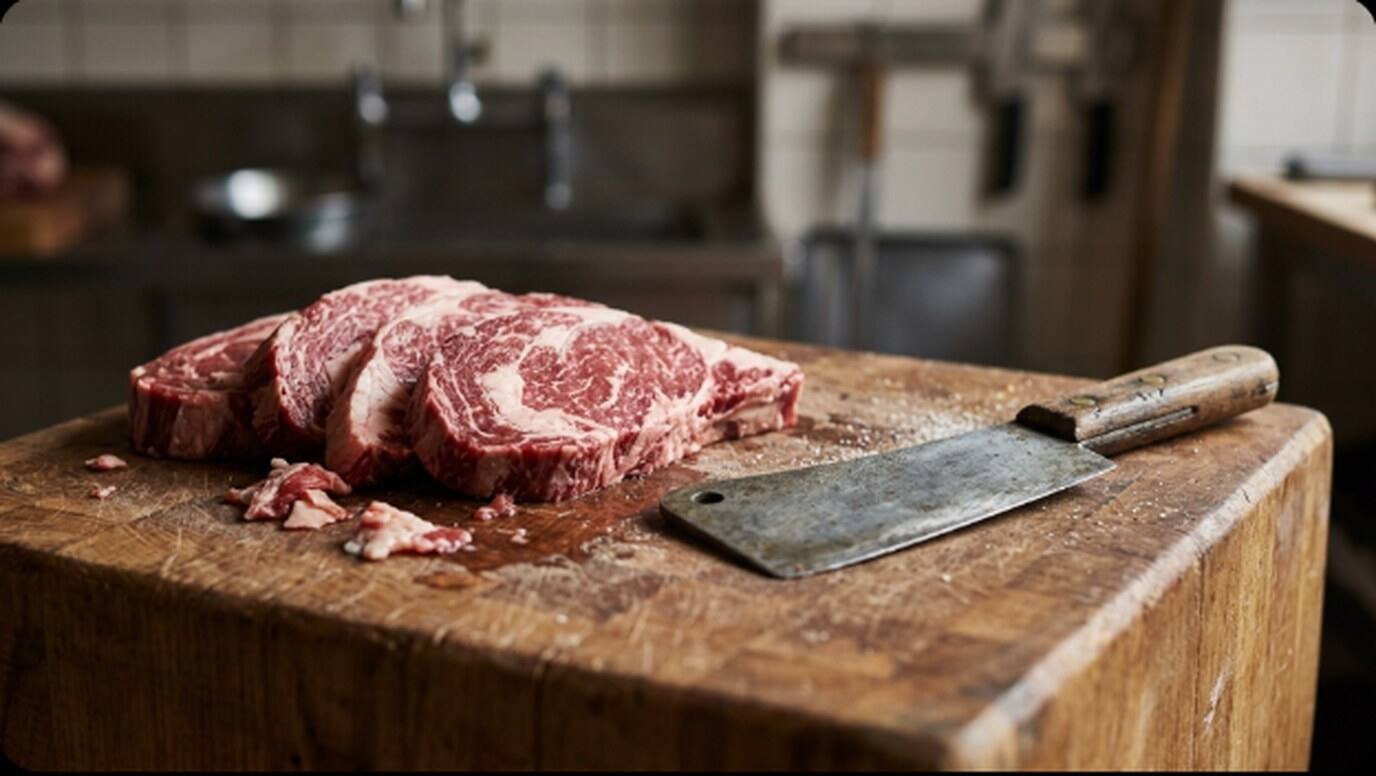
Meat law treats a butcher’s two kinds of customers differently. The retail store exemption in 9 CFR 303.1(d) defines a consumer as “any household consumer, hotel, restaurant, or similar institution,” and then sets conditions. At least 75 percent of the store’s sales, in dollar value, have to go to household consumers. Sales to everyone else cannot pass the yearly dollar limit, which is adjusted against the Consumer Price Index and published in the Federal Register. And the preparation of meat for those other customers “is limited to traditional and usual operations,” and the regulation’s own list of those operations reads like a butcher’s day: cutting, slicing and trimming wholesale cuts into steaks, chops and roasts, grinding, curing, smoking, breaking bulk shipments, and wrapping.
New York closes the loop from my side. The State Sanitary Code at 10 NYCRR 14-1.31(d) says “Food is to be obtained from approved sources that comply with all laws relating to food and food labeling.” A restaurant that buys from a butcher is relying on the butcher being on the right side of those federal rules, whether that is the retail exemption or a separate inspected operation.
Here is the part that took me a while to sit with. Divide $109,600 by 52 and it comes to a little over $2,100 a week in meat, and that cap covers every hotel, restaurant and institution the shop sells to, combined. The exemption was built for a butcher who sells to a few kitchens on the side, and it works against exactly the thing a diner owner wants from a neighborhood shop, which is to lean on it hard. The more restaurants lean, the closer the shop gets to the line.
Poultry runs on its own, lower number. The same notice puts the 2026 limit for poultry and poultry products at $76,100, up from $74,800, and chicken is the one thing a diner goes through like water: cutlets for parmigiana, breasts for the grill, wings, soup. A shop selling cutlets to a handful of kitchens would reach the poultry line well before the beef line, which is the kind of detail that never comes up at the counter and decides how the back door works.
The harder thing under that is the 75 percent rule. A butcher’s restaurant business only stays simple for as long as the households keep coming through the front door, so the people standing at the counter on a Saturday buying two pounds of chopped meat are carrying the restaurant accounts on their backs whether they know it or not. A shop that wants a real wholesale business, like the one Cow Palace described in 2012 serving restaurants, hotels, schools and country clubs, is running a second kind of operation with its own rules. The counter and the loading dock answer to different paperwork.
Butchers who sell to Long Island kitchens
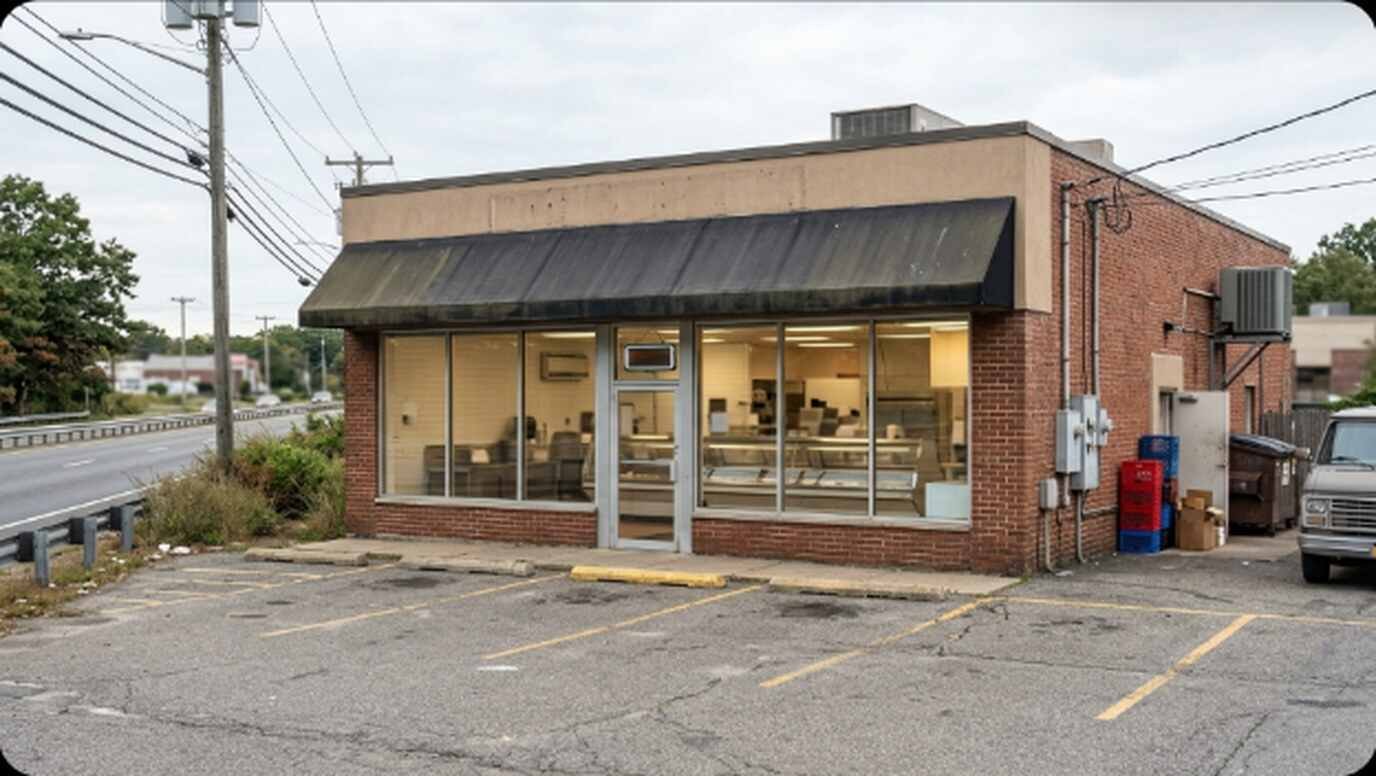
The Island has a long line of family meat businesses that grew a restaurant side. Meat and Poultry magazine’s profile of Main Street Wholesale Meats in Farmingdale describes a third-generation company with a processing plant and a retail storefront. Kent took over from his father in 1979 and his son Lee now runs it as president. Its trucks deliver to customers within roughly 100 miles, and the list includes Peter Luger Steak House, the Bohlsen Restaurant Group, hotels, country clubs and racket clubs.
Behind every one of those counters is a trade that keeps going. The Bureau of Labor Statistics counts about 359,300 jobs for meat, poultry and fish processing workers in 2025, with 35 percent of them at grocery and specialty food retailers, and a median annual wage of $39,190 in May 2025. The agency projects the field to grow 4 percent from 2025 to 2035. A knife hand is still a job, and the shops that train one are doing work for the whole county, restaurants included.
What a diner wants from the counter
The broadline truck arrives on its day. A neighborhood butcher is there for every other day: a special that needs a cut the truck does not carry, a catering order that grows by twenty pounds the night before, a Saturday when the walk-in came up short on something the menu cannot run without. Those are the mornings a local shop earns its place in a diner’s order guide, and a shop with a wholesale side and a retail case on the same property has two ways to help.
Cutting to order matters more than people think. A butcher who trims to the weight on the ticket takes that work off the line, and the cook who would have spent that time over a cutting board is back on the grill where the tickets are piling up. The labor cost post gets into why those minutes show up on the schedule, and they show up at the end of the week too.
Before leaning on any butcher, the questions are the same:
- Does the shop sell to restaurants, and is that through the retail counter or a wholesale side?
- What is the lead time for a cut or a quantity that is not in the case?
- Is there delivery, or does the pickup have to be planned into the morning?
- How are weights and prices written on the invoice, so the order guide and the food cost stay current?
Every delivery gets checked at the door the same way a broadline delivery does, by weight, temperature and count, as the receiving post lays out. Then the price per pound and the portion weight go into the food cost percentage, and the menu price either holds or it does not.
Two addresses on 25A
The Heritage Diner is at 275 Route 25A in Mount Sinai. Cow Palace is at 457 Route 25A in Rocky Point. Same road, a short drive east, one shop that has been cutting meat for Suffolk County households since a store opened in Middle Island in 1976 and one diner that has been cooking it since 2000.
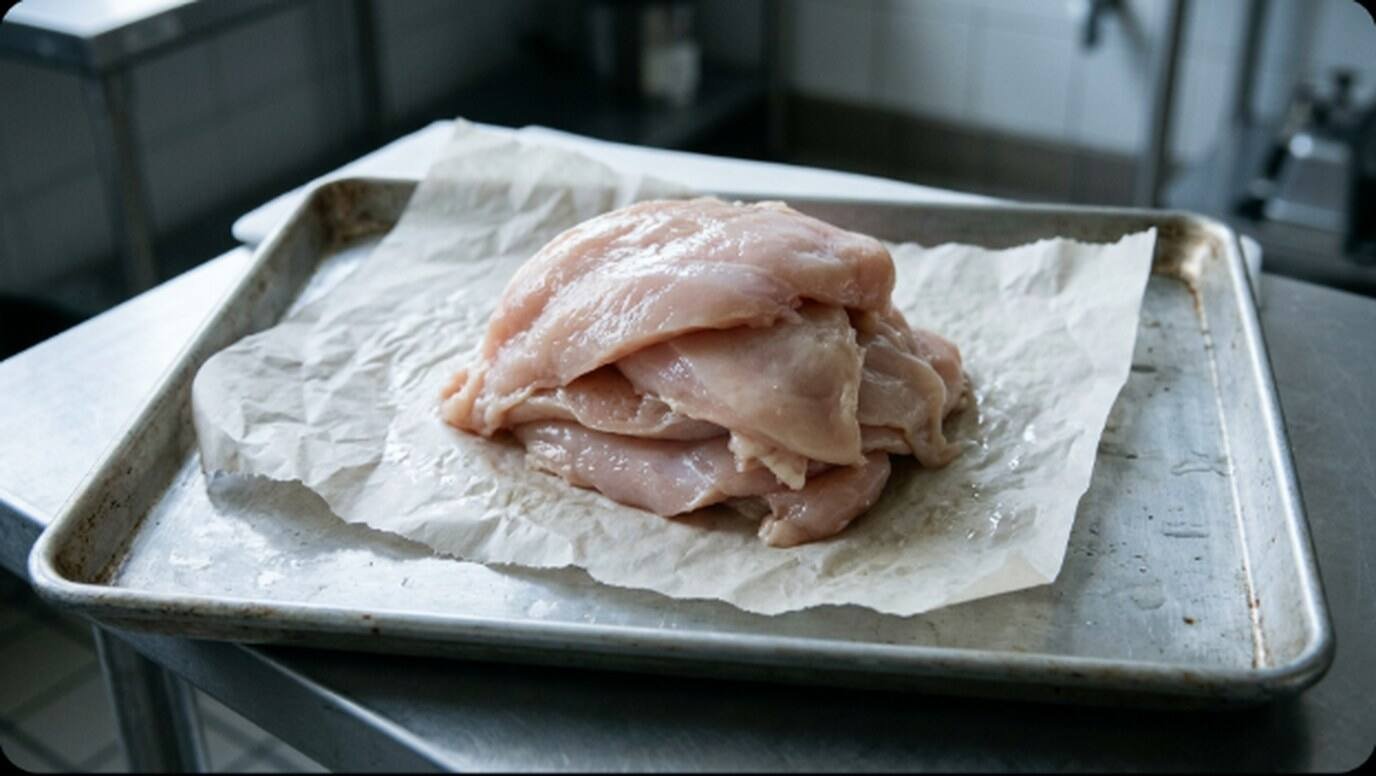
A tray of cutlets on butcher paper on a steel table does not look like much, and it is the whole business: someone’s knife, someone’s scale, someone’s truck, a federal number that never makes it onto the price tag, and the households in line keeping the door open. Which cut is the one a supermarket case never seems to have on the morning a kitchen needs it?
For informational purposes only — consult a licensed attorney or financial advisor.
Sources
- Food Safety and Inspection Service, “Retail Exemptions Adjusted Dollar Limitations,” Federal Register (April 28, 2026)
- Electronic Code of Federal Regulations, 9 CFR 303.1
- Patch, “Cow Palace Expands Out East” (January 16, 2012)
- Patch, Cow Palace opens in Westhampton Beach (January 2012)
- MapQuest, Cow Palace, Rocky Point
- LoadWrap, Cow Palace of Rocky Point Inc (USDOT 1908184)
- New York Codes, Rules and Regulations, 10 NYCRR 14-1.31
- Meat and Poultry, Main Street Wholesale Meats profile
- U.S. Bureau of Labor Statistics, Occupational Outlook Handbook: Meat, Poultry, and Fish Processing Workers