
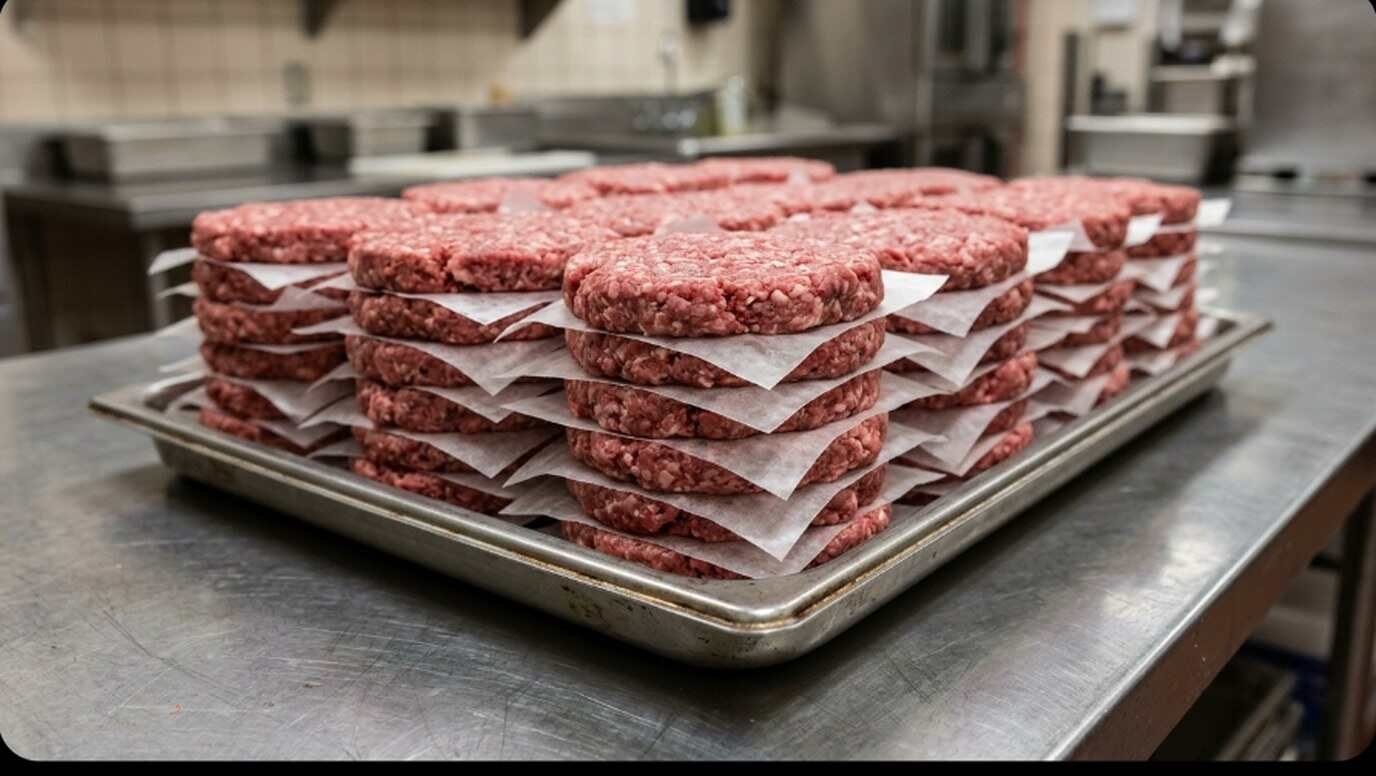
Federal law lets a hamburger have more added fat in it than ground beef is allowed to have. The rule is in 9 CFR 319.15: ground beef may not have “beef fat as such” added to it, while hamburger may, and both stop at 30 percent fat with no water, phosphates, binders or extenders. I have been cooking burgers since 2000 and I learned that from the Code of Federal Regulations, which tells a person something about the Code of Federal Regulations and something about me.
A patty house on South Long Beach Road
Janowski’s Hamburgers has built a whole company on that one word. The company’s website calls Janowski’s Hamburgers Inc. a family-owned “one stop shop for year round butcher quality meats,” dates the business to 1925, and serves the tri-state area. The anniversary line on the site reads “one hundred years. one beefy legacy,” and the anniversary merch includes a “Size Matters Hat” at $39.95, which is a strong position for a company whose product is sold by the ounce.
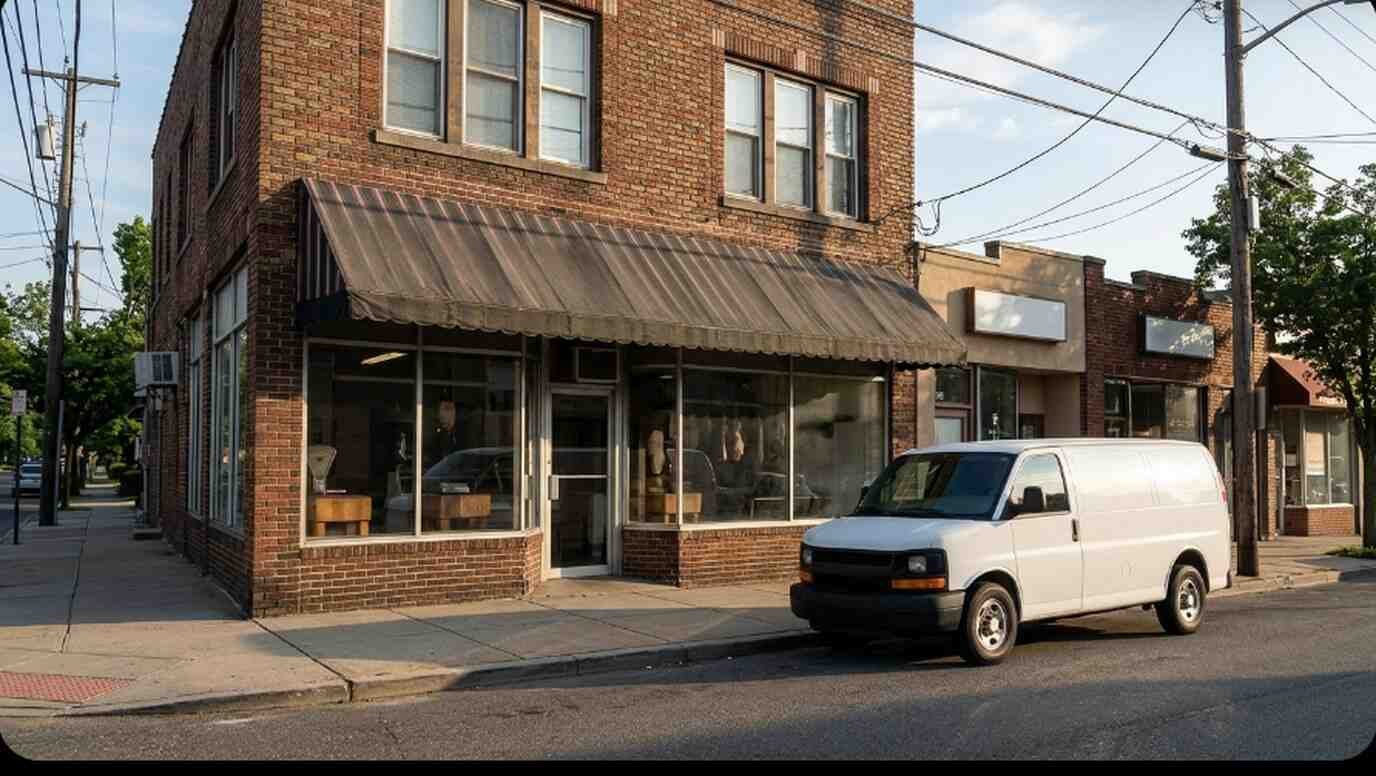
The shop sits at 15 South Long Beach Road in Rockville Centre. A listing on Atly calls it a meat wholesaler “with a family-owned feel,” known for burgers, hot dogs and filet mignon, and mentions a mascot dressed for the holidays that entertains outside. Plenty of meat companies have a logo. Very few have a guy in a costume on the sidewalk in December, and I respect the commitment.
The patty line on the website comes in three names: Signature Burger Patties, Signature Prime Patties and Signature Wagyu Patties, with a “Shop All Proteins” menu behind them. Orders and questions go to contact@janowskishamburgers.com, the address listed on the site.
Establishment M4504
The more useful record is the federal one. The USDA’s Food Safety and Inspection Service lists Janowski Hamburgers as establishment M4504 at the same Rockville Centre address. The activity is meat processing. The size class is “very small.” The listing carries a grant date of August 16, 2021, and a DBA of Bianca Burgers, LLC.
For a restaurant buyer, that number is worth more than any slogan on a hoodie. A plant with an FSIS grant of inspection operates under federal inspection, and the M on the front of the number marks it as a meat establishment. When a health inspector asks where the beef came from, a kitchen that can point to an inspected establishment on the invoice has a short conversation.
“Very small” is a regulatory category, not a judgment. FSIS sorts plants into very small, small and large by employee count and annual sales, a system that dates to the 1996 HACCP rule, and in March 2026 the agency asked the public whether those definitions should change, with comments due May 26, 2026. The question sounds dry. For a plant at the small end, the size line decides which rules and which help programs apply.
Twelve patties and a six o’clock cutoff
REKKI, a wholesale ordering app for restaurants, carries a Janowski Hamburgers page that reads like a cook’s shopping list. Twelve items, every one in a 10-pound pack, running from a 2-ounce patty up to 8 ounces, each with a second mark after the weight: 3/8, 1/2, 5/8, 3/4, one inch. Delivery is listed seven days a week, the minimum is $150, and the cutoff is 6:00 a.m. Prices sit behind the app’s login.
Seven-day delivery is the line that would make most diner owners sit up. Broadline trucks come on their schedule. A Sunday that runs through the patties by one o’clock, with a Monday truck on the calendar, is the kind of problem a seven-day supplier exists to solve, and a 6 a.m. cutoff means the decision gets made before the first ticket prints. A diner that runs out of burgers on a Sunday is a hardware store out of nails, and the customers say so to the waitress, not the owner.
Before ordering, it pays to ask the rep what each mark after the weight means for that particular plant, and to have it written down. Two shops can label the same patty two ways, and the flat-top doesn’t read labels.
What a patty does on a hot flat-top
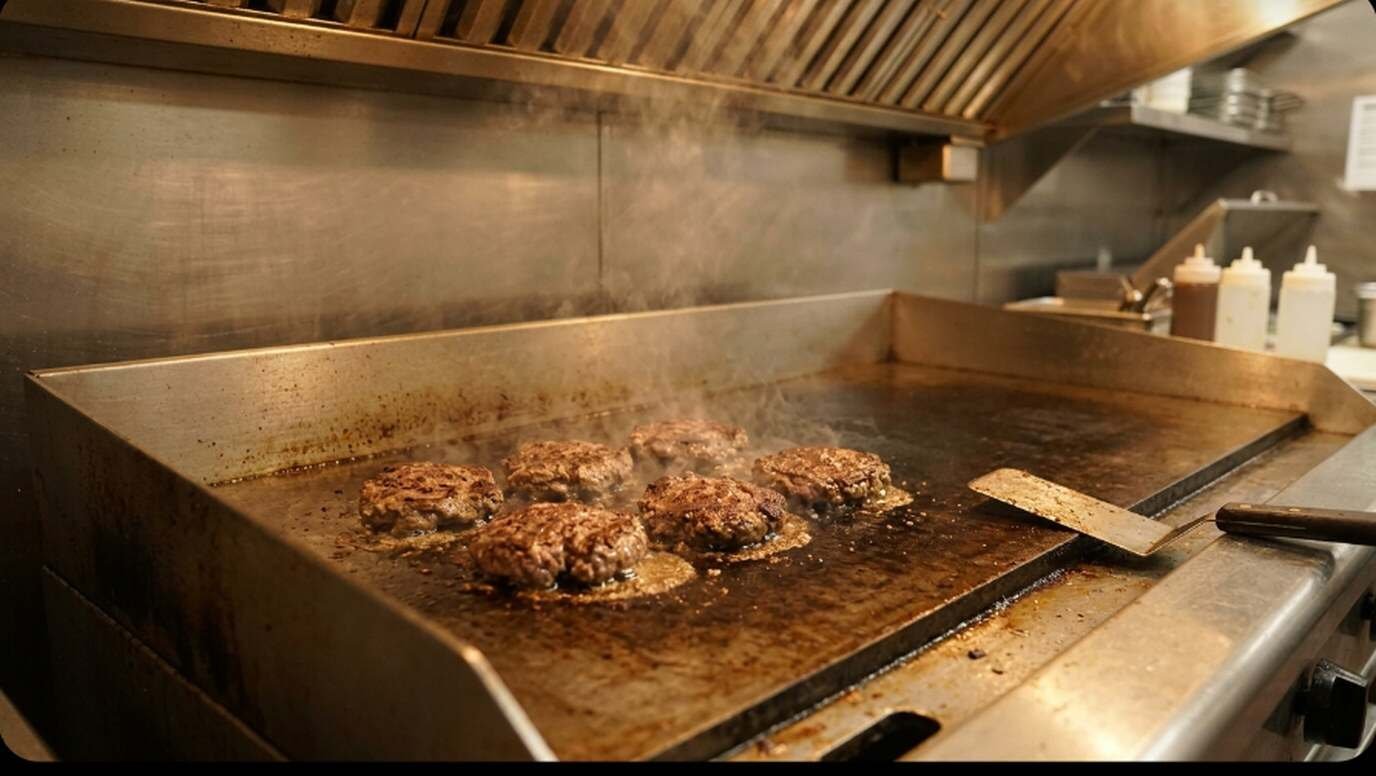
Some years back I cooked a sample case next to the patties I was already buying, same flat-top, same spatula, same cook, two rows side by side. The first thing that told them apart was the turn. One row lifted clean and stayed round. The other row cracked at the edge and leaked, and the cook looked at me with the face that says he will not be working that row on a Saturday. Neither patty was bad. One of them was easier to cook three hundred times.
That is what a diner buys when it buys a formed patty: not the beef, the repetition. The grind, the fat, the weight and the thickness decide how the meat behaves when it hits 375 degrees and sits under a press, and a 10-pound pack of identical patties lets the cook read the ticket instead of the scale. Portions stay even from the first plate to the last. The food cost on the burger lands close to the number on the costing card, which is the whole point of having a costing card, and the method for building one is in how to calculate food cost percentage.
The safety side is not optional. USDA’s ground beef guidance gives 160°F as the safe minimum internal temperature, measured with a thermometer, and says refrigerated ground beef should be used within one or two days at 40°F or below, or frozen and used within about four months for best quality. A seven-day delivery schedule makes the one-or-two-day window easier to live with. A kitchen still needs its logs, covered in keeping temperature logs for coolers and hot holding.
How New York butchers ended up in the burger business
Patty houses in this region tend to start as butcher shops that got squeezed. A 2017 SupplyChainBrain interview with Jamie Schweid of Schweid & Sons, the New Jersey ground beef company, traces his family from a Lower East Side butcher shop in the late 1800s to a business approaching $250 million and more than 80 million pounds of ground beef a year. The turn came in the 1970s, when the big packers began shipping boxed beef straight to retailers. Schweid put it plainly: the packers “didn’t need my dad or my grandfather to sell boxed beef to retailers.”
What was left for a family meat business was the grinder. Burgers needed somebody local, fast and consistent, and the boxed-beef plants in the Midwest were none of those things to a diner in Queens or Nassau.
The pattern holds from this side of the counter. A family meat company gets very good at one thing, restaurants find it, and the one thing ends up on the sign. Janowski’s put it on the sign, the website and the hat.
The case for staying on the broadline truck
The easy story says a family patty house beats a national distributor every time. It doesn’t, or at least not on every count. The broadliner already carries patties, already shows up with the fries and the buns and the to-go cups, and folds the burger into an invoice the kitchen checks anyway. A specialty account adds a second vendor, a second login, a $150 minimum and one more truck to receive at the back door. For a diner that sells forty burgers a day, that math can go either way.
Then the harder part. The more a menu leans on one distinctive patty, the more the burger depends on one very small plant on one road in Rockville Centre. A broadline patty is replaceable by design, which is its whole weakness and its whole strength. A good specialty patty is not, and the day the van doesn’t come is the day the menu finds out which one it bought.
Some practical checks before opening the account:
- Which weights and blends are stocked every day, and which are special order?
- Does the seven-day schedule apply to the restaurant’s address, and what time does the truck arrive?
- Is the product shipped fresh or frozen, and what is the use-by window from delivery?
- Does the invoice carry the establishment number, so the kitchen can show where the beef was processed?
- Who is the backup supplier if a delivery misses?
Every receiving step from receiving a delivery before signing applies to a patty case the same as to a broadline pallet: count it, check the temperature, then sign.
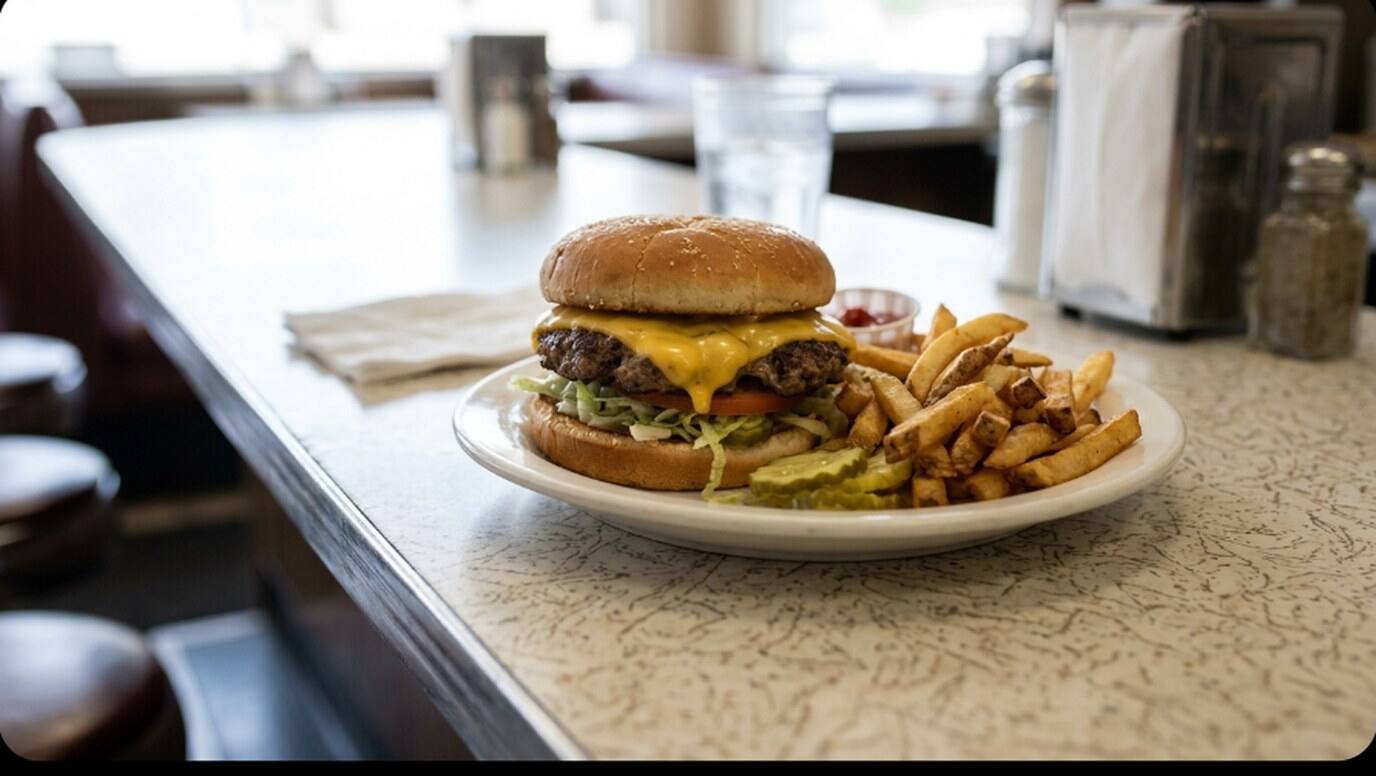
Under a slice of American and a toasted bun, with pickles on the side and a side of fries crowding the plate, the patty is maybe a third of what the customer tastes. Cooks who have run both on the same grill: does the diner at the counter taste the difference between the specialty patty and the one off the broadline truck, or does the bun do all the talking?
For informational purposes only — consult a licensed attorney or financial advisor.
Sources
- eCFR, 9 CFR 319.15, Miscellaneous beef products
- Janowski’s Hamburgers, company website
- Atly, Janowski’s Hamburgers listing
- USDA FSIS, Janowski Hamburgers establishment listing (M4504)
- Food Safety Magazine, “USDA-FSIS Seeks Input on Potential Updates to Establishment Size Definitions” (March 24, 2026)
- REKKI, Janowski Hamburgers supplier page
- USDA FSIS, Ground Beef and Food Safety
- SupplyChainBrain, “How Fourth-Gen Schweid & Sons Built a $250M Business on Burgers” (August 10, 2017)


