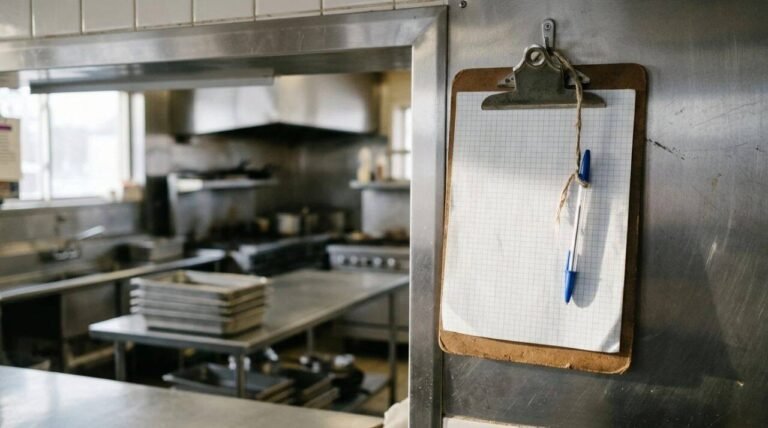


A specials board is a purchasing tool that happens to face the customer. The Heritage Diner, the family restaurant where I work, carries daily specials, and I have used a specials board to move stock myself. What follows is a method for doing it on purpose, with the public sources that support each step and a clear line around what a special must never be.
Count first, then write

The board starts in the walk-in, not at the chalk. The U.S. Environmental Protection Agency’s page on preventing wasted food through source reduction tells businesses to compare purchasing and inventory with customer ordering, to track what they already have before ordering more, and to modify menus to cut uneaten food. Two of those three verbs are about numbers on paper. A special written without a count is a guess about what is on the shelf.
The same page gives a small real example. A restaurant in Tennessee, Captain’s Galley, listed “developing menu specials to use food close to the end of its shelf life” as one of its most successful methods, alongside waste tracking and prep planning. It is one restaurant’s account on a government page, not a rule, but it names the practice plainly and puts it beside the two habits that make it work.
A count does not have to be fancy. A walk down the shelves with a pencil and the order guide is enough, as long as it is done close to the time the special gets written, because the number that matters is what is there today.
What the count needs to capture:
- What is on hand that is above the normal par for the week.
- What is on hand that is nearing the end of its useful life.
- What arrives in the next delivery, so the special does not pile new stock onto old.
- Which of those items can be prepared in more than one way.
The last line is the one that makes a special possible. A pan of roasted vegetables is a side, a soup, a filling and a topping. An item with only one use has few ways to leave the building.
Read the waste before reading the shelf
The shelf shows what is there. The trash shows what did not sell. EPA’s Food Loss Prevention Options for Restaurants, published in August 2016, starts with a food waste audit: “See what’s being thrown out and why.” It describes weighing discarded food at trash cans and kitchen stations and logging the type and the reason, and says staff can record this on a log sheet near the trash can. The results are meant to adjust menus, purchasing and portion sizes.
Applied to the board, a waste log answers an uncomfortable question. Which of last week’s specials ended up in the bin? If the answer is the same dish twice, the special was not moving anything. It was adding work.
The EPA document also recommends running regular inventory checks, or more frequent ones, to cut spoilage. Another suggestion is to use see-through containers so staff can monitor freshness without opening every lid. For a kitchen with several cooks, that matters more than it sounds. A special that depends on someone remembering what was in the back of the cooler will not survive a day off.
Build the special from what is there

The EPA options document offers a few specific ideas that translate to a board. It suggests reusing leftovers in new dishes, such as steak from one day becoming beef stew the next. It suggests using as much of each ingredient as possible, such as cooking carrot greens and leaving skins on potatoes and cucumbers. It recommends finishing preparation at the line so partial ingredients stay flexible for other recipes, and reducing batch sizes and cooking to order to limit leftover prepared food. It also suggests dropping garnishes customers typically leave uneaten and offering more than one portion size.
Read together, those lines describe a way to design a special in reverse. Start with the item that needs to go, then ask what the kitchen already makes that can absorb it.
A few patterns follow from that, none of them from a source and all of them reasoning about how kitchens work:
- A soup or a stew absorbs trim and leftover protein, and it is forgiving about quantity.
- A sandwich or a plate built on a standard base, such as the usual potato or rice, borrows from the main line and needs little new prep.
- A salad or a topping uses the produce that is soft but sound, if it is still within its safe life.
- A filled or stuffed item changes an ordinary ingredient into something that looks new.
The important thing is that the special has to be a good dish. Customers do not order a special for the kitchen’s benefit. If the dish reads as a clearance, the board teaches them to skip it.
What a special must never be
The line has to be drawn firmly. A special is a way to use food while it is still good, not a way to hide food that is past it. The U.S. Department of Agriculture’s Danger Zone page gives the range of 40°F to 140°F, says never to leave food out of refrigeration over two hours, and says that above 90°F the limit is one hour. Hot food should stay at or above 140°F and cold food at or below 40°F.
That page governs how a special is handled, from the walk-in to the line to the plate. An item near the end of its shelf life still has to be held at the right temperature, and an item that has been out too long goes in the bin. The EPA phrase is “close to the end of its shelf life,” not past it.
The date-marking and discard rules for prepared food come from the health code that applies where the restaurant operates, and I have not quoted a number here because the local rule is the one that counts. The cook who writes the board should know that rule, and the person who signs off on the special should be able to say when each component was made.
A second boundary is the allergen one. A special that moves stock often swaps an ingredient, such as nuts for seeds or a different sauce, and the board needs to say what is in the dish. The staff on the floor have to know it before the first table asks.
Telling the floor, writing the board
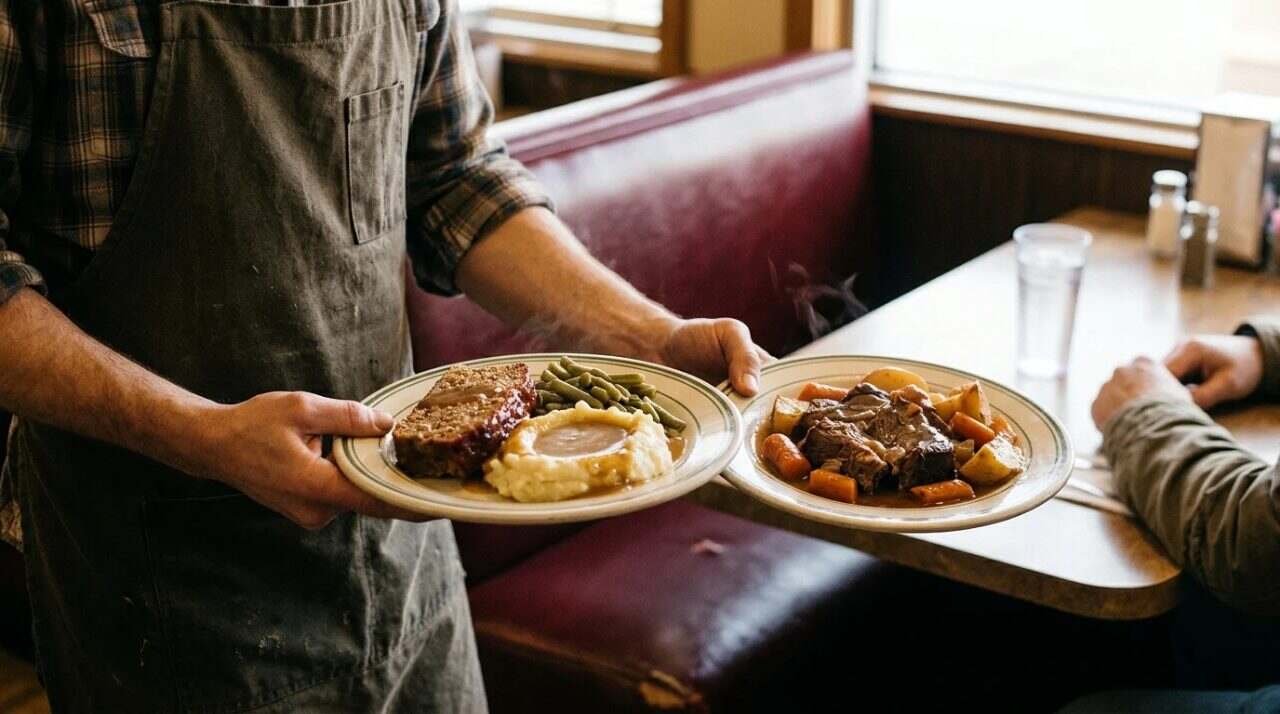
A special does not move stock until a server says it out loud. The board is a prompt. The server’s mouth is the sale. So the kitchen’s side of the work includes a short briefing: what the special is, what is in it, how much there is, and how much to push it.
Quantity is a boundary too. A special that runs out, called 86 in kitchen language, is a better result than a special with half a pan left at close. The EPA suggestion to reduce batch sizes and cook to order applies here. Make less than demand and let it sell out, and the board looks successful and the walk-in is clean.
For the board itself, a few plain rules:
- Name the dish for what is in it, in words a customer would use.
- State the price clearly, and write it only once the plate cost is known.
- Date the board, so tomorrow’s cook knows it is old.
- Take the special down when it is gone.
The last one is the one forgotten. A special that is sold out but still on the board turns into a question at every table, and the server has to answer it.
The honest objection
Specials have a cost that does not show on the shelf. They take prep time, they interrupt the line’s rhythm, and a special that does not sell leaves more waste than the item it was meant to move. The practices on the EPA page exist to prevent and reduce wasted food, and a special that goes unsold works against that aim. A board that changes every day can use up the cook’s attention faster than it uses up the stock.
That is the reason for the count and the log. Write a special when the numbers say there is something to move and a clear way to move it. When they do not, leave the board alone, and let the regular menu do the work.
For informational purposes only. Food safety rules, date-marking requirements and allergen notice rules vary by jurisdiction and change, so confirm them with your local health department, and consult a licensed attorney or insurance advisor on liability questions.
Sources
- U.S. EPA, Prevent Wasted Food Through Source Reduction: https://www.epa.gov/sustainable-management-food/prevent-wasted-food-through-source-reduction
- U.S. EPA, Food Loss Prevention Options for Restaurants (August 2016): https://www.epa.gov/sites/production/files/2016-08/documents/food_loss_prevention_options_restaurants_august_2016.pdf
- USDA Food Safety and Inspection Service, Danger Zone (40°F – 140°F): https://www.fsis.usda.gov/es/node/3295