


A press release for a local paper is a one-page statement of a single piece of news, written so that an editor can lift the facts out of it without calling anyone. I have written them, and I will not claim the writing is hard. The hard part is deciding whether you have news at all, which is a decision the paper makes and you only get to guess at. This post follows the published guidance from the Small Business Administration, SCORE, Business News Daily and a press-release distribution company, and it marks where those sources disagree with one another.
Start with whether it is news

The first question is not about format. It is whether a local reporter would assign the story. The company eReleases, in its guide to press releases for small business, says openings, expansions, awards, original data, notable hires and partnerships usually qualify, and that discounts and website updates usually do not. Its sharpest line on this is “A press release announces an event. A discount is a marketing offer.”
Business News Daily makes a matching point in its piece on press releases that get read, last updated June 11, 2024. It quotes a marketing consultant saying the best way to get a release read is to make sure what you announce is actually newsworthy, and it lists new products, industry recognition and special events as the kinds of news worth sending.
A counter test is useful here. Imagine telling a regular what the release says, in one sentence, over the register. If the regular says “so what,” the paper will say the same thing with less politeness. If the regular says “oh, that’s something,” you have a release.
SCORE, the volunteer small-business mentoring group, adds a matter of audience in its article on press release rules, published April 30, 2019. It says local news suits local media, and industry news such as a product launch, award or promotion suits trade publications. Its example is that a national outlet will not care about a regional promotion, while a local business journal might. A local paper is the right target for a local event, which is the whole reason to write to it.
The shape of the page

The sources agree on the order, with slight differences in vocabulary. The eReleases guide uses seven parts: headline, dateline, lead paragraph, body paragraphs, a spokesperson quote, a boilerplate “About” paragraph and contact information, followed by ###. Business News Daily describes the same sequence: contact information and a release date at the top, a bold dateline with the city, a lead that answers the five W’s, a body in inverted pyramid order, a boilerplate and the closing marks.
The Small Business Administration’s guide to writing a press release, by Rieva Lesonsky and published June 3, 2019, matches it again. It says the lead should summarize the most important information in a few sentences, covering who, what, where, when and why, along with the company name, and that readers often stop there. It says to close with a short standard paragraph about the business, and to list a spokesperson who can respond quickly with more than one way to reach them.
Here is the page as a working list, in the order the sources give it:
- Headline: short, specific, and about the news. The SBA says 100 characters or less; Business News Daily suggests about 70, so that it is not cut off in email previews or search results. The two numbers differ and I would take the lower one.
- Contact line and release date at the top, naming the person who will answer the phone.
- Dateline: the city where the business operates.
- Lead paragraph: the five W’s and the business name.
- Body paragraphs: details in short paragraphs, the most important first.
- One quote from the owner or leader, with full name and title.
- Boilerplate: a short paragraph about the business, what it does and when it was founded.
- The closing marks, ###.
The inverted pyramid is the idea under all of it. Put the most important facts first and the least important last, so an editor who has room for three sentences gets the right three. Business News Daily adds the reason: reporters may not call, and anything missing from the release may not make the story.
Length, tone and the quote
Both eReleases and Business News Daily put length at about a page. The eReleases guide gives 400 to 600 words and recommends third person and active voice, one story per release. The SBA says one or two pages. These are compatible, and the shorter end is safer for a local paper that will cut anyway.
Third person is the odd one for a small owner, who is used to writing in the first. A release is written about the business, as if by someone at the paper, and the owner speaks only in the quote. That is where the personality goes. Business News Daily says quotes add a personal tone and let journalists use them without conducting interviews. A good quote says something a person would say aloud, about why the thing matters, and not something a brochure would say.
The same article lists the mistakes. Typos and grammar errors come first, and it says they turn off journalists quickly. Next, it says, is leaving out key facts. Weak verbs come third, and the piece notes that words like “show,” “roll out,” “allow” and “reveal” tend to perform better than the overused “announce” and “launch.” I would add a rule of my own, which is to read the release aloud once. Anything you stumble on, an editor will stumble on.
Who gets it, and when
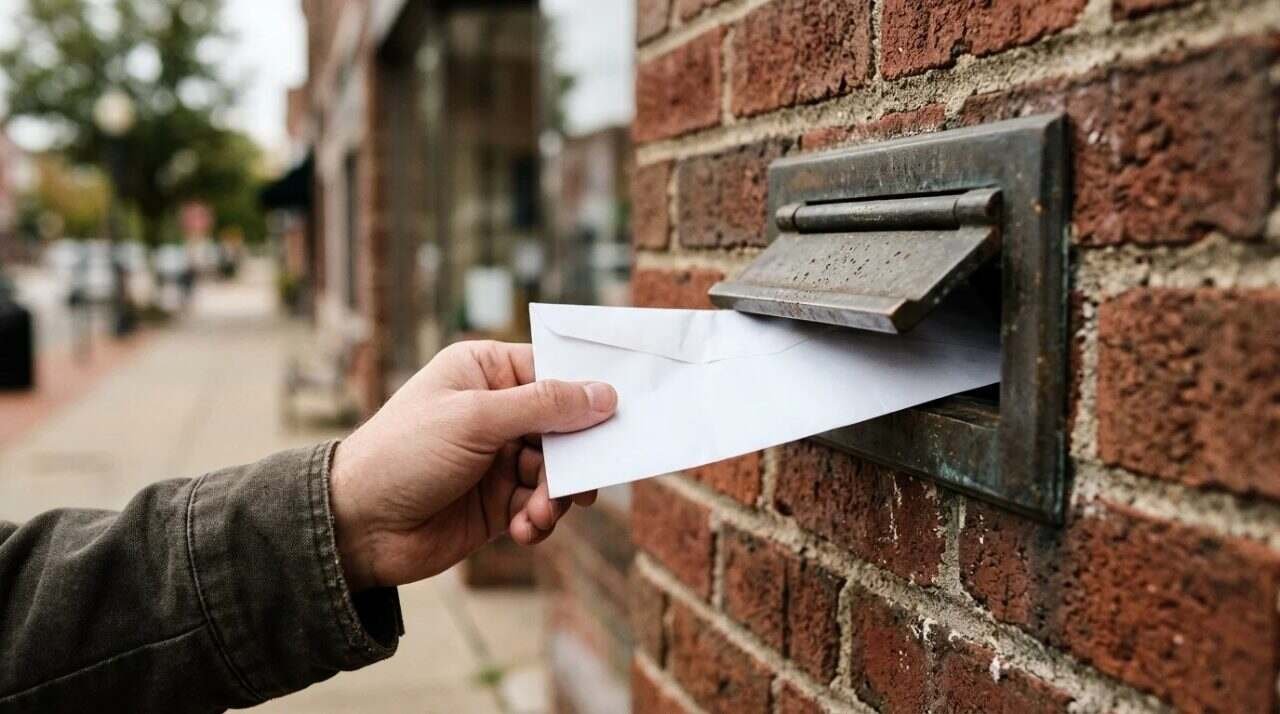
A release sent to a generic inbox is a release sent to no one. The eReleases guide advises sending to a named reporter, adding one sentence about how the story fits that reporter’s beat, and leading with local impact such as jobs created or a community milestone. It also says local business editors and regional trade publications are often more likely to cover a small business than national outlets. I wrote about what a local newspaper wants separately, and the two pieces fit together: that one covers the reader on the other end, this one covers the page you send.
SCORE gives the follow-up rules in blunt form. Send the release to outlets that fit the story. Send an introductory email to confirm you have the right contact. Post the release in a media or news section of your own website. Its advice on the telephone is two words, “Don’t call.” It also says to wait a reasonable time before following up, to follow up only once and not within 24 hours, and, if nothing comes back, to try again with a new angle instead of resending the same release.
Timing gets one more mention. Business News Daily identifies 10 a.m. to 2 p.m., Tuesday through Thursday, as peak times, and advises avoiding early mornings, late workdays and Fridays. I would treat that as a default and let a newspaper’s own deadlines override it. A weekly paper with a Wednesday print day wants your release well before the print day, a fact you can learn by asking.
Photos belong on the website, not in the email. Both the SBA and SCORE advise linking to photos and video, not attaching large files. The SBA suggests hosting them on a newsroom page on your own site. For a small business that means a plain page with a few good images that anyone can download without writing to you.
What a release cannot do
A press release does not guarantee coverage, and none of the sources claim it does. A paper that runs it gives you a paragraph or a calendar line, and one that does not will not tell you why. The honest measure of a release is whether it makes the editor’s job easier, and an easy job for the editor is a short list: the facts are all there, the dates are right, the spelling of the names is right and there is a person to call.
There is also a limit on the sources. Three of them are from marketing and distribution companies and organizations that sell services or advice to small businesses, and the SBA piece itself mentions posting releases through paid distribution services. A local paper is a different animal from a national wire. Whether yours takes unsolicited releases at all, and what form it prefers, is a question for the paper. Most print a contact page for the newsroom, and it costs nothing to read it before you write.
The first paragraph deserves the most trimming, down to the three facts a reader needs. Everything else on the page can be cut by the paper without harming anything.
For informational purposes only. This post summarizes published guidance and does not promise coverage; consult a licensed attorney or accountant if a release makes claims about prices, health, finances or other regulated subjects.
Sources
- SBA, How to Write a Press Release That Gets Results (Rieva Lesonsky, June 3, 2019): https://www.sba.gov/?p=19584
- eReleases, How to Write a Press Release for a Small Business: https://www.ereleases.com/how-to-write-a-press-release-for-a-small-business/
- SCORE, New Rules for Press Releases (April 30, 2019): https://www.score.org/resource/article/new-rules-press-releases
- Business News Daily, Writing Press Releases That Actually Get Read (June 11, 2024): https://businessnewsdaily.com/5200-how-to-write-a-press-release.html